




Tighter Communications Help OEMs Meet Tighter Regulations
Closer links between powertrains and hydraulic systems cut fuel usage and emissions while improving efficiency.

As regulations including Tier 4 further restrict fuel consumption requirements, design teams are tightening the links between powertrains and hydraulic systems. Improving communications between the two can bring significant savings while also reducing size and weight.
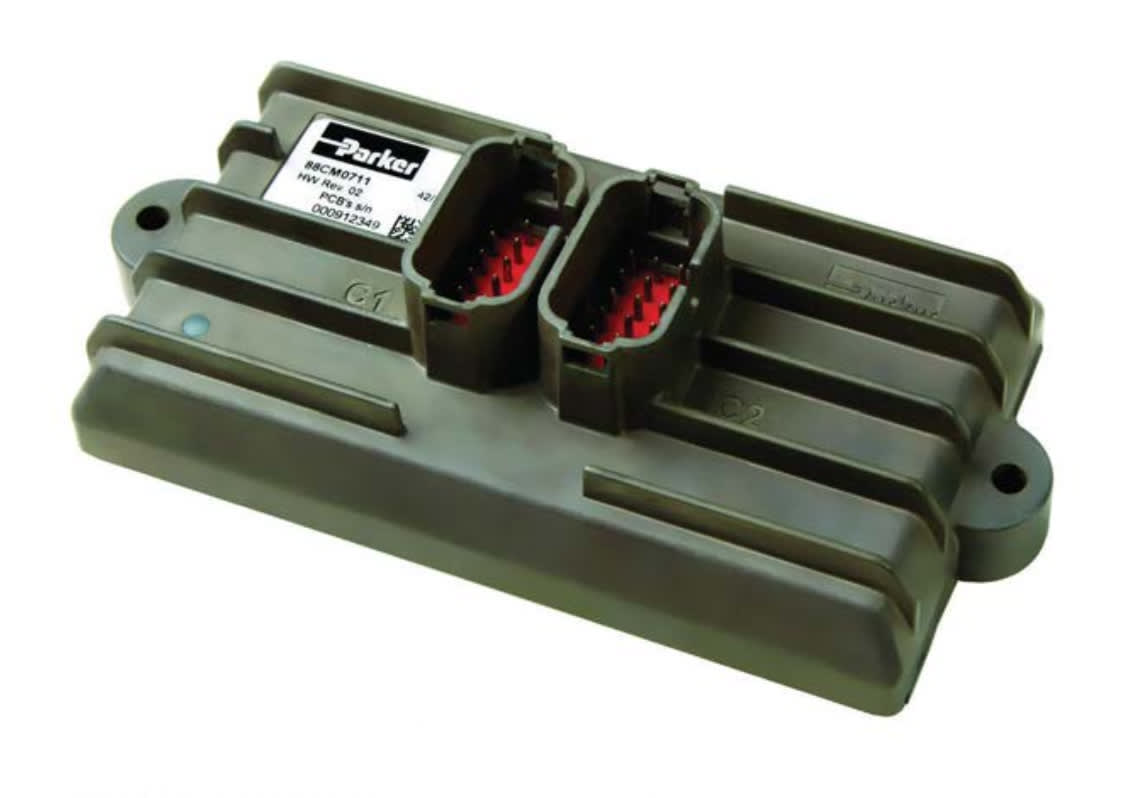
Advanced electronics permit matching the hydraulics demand and the engine load, which cuts fuel usage while improving hydraulic performance. Engines can run in their sweet spots longer and hydraulic systems can deliver power more quickly when they don’t have to wait for engines to rev up. These revisions also help trim emissions.
“As more electronics are integrated into the hydraulics, we see more efficient use of the power required to drive the hydraulics,” said Kirk Lola, Business Development Manager at Parker Hannifin Corp.’s Electronic Controls Division. “In the case of diesel engines, this results in lower fuel consumption and emissions.”
When these closely tuned systems are operating in the field, there are significant advantages for owners and operators. When there’s close communication between engines and hydraulics, controllers can anticipate load increases and increase engine speed accordingly.
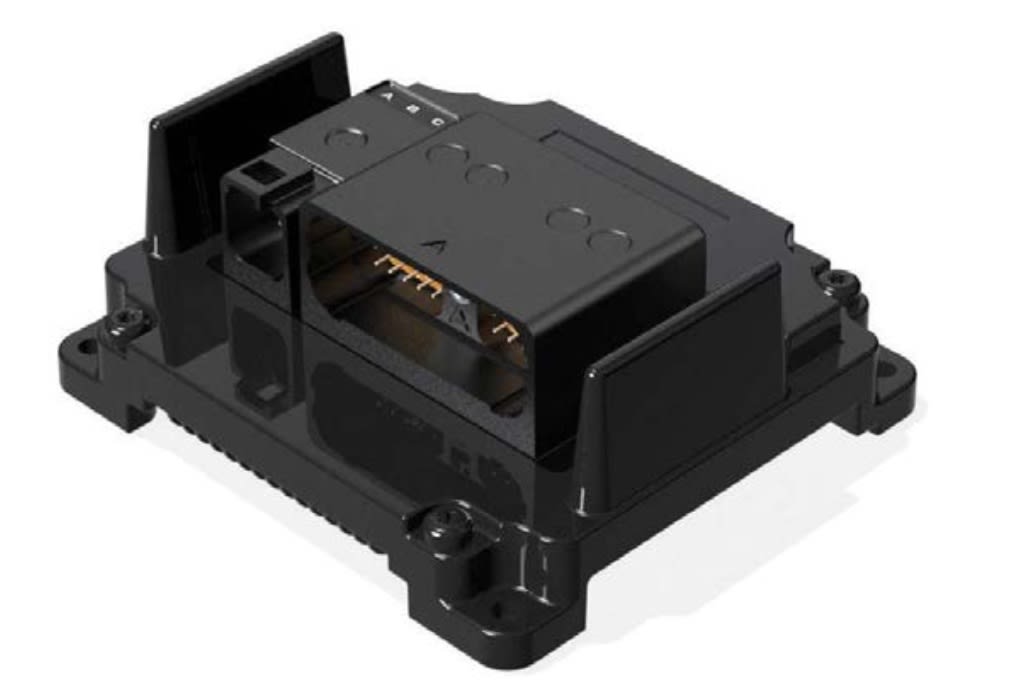
“If the hydraulics will be putting on a sudden heavy load, providing that information to the engine controller ahead of the load enables the engine controller to begin to respond, reducing the amount the engine speed drops as the load is applied,” said Marv Farr, Manager of Engine Electronics and Controls at John Deere Power Systems.
When engines and hydraulic systems communicate, engines deliver only the amount of power that is needed, while hydraulic functions get the level of energy that is needed. That helps companies meet tighter regulations for fuel usage and emissions.
“ECUs can control the exact amount of power delivered by a machine engine by precisely controlling the demand of a specific operation and matching the engine speed to the power required by specific operations,” said Eddie Phillips, Marketing Manager, Electronic Controls and Software, for Eaton’s Hydraulics Business. “The result is an improvement in fuel consumption and overall energy savings.”
Digital controls also make it possible to save fuel by reducing weight. Engineers can eliminate mechanical components, which simplifies manufacturing while providing other benefits.
“The use of our new safety ECU replaces eight proportional valves for an electronic stability control system with four proportional valves and one two-position valve,” said Manfred Maiers, EH Group Director at MICO Inc. “This concept saves components and wiring and ultimately cost. “
More functions

Electrohydraulic technologies are also helping conserve fuel by expanding their role. Hydraulic fans are rapidly replacing conventional cooling systems, making it possible to turn fans off or alter their speed to match engine requirements.
“In many John Deere applications, the engine controls the variable-speed fan that operates at the slowest speed required to provide proper cooling, “Farr said. “This offers both engine performance and fuel economy benefits.”
This trend is opening up new markets for hydraulic system providers. They’re helping OEMs keep costs down by leveraging existing hydraulic controllers in these cooling systems.
“In addition, with the advent of the Tier 4 engines, the cooling requirements have gotten tighter, often requiring better control of hydraulic fan drive systems,” Lola said. “Parker’s new CM0711 controller has been used as an effective fan drive controller as it provides two CAN ports for J1939 data, as well as analog inputs for temperature sensors and PwM outputs to drive the hydraulic valves in the fan drive system.”
Distributing intelligence

When design teams put together large, complex functions such as hydraulic systems, one of the first decisions is whether to centralize controls or distribute intelligence. Many companies are leveraging the low cost of mainstream microcontrollers rather than utilizing more expensive state-of-the-art CPUs. This approach makes it possible to distribute intelligence across the entire machine. Embedding controllers in various components and sub-systems can improve efficiency.
“This allows each individual component to act smarter and more efficiently,” Lola said. “In addition, this increases machine performance and productivity. The addition of ECUs onto pumps and valves allows these components to work smarter and has the biggest impact on cost savings. Adding electronics onto the hydraulic pumps and valves provides for better efficiency and lower fuel consumption by better managing the power demands of the hydraulic system.”
This approach is driven in part by the diversity of suppliers used by equipment OEMs. Engine, transmission, and hydraulic components often come from a range of suppliers. That makes it difficult to use a single controller to manage the complete system.
“There is no single, global operating system and I/O interface standard; it is almost impossible to write a black box software component that will run on other companies' ECUs,” Maiers said. “There is, however, an evolving standard in automotive [AUTOSAR] that is trying to resolve that.”
Even if AUTOSAR eventually makes it easier to use one centralized controller for multiple systems, many observers feel it will remain more efficient to scatter microcontrollers and systems throughout the vehicle.
“More powerful ECUs allow for faster and better control of the hydraulic components as each ECU can be dedicated to control of a particular hydraulic component,” Lola said. “In addition, by spreading out the ECUs across the whole machine, the overall machine intelligence goes up.”
More From SAE Media Group
Tech Briefs
Readers Select 2024 Products of the Year
Tech Briefs
Executive Forum: Sensors & the IoT
Aerospace & Defense Tech Briefs
The Inside Story on Unmanned Vehicle Signal Recorder Technology

Sensor Technology
Understanding the Implications of 5G Cellular
Tech Briefs
Product of the Month


Sensor Technology
What Will 5G Do for the IoT/IIoT?

Off-Highway Engineering
Autonomous Quarry Haulage in High Demand
Off-Highway Engineering
The Role of a Cloud-based Server in Service Workshops


Tech Briefs
Electronics Cooling Using Additive Manufacturing
Photonics & Imaging Technology
Photonic Communication Comes to Computer Chips

Tech Briefs
How Much Do You Know About GPS and its History?
Tech Briefs
Robust Serial Communications
Tech Briefs
Sensor Network for Air Vehicles
Off-Highway Engineering
Security, Bandwidth Drive Over-The-Air Development
Photonics & Imaging Technology
Text Tech: Navy Vessels Use Shipboard Signal Lamps for Text Messaging
Motion Design INSIDER
Improving Traffic Signal Timing with a Handful of Connected Vehicles



Off-Highway Engineering
Securing CAN Networks in Commercial Vehicles
Autonomous Vehicle Engineering
Navigating Deep Learning to Improve ADAS
Top Stories
INSIDERManufacturing & Prototyping
 How Airbus is Using w-DED to 3D Print Larger Titanium Airplane Parts
INSIDERManned Systems
 FAA to Replace Aging Network of Ground-Based Radars
NewsTransportation
 CES 2026: Bosch is Ready to Bring AI to Your (Likely ICE-powered) Vehicle
NewsSoftware
 Accelerating Down the Road to Autonomy
EditorialDesign
 DarkSky One Wants to Make the World a Darker Place
INSIDERMaterials
 Can This Self-Healing Composite Make Airplane and Spacecraft Components Last...
Webcasts
Defense
 How Sift's Unified Observability Platform Accelerates Drone Innovation
Automotive
 E/E Architecture Redefined: Building Smarter, Safer, and Scalable...
Power
 Hydrogen Engines Are Heating Up for Heavy Duty
Electronics & Computers
 Advantages of Smart Power Distribution Unit Design for Automotive...
Unmanned Systems
 Quiet, Please: NVH Improvement Opportunities in the Early Design...
