




Automotive Engineering - March 2024
Inside this issue
Overview
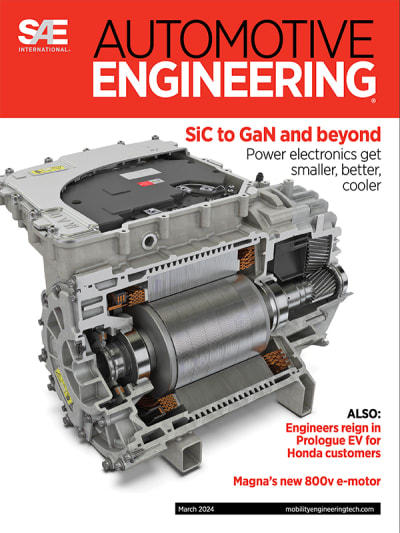
The March 2024 edition of Automotive Engineering presents a comprehensive overview of the latest advancements and trends in the automotive industry, focusing on electric vehicles (EVs), innovative technologies, and the evolving landscape of mobility.
Key Highlights:
-
Power Electronics Advancements: The issue delves into the transition from Silicon Carbide (SiC) to Gallium Nitride (GaN) technologies in power electronics. This shift is crucial for enhancing the efficiency and performance of electric drivetrains. GaN devices are noted for their ability to operate at higher frequencies and temperatures, which can lead to smaller, lighter, and more efficient power systems. The implications of this technology for future EV designs are significant, promising improved range and performance.
-
Magna's 800V E-Motor: A feature article highlights Magna International's new 800V e-motor, which is designed to optimize energy efficiency and performance in electric vehicles. This motor is part of a broader trend towards higher voltage systems in EVs, which can reduce charging times and improve overall vehicle efficiency. The article discusses the engineering challenges and innovations involved in developing this advanced motor, emphasizing its potential impact on the EV market.
-
EV Energy Management: The magazine explores the critical role of energy management systems in electric vehicles. These systems are essential for optimizing battery usage, extending range, and enhancing the overall driving experience. The issue discusses various strategies for energy management, including regenerative braking, thermal management, and smart charging solutions. The integration of advanced algorithms and AI in these systems is also highlighted, showcasing how technology can improve energy efficiency.
Sensor Fusion Technologies: Another significant topic covered is the evolution of sensor fusion technologies in vehicles. As the automotive industry moves towards higher levels of automation, the need for sophisticated sensing capabilities becomes paramount. The article discusses how digital sensors are replacing traditional analog systems, enabling faster response times and greater functionality. This shift is crucial for the development of autonomous vehicles, where accurate and reliable sensor data is essential for safe operation.
-
Sustainable Refrigerants: The issue addresses the importance of sustainable refrigerants in automotive air conditioning systems. With increasing regulatory pressure to reduce greenhouse gas emissions, the automotive industry is exploring alternatives to traditional refrigerants that have high global warming potential. The article reviews various options being considered and the challenges associated with their implementation, emphasizing the need for a balance between performance and environmental impact.
-
Collegiate Chapters and Member Engagement: The magazine also highlights the role of SAE International's Collegiate Chapters in fostering the next generation of engineers. These student-run organizations provide valuable opportunities for skill development in leadership, project management, and technical knowledge. The importance of engaging young professionals in the automotive field is underscored, as they are vital to the industry's future.
-
EV Charging Infrastructure: A critical analysis of the current state of EV charging infrastructure is presented, noting the challenges that persist despite significant investments. The article discusses the uneven distribution of charging stations and the impact this has on consumer confidence in electric vehicles. It emphasizes the need for a robust and reliable charging network to support the growing adoption of EVs.
-
Industry Events and Networking: The issue encourages readers to participate in industry events and networking opportunities, such as the upcoming SAE WCX 2024. These gatherings are essential for professionals to share knowledge, discuss innovations, and collaborate on future projects. The magazine invites engineers and industry experts to contribute their insights and experiences, fostering a community of shared learning.
-
Automotive News and Trends: The magazine features a section dedicated to recent automotive news, including product launches and technological breakthroughs. Notable mentions include Kia's introduction of a hybrid Carnival and Tesla's Cybertruck, which continues to generate interest. The adventurous journey of Chris and Julie Ramsey, who drove an all-electric Nissan Ariya from the North Pole to the South Pole, is also highlighted, showcasing the capabilities of modern EVs in extreme conditions.
In summary, the March 2024 edition of Automotive Engineering provides a rich tapestry of information on the current state and future direction of the automotive industry. With a strong focus on electric vehicles, innovative technologies, and sustainability, this issue serves as a valuable resource for professionals seeking to stay informed and engaged in the rapidly evolving world of automotive engineering. The magazine not only highlights technological advancements but also emphasizes the importance of community and collaboration in driving the industry forward.
Features
-
Articles
18 EV Energy-Management Powers-Up
23 CES 2024: Magna Puts Multiple Innovations in New, More Efficient 800v E-Motor
26 Sensor Fusion Expanding in Step with Advancing Vehicle Sophistication
Regulars
-
Supplier Eye
-
Technology Reports
4 Putting a New ‘Charge’ in EV Recharging
6 Enterprise Battery-Analysis Pioneer Voltaiq Partners with Siemens
8 Program to Train EV Charger Techs Graduates First Class in Detroit
9 Stellantis Unveils STLA Large Platform for D, E Segments
10 Kymco’s New Ionex BMU, BaaS Will Boost Electric Scooter Adoption
-
Road Ready
14 2024 Lexus GX Ready for Off-Road Adventure with New Platform, E-KDSS
16 2024 Honda Prologue Is a Cautious Invitation to Drive Electric
Top Stories
INSIDERManufacturing & Prototyping
 How Airbus is Using w-DED to 3D Print Larger Titanium Airplane Parts
INSIDERManned Systems
 FAA to Replace Aging Network of Ground-Based Radars
NewsTransportation
 CES 2026: Bosch is Ready to Bring AI to Your (Likely ICE-powered) Vehicle
NewsSoftware
 Accelerating Down the Road to Autonomy
EditorialDesign
 DarkSky One Wants to Make the World a Darker Place
INSIDERMaterials
 Can This Self-Healing Composite Make Airplane and Spacecraft Components Last...
Webcasts
Defense
 How Sift's Unified Observability Platform Accelerates Drone Innovation
Automotive
 E/E Architecture Redefined: Building Smarter, Safer, and Scalable...
Power
 Hydrogen Engines Are Heating Up for Heavy Duty
Electronics & Computers
 Advantages of Smart Power Distribution Unit Design for Automotive...
Unmanned Systems
 Quiet, Please: NVH Improvement Opportunities in the Early Design...
