




Pothole Detectives
Vehicles traveling repeated routes are data-gatherers for Aisin’s Road Maintenance Solution (ARMS) technology, ready for beta testing in the U.S.
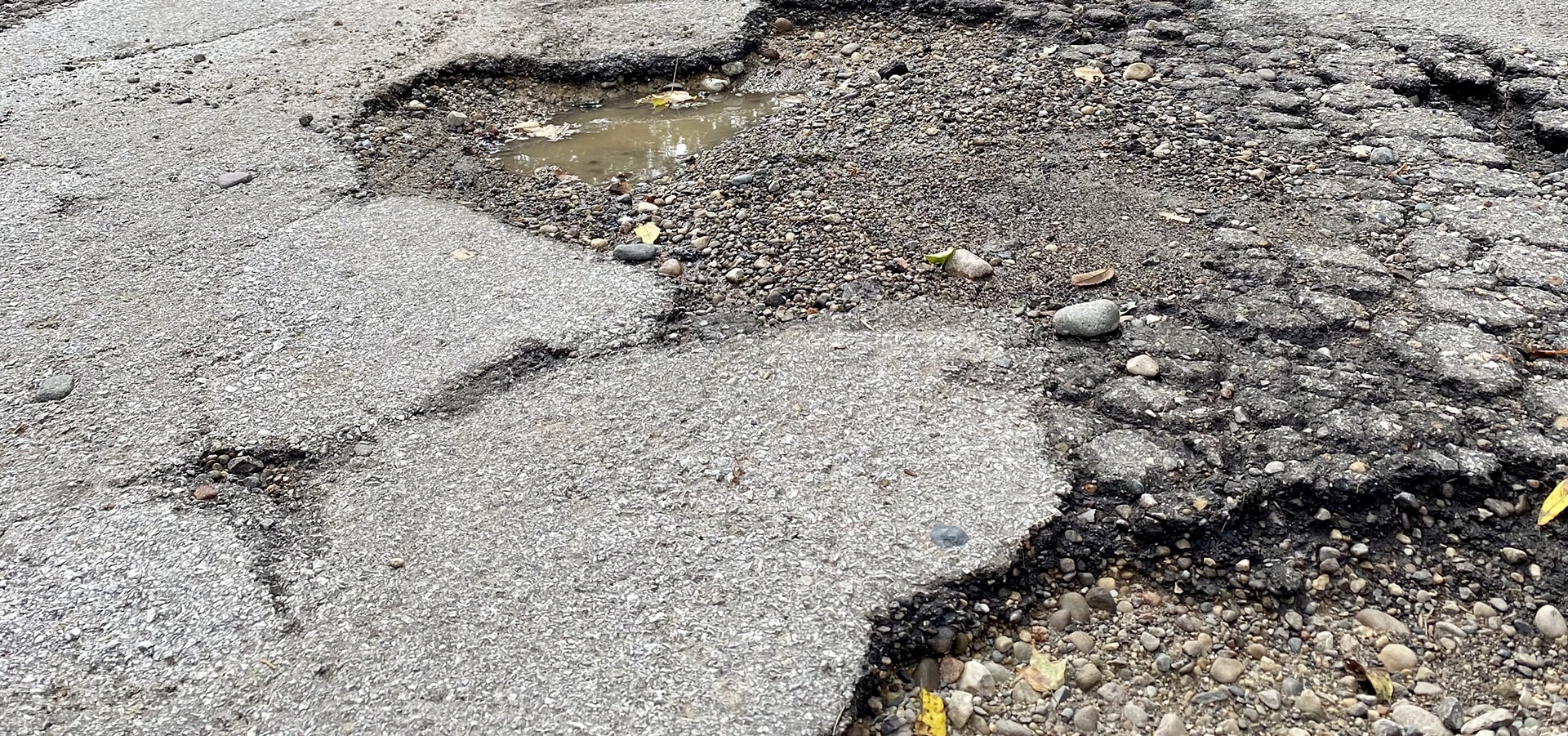
The first North American business-to-government technology initiative for Aisin’s Connected & Sharing Solutions Division is expected to begin beta testing in late 2023 or early 2024. “ARMS (Aisin Road Maintenance Solution) technology is a system that can identify potholes and other road problems, then communicate those issues from the vehicle to the cloud in real time,” Scott Turpin, president and CEO of Aisin World Corp of America, said in an SAE Media interview during the 2023 North America International Auto Show in Detroit.
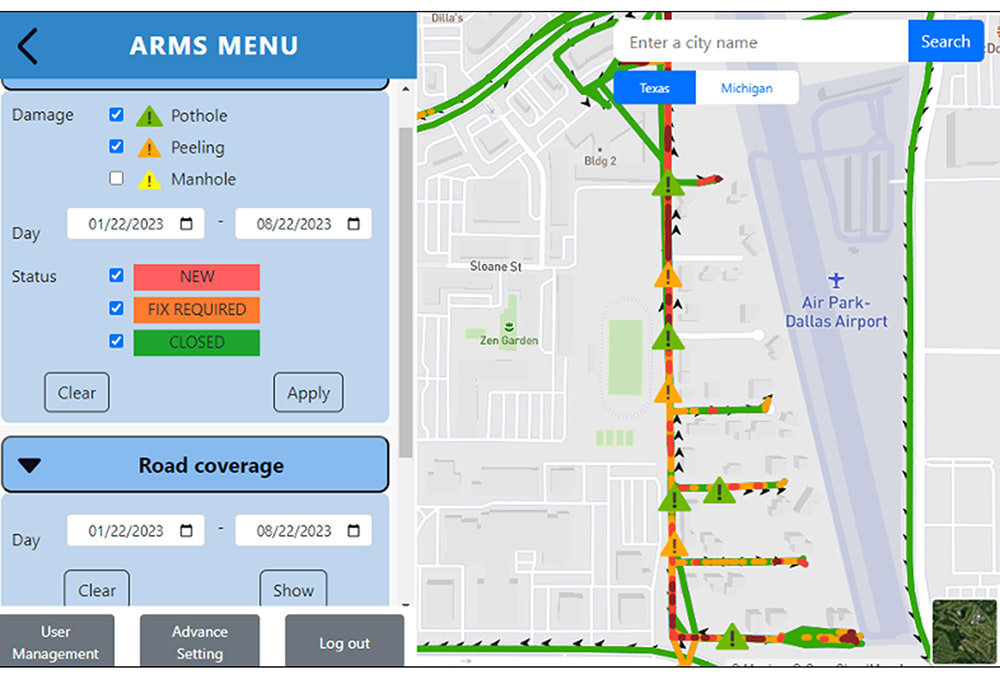
Vehicles that are routinely driven on the same roads within a community are well-suited for ARMS application. “Garbage trucks, buses, snowplows and other vehicles that run similar routes on a regular basis present a way to capture road data that can then be accessed in the cloud by a municipality,” said Cam Danh, Assistant Manager, Business Design Group of Aisin’s Connected & Sharing Solutions Division.

A vehicle equipped with a high-definition camera and an edge computer is required hardware for ARMS. Aisin’s location-based services platform, which relies on machine learning and algorithms, enables the pinpointing of a road issue. Initial data processing occurs via the onboard edge computer with additional analysis in the cloud. Edge computing is an information architecture that brings the computing resource closer to the source of data.

The ARMS system can detect the depth of potholes, various types of road cracks and road roughness. “Digitalization of the collected data means a municipality will have a library of road information, including historical reference points,” Danh said. The collection of road data will occur year-round, as the ARMS-equipped vehicles in a municipality program are driven daily or weekly.
Aisin developed and first-deployed ARMS in Japan, so the technology’s artificial intelligence (AI) model had to be trained for North American applications. “Japanese roads have different characteristics from roads in North America. If we applied the same AI model that was developed in Japan to the U.S., there would be a lot of false positives, or incorrect characterizations,” said Danh. Road differences between Japan and the U.S. include lane widths and unique manhole-cover designs.
Training the AI model for North America use has taken more than two years, according to Kevin Smith, Senior Manager, Business Development Department of Aisin’s Connected & Sharing Solutions Division. “It’s important to make sure that we have the most accurate AI model possible, so we’ve accumulated thousands of miles driving around Texas and Michigan training the model, which gets more accurate with more training,” Smith said.
More From SAE Media Group
Tech Briefs
Executive Forum: Machine Learning & AI
Aerospace & Defense Tech Briefs
AIA Predicts Flying Air Taxis, Supersonic Air Travel, and Space Industry for 2050
Motion Design
Deep Learning Models Enable Robotic Motion
Tech Briefs
Machine Learning Software for 3D Printing

Aerospace & Defense Tech Briefs
The US Army’s New AI Supercomputer
Aerospace & Defense Tech Briefs
New Swarm and Search AI Challenge Combines Machine Learning and UAS to Help Map Wildfires
Off-Highway Engineering
Artificial Intelligence Being Schooled for Mining Applications

Off-Highway Engineering
Volvo CE Pursues AI for Operator-Assist Functions on Path to Full Automation

Tech Briefs
AI System Discovers New Material

Tech Briefs
Boosting Operational Intelligence with AI

Tech Briefs
Executive Roundtable: Artificial Intelligence
Automotive Engineering
StreetDrone Proposes Top 10 Safety Rules for AV Developers
Aerospace & Defense Tech Briefs
A Perspective on GVSC Crewstation Development and Addressing Future Ground Combat Vehicle Needs
Tech Briefs
Giving Autonomous Vehicles the Ability to Reason
Automotive Engineering
Machine Learning Software Monolith Cuts Development Time for BMW’s Test Engineers
Automotive Engineering
WePredict Ready to Rock Component-Quality Analytics
Tech Briefs
Robot Locates and Retrieves Buried Items
Autonomous Vehicle Engineering
Data Drives Driverless Truck Launch
Aerospace & Defense Tech Briefs
Will Generative AI Transform Robotics?
Tech Briefs
Nanomagnets Can Perform AI-Like Processing
Motion Design INSIDER
Physics-Aware Neural Networks Improve Camera-Based Machines
Off-Highway Engineering
COMVEC 2022: Hiring Talent to Meet High-Tech Demands
Top Stories
NewsRF & Microwave Electronics
 Microvision Aquires Luminar, Plans Relationship Restoration, Multi-industry Push
INSIDERAerospace
 A Next Generation Helmet System for Navy Pilots
INSIDERDesign
 New Raytheon and Lockheed Martin Agreements Expand Missile Defense Production
INSIDERMaterials
 How Airbus is Using w-DED to 3D Print Larger Titanium Airplane Parts
NewsPower
 Ford Announces 48-Volt Architecture for Future Electric Truck
ArticlesAR/AI

Webcasts
Electronics & Computers
 Cooling a New Generation of Aerospace and Defense Embedded...
Automotive
 Battery Abuse Testing: Pushing to Failure
Power
 A FREE Two-Day Event Dedicated to Connected Mobility
Unmanned Systems
 Quiet, Please: NVH Improvement Opportunities in the Early Design Cycle
Automotive
 Advantages of Smart Power Distribution Unit Design for Automotive &...
Energy
 Sesame Solar's Nanogrid Tech Promises Major Gains in Drone Endurance