




Triggering Li-ion Battery Cells with Laser Radiation
Non-invasive method precisely triggers thermal runway.
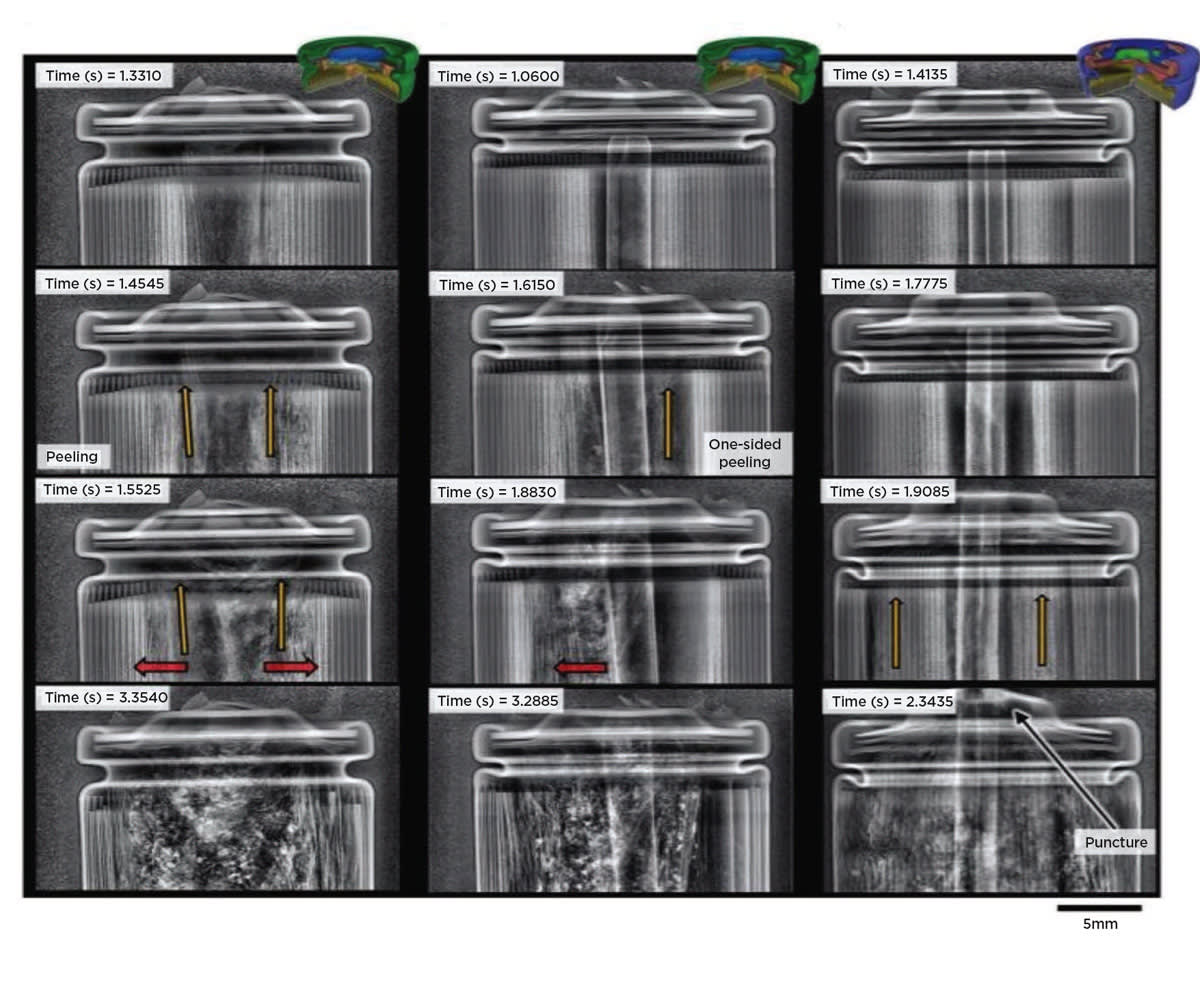
Innovators at NASA Johnson Space Center have developed a high-powered infrared (IR) laser that can trigger Li-ion battery cells into thermal runaway (TR) without perforating the battery’s wall like previous methods. Inducing TR in a battery cell allows engineers to test and improve the safety performance of overheated batteries that can potentially catch fire or explode. The primary advantage of this method is the heat energy delivered by the laser can be localized to the exact target spot on the battery cell minimizing thermal biasing to adjacent cells.
This technology is based upon a 120-watt IR laser coupled to a fiber optic cable that is routed from the output of the laser into a series of focusing optics which directs energy onto a battery cell mounted to a test stand. When activated, heat from the laser penetrates the metal housing, heating the internals of the cell. At a specific temperature, the separator in the first few layers of the cell melts allowing the anode and cathode to make contact and initiates an internal short circuit. The internal short circuit then propagates throughout the battery eventually causing thermal runaway.
The lower the wavelength of the laser used to produce the thermal runaway the more heat-energy will be absorbed into the cell producing a faster result. The fiber optic cable can be terminated into a series of optics to focus the laser at a specific target, or the fiber optic cable can be stripped bare and placed next to the target to heat an isolated location. This method can also be used on a wide variety of cells, including Li-ion pouch cells, Li-ion cylindrical cells and Li-ion large format cells.
This laser method does not require any internal modification of the test subject cell design nor require patch heating to trigger a short-circuit. Triggering Li-ion cells with laser radiation could work on any commercial battery cell design with only exterior surface treatment required, which can be done by the user. The technology has several potential applications including human-occupied vehicular transport applications that require a high level of rigor in determining margins of safety (automotive, aircraft, sea vessels, spacecraft).
NASA is actively seeking licensees to commercialize this technology. Please contact NASA’s Licensing Concierge at
More From SAE Media Group

Battery Technology
Semi-Liquid Metal Anode

Tech Briefs
Stable, Efficient, Anode-Free Sodium Battery
Battery & Electrification Technology
Iron Could Be Key to Less Expensive, Greener Lithium-Ion Batteries
Battery & Electrification Technology
Developing Safer Batteries with Solid-State Polymer Electrolytes
Battery Technology
Sustainable Aluminum-Anode Batteries
Tech Briefs
Dry Manufacturing Process for EV Batteries

Tech Briefs
A New Design for Lithium-Sulfur Batteries
Battery & Electrification Technology
Folded or Cut, This Lithium-Sulfur Battery Keeps Going
Tech Briefs
Large Format Li-Ion Calorimeter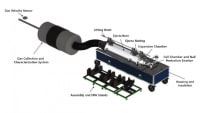
Tech Briefs
Room-Temperature Liquid-Metal Battery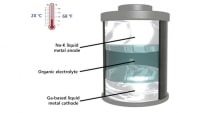

Battery Technology
Electrolyte Design Improves Anode Capacity in Lithium-Ion Batteries
Battery Technology
New Approach Makes Lighter, Safer Lithium-Ion Batteries
Battery & Electrification Technology
A New Way to Enhance Durability of Lithium Batteries
Battery & Electrification Technology
Emerging Plasma FIB-SEM Techniques Advancing Battery Innovation
Tech Briefs
Products of Tomorrow
Battery & Electrification Technology
Next-Generation Binder for Lithium-ion Batteries
Battery & Electrification Technology
Increased Storage Capacity in Water-Based Batteries
Battery & Electrification Technology
Researchers Unveil Scalable Graphene Technology to Revolutionize Battery Safety and Performance

Tech Briefs
A New, Low-Cost Aluminum-Sulfur Battery
Battery & Electrification Technology
Anode-Free Lithium Batteries with Maximized Energy Density
Top Stories
NewsRF & Microwave Electronics
 Microvision Aquires Luminar, Plans Relationship Restoration, Multi-industry Push
INSIDERAerospace
 A Next Generation Helmet System for Navy Pilots
INSIDERDesign
 New Raytheon and Lockheed Martin Agreements Expand Missile Defense Production
INSIDERMaterials
 How Airbus is Using w-DED to 3D Print Larger Titanium Airplane Parts
NewsPower
 Ford Announces 48-Volt Architecture for Future Electric Truck
ArticlesAR/AI

Webcasts
Aerospace
 Cooling a New Generation of Aerospace and Defense Embedded...
Automotive
 Battery Abuse Testing: Pushing to Failure
Transportation
 A FREE Two-Day Event Dedicated to Connected Mobility
Unmanned Systems
 Quiet, Please: NVH Improvement Opportunities in the Early Design Cycle
Transportation
 Advantages of Smart Power Distribution Unit Design for Automotive &...
Energy
 Sesame Solar's Nanogrid Tech Promises Major Gains in Drone Endurance