




Partnering to Produce Fuel-Cell-Electric Trucks
Plug Power and Lightning Systems are working to introduce the world’s first Class 6 FCEV in the third quarter of 2020.

A first-of-its-kind propulsion alternative for transporting products between ports, warehouses and distribution centers is on the horizon. “The Class 6 fuel-cell-electric vehicle (FCEV) is a perfect zero-emission solution for the movement of goods through the ‘middle miles,’” said Andy Marsh, CEO of Plug Power Inc., a supplier of hydrogen fuel-cell systems. Plug Power and electric drivetrain manufacturer Lightning Systems recently partnered to produce what they claim is the world’s first hydrogen fuel-cell-powered electric Class 6 truck.

Built off the Chevrolet Low Cab Forward 6500XD platform, the standard FCEV has an estimated driving range of 200 miles (322 km). An extended-range option doubles the range to 400 miles (644 km). “The most important benefit of a fuel cell-equipped BEV is operating range,” said Tim Reeser, CEO of Lightning Systems. “Many intermodal delivery routes in the United States are greater than 150 miles, making the fuel cell-equipped BEV an ideal piece of equipment for the ‘middle mile’ vocation.”
From a hardware perspective, the extended-range version adds a second hydrogen storage tank and associated control valve. “The tank – or tanks, depending on the configuration – is identical to the storage tank/s used to provide the initial range,” said Bill Kelley, chief technology officer (CTO) and chief operating officer (COO) of Lightning Systems.


The Class 6 FCEV will be powered by a 90-kW fuel-cell system comprised of three 30-kW modules running in parallel. “Each module is a complete, self-contained power unit that includes stack, air delivery, cooling system and DC/DC converter in the box,” explained Keith Schmid, COO of Plug Power. The metal stack’s innovative membrane electrode assembly (MEA) is crucial to the fuel-cell system’s functionality. “Through our R&D activities, we developed an ink catalyst and material formula for our MEA technology that improves efficiency and enhances durability,” said Schmid.
Plug Power began manufacturing MEAs in the third quarter of 2018 from its Rochester, New York, facility, following the acquisition of American Fuel Cell. “We’re leveraging existing expertise and infrastructure in fuel-cell technology as well as thin-film coating and roll-to-roll manufacturing,” Schmid noted. To date, more than 30,000 Plug Power fuel cell systems have recorded more than 300 million operating hours in the material-handling industry.
Transitioning to FCEVs
Material-handling applications paved a path for Plug Power’s transition to the logistics delivery market. “We designed our systems to be heavy enough to meet the minimum weight required to replace a lead-acid battery in a forklift – where it was used as a counterbalance – to the FCEV on-road market, where making the fuel-cell system lighter is important to benefit vehicle efficiency and payload capacity,” Schmid said.
Reducing the weight of the fuel-cell system spotlights lightweight material usage, a thinner metal fuel stack plate and next-generation MEA technology. “This has allowed us to achieve a much higher power density than previous-generation fuel-cell stacks,” said Schmid.
The fuel-cell truck’s EV drivetrain is comprised of a 220-kW electric motor and a 2-speed (3.53:1 and 1:1) gearbox. “The typical BEV version of a Class 6 vehicle uses 160 to 192 kWh of high-voltage batteries, resulting in about 100 to 200 miles of operating range,” said Kelley. The Class 6 FCEV truck uses 64-kWh lithium-ion nickel manganese cobalt oxide (Li-ion NMC) batteries, stored in two packs that are cooled by an active thermal-management system.

Installed where a conventional engine and transmission would be located, the electric drivetrain uses the original-equipment driveshaft. The 2700 cells in each battery pack and the packaging of other FCEV-related hardware does not interfere with typical aftermarket equipment such as liftgates and boxes.
Ready for the road
Since 2018, the EV platform has undergone lab and road testing. Fuel cell modules are subjected to typical load profiles to ensure that performance meets the specifications. “The hydrogen-storage modules are also pressure-tested to make sure they are 100% leak-free and ready for service,” said Marsh.
Final production testing of each Class 6 FCEV, including at least 200 miles of on-road evaluations, will be completed before delivery to customers. Plug Power and Lightning Systems’ FCEV trucks will be commercially available in the third quarter of 2020.
More From SAE Media Group
Off-Highway Engineering
Nikola Producing Battery-Electric Trucks, Fuel-Cell EVs Coming
Automotive Engineering
Hydrogen Storage in a Box!
Off-Highway Engineering
GM Hydrotec Boss Readies Fuel Cells for Commercial Deployment
Automotive Engineering
Making H2 Fuel Cells Happen
Automotive Engineering
Hydrogen Industry Vet Says Fuel Cells Still a ‘Go’
Off-Highway Engineering
Narrower Focus, Bigger Payoff for Commercial EVs
Automotive Engineering
Reducing the Battery Materials Supply Risk
Off-Highway Engineering
Truckin’ on Hydrogen
Off-Highway Engineering
Batteries Not the Only Route to EV Efficiency
Off-Highway Engineering
Hydrogen ‘Inevitable’ for Commercial Vehicles
Off-Highway Engineering
BEV Truck Manufacturers Charge Ahead at 2022 NTEA Show
Off-Highway Engineering
Battery of Issues Surrounds Large-Vehicle Electrification
Off-Highway Engineering
Battery Innovation Key for Commercial and Off-Highway EVs
Off-Highway Engineering
Hyundai CE Debuts Hydrogen and Electric Excavators at Bauma 2022
Off-Highway Engineering
Hydrogen Lightens the Load for Heavy Trucks
Off-Highway Engineering
Hydrogen Shows Increased Commercial Interest
Off-Highway Engineering
GM Nikola Tie-Up Sparks Worldwide Hydrogen Fuel Cell Interest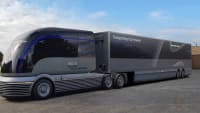
Automotive Engineering
Tackling the Thermal Challenges of Battery EVs
Automotive Engineering
Is Hydrogen the Future for Trucking?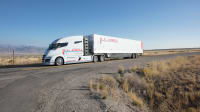
Off-Highway Engineering
Brownout for Commercial-Vehicle Electrification?
Off-Highway Engineering
ZF, Freudenberg Developing Integrated Fuel-Cell and E-Drive System
Off-Highway Engineering
Mahle Amps up Its Electrification R&D
Off-Highway Engineering
A Diversified Path for Sustainable Fleets
Automotive Engineering
BMW Reapproaches Hydrogen
Off-Highway Engineering
Quantron Launches 12-M Battery-Electric Bus; Fuel-Cell Variant to Follow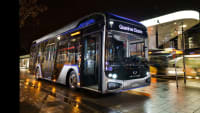
Off-Highway Engineering
Freudenberg to Deliver Batteries, Fuel-Cell Stacks
Off-Highway Engineering
How Battery Technology Will Drive Truck Electrification
Automotive Engineering
Time for Hydrogen
Off-Highway Engineering
ACT Expo 2025: Heavy-Duty EVs, H2 Trucks and Tariff Talk Dominate Day One
Off-Highway Engineering
Kalmar Launches 3rd-Gen Electric Terminal Tractor
Top Stories
NewsRF & Microwave Electronics
 Microvision Aquires Luminar, Plans Relationship Restoration, Multi-industry Push
INSIDERAerospace
 A Next Generation Helmet System for Navy Pilots
INSIDERDesign
 New Raytheon and Lockheed Martin Agreements Expand Missile Defense Production
INSIDERMaterials
 How Airbus is Using w-DED to 3D Print Larger Titanium Airplane Parts
NewsPower
 Ford Announces 48-Volt Architecture for Future Electric Truck
ArticlesAR/AI

Webcasts
Electronics & Computers
 Cooling a New Generation of Aerospace and Defense Embedded...
Automotive
 Battery Abuse Testing: Pushing to Failure
Power
 A FREE Two-Day Event Dedicated to Connected Mobility
Unmanned Systems
 Quiet, Please: NVH Improvement Opportunities in the Early Design Cycle
Automotive
 Advantages of Smart Power Distribution Unit Design for Automotive &...
Energy
 Sesame Solar's Nanogrid Tech Promises Major Gains in Drone Endurance