




JCB Prepared to Meet EU Stage V Emissions
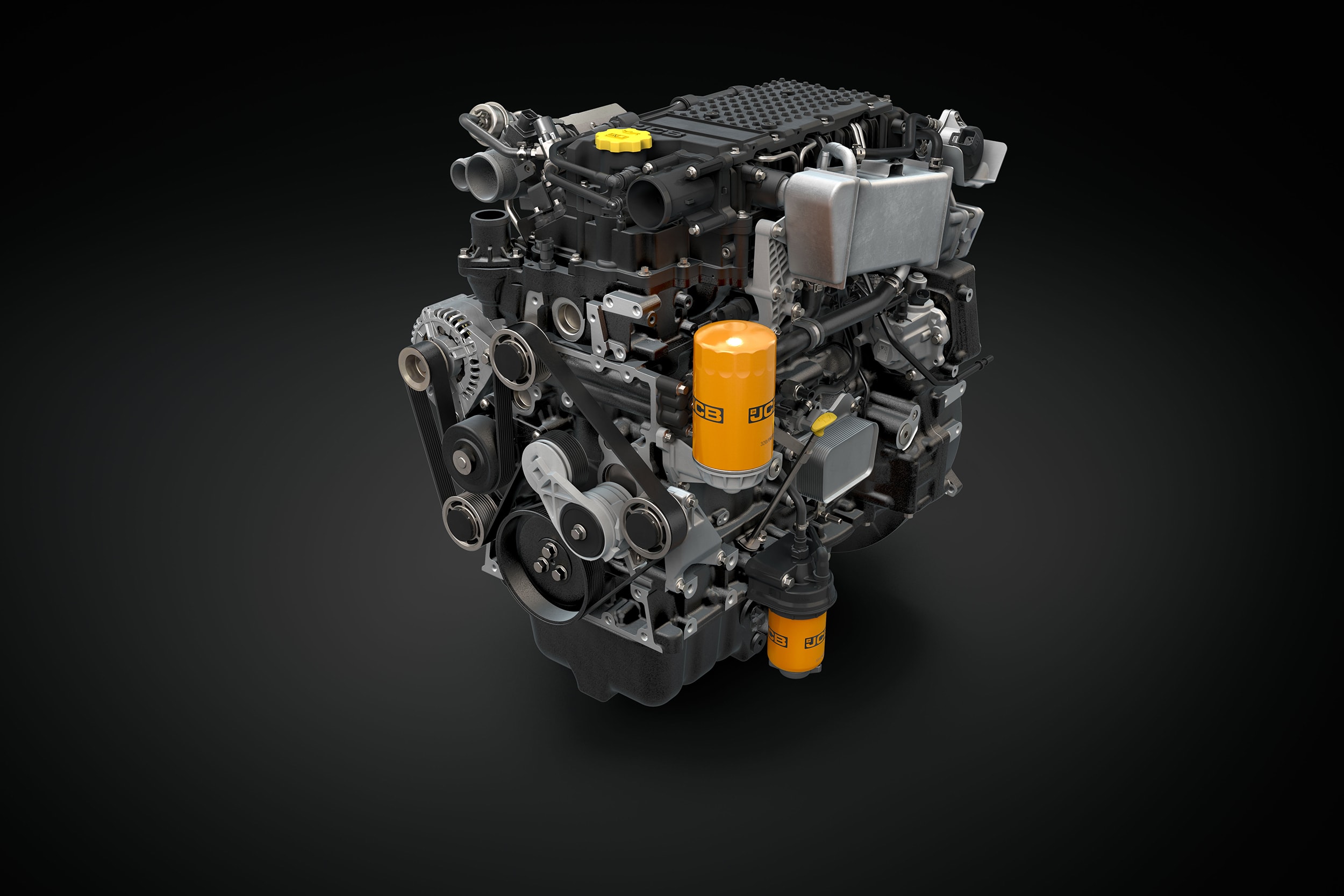
JCB is preparing to offer Stage V compliant engines across its equipment lines, with updates to its own engine range and changes to supplier models. Group director of engines Alan Tolley said that the company has preferred to tackle emissions within the combustion system, rather than simply adding aftertreatment to the exhaust system; however, for Stage V, diesel particulate filters (DPFs) and selective catalytic reduction (SCR) will become necessary.
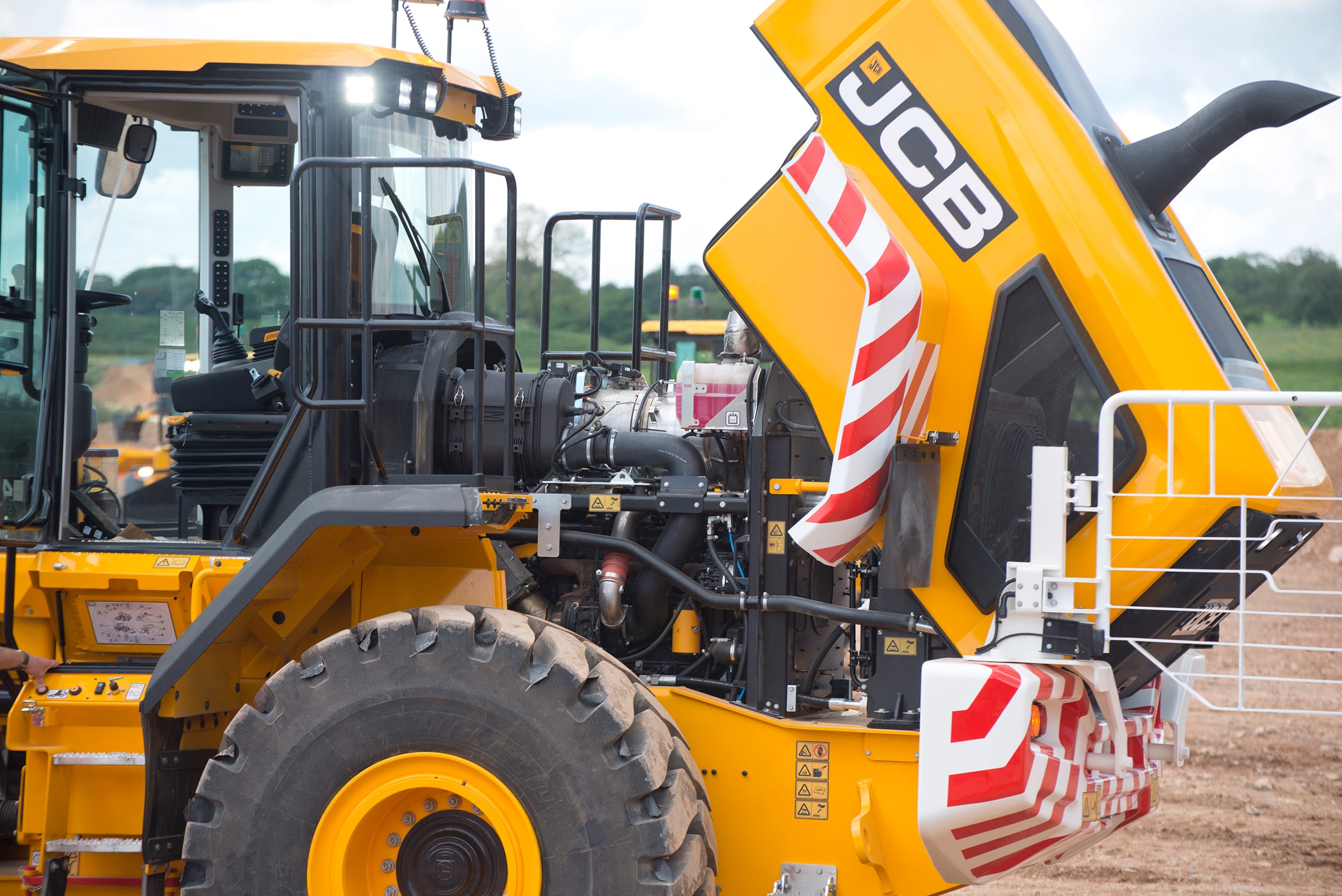
“Stage V calls for a further reduction in particulate matter, but it has been our focus for a long time,” said Tolley. “JCB fully believes that diesel engines will continue to play a major role in powering construction equipment for the foreseeable future.”
The company’s smallest engine, the 3.0-L 430 Dieselmax, delivers 55 kW (74 hp) and 440 Nm (325 lb-ft) at 1,150 rpm. The engine, which is fitted to many of the company’s Loadall telescopic handlers, its backhoe loaders and large platform skid steer and compact tracked loaders, is equipped with a “one-can” DPF/DOC (diesel oxidation catalyst). The 430 has hydraulic valve lash adjusters and a sealed-for-life crankcase ventilation module, eliminating filter replacement. It also boasts auto-stop technology to further reduce emissions. Service intervals remain at 500 hours.
Higher up the power range, JCB has opted for a 210-kW (282-hp) Cummins QSB6.7 diesel engine to power its 457 wheeled loading shovel in Stage V countries. Operators will be able to choose between two power modes from within the cab, reducing engine output to 167 kW (224 hp) in lighter duties to cut fuel consumption and emissions. The machine will also now be equipped as standard with a five-speed Powershift transmission, instead of the previous four-speed unit.
“Telematics tell us that many machines around the world are only running at part load, so we have designed power modes onto the machines,” said Joe Eddlestone, wheeled loader product marketing manager.
The Cummins engine will be equipped with an auto shutdown feature and the combination of the new engine and transmission will deliver a claimed 10% improvement in fuel consumption. A wide-core cooling pack, previously an option on the 457, will become standard on the Cummins-powered loader.
The 457 will continue to be powered by a 192-kW (258-hp) MTU engine in Tier 4 Final territories such as North America, as the MTU engine meets the emissions standard without the use of a DPF.
JCB will also use Stage V Cummins engines in its 437 and 427 models. The 437 gets a power boost at Stage V, from 136 to 145 kW (183 to 195 hp). The 427 will be equipped with a 123-kW (165-hp) Cummins motor. Both machines also adopt a five-speed Powershift transmission and auto shutdown, while the 437 also comes with a low power mode.
The smaller 407 and 409 loaders will continue to use JCB Diesel by Kohler engines to meet Stage V, though now with the addition of a DPF. Power outputs are unchanged, though auto shutdown has now been included. The 407 will also come with a “whisper quiet” Rexroth hydraulic pump to reduce overall noise levels. An Eco Drive Mode has also been incorporated in the hydrostatic driveline, to make up to a 16% fuel saving at higher speeds.
For the smallest 403 model, JCB will offer a choice of the current 26-kW (36-hp) engine, alongside a Smart Power 19-kW (25-hp) version, for those customers seeking ultimate fuel economy.
More From SAE Media Group
Off-Highway Engineering
Cummins Cylinder Deactivation Saves on Fuel and Emissions
Off-Highway Engineering
Kubota Enters Stand-On Track-Loader Segment with New SCL1000
Off-Highway Engineering
Cummins, Tula Test ‘Dynamic’ Cylinder Deactivation for Diesels
Off-Highway Engineering
JCB Adds Three New X Series Crawler Excavators
Off-Highway Engineering
Cummins’ New Mid-Displacement Turbos Quieter and More Efficient
Off-Highway Engineering
Developments in Engine-Based Gensets
Off-Highway Engineering
Westport Awarded LNG Development Program
Off-Highway Engineering
Shell Details Upcoming Engine-Oil Developments
Off-Highway Engineering
Navistar’s ‘Ground Up’ Approach to All-New Diesel Engine
Off-Highway Engineering
Hybrids Are Having a Moment
Automotive Engineering
Eaton Goes Internal with Its Next-Generation EGR Solution
Automotive Engineering
Engine Researchers: 50% Gasoline-Engine Efficiency in Sight
Automotive Engineering
Mahle Reveals ‘Fits All’ Modular and Scalable Integrated Hybrid Powertrain
Off-Highway Engineering
Cummins Unveils EPA-Compliant 2021 Heavy-Duty Diesels
Off-Highway Engineering
Maintaining Protection for Next-Gen HD Engine Lubricants
Automotive Engineering
Extending the ICE Age: Hyundai Optimizing Engines and Fuels
Off-Highway Engineering
HD Hyundai Rolls out a Slew of New Machines
Off-Highway Engineering
Many ICE Paths Lead to Reduced Emissions
Off-Highway Engineering
Global Emissions Regs Demand Differing Engine Strategies
Off-Highway Engineering
Detroit DD15 Gen 5 Showcases Durability of New Diesel Tech
Off-Highway Engineering
FPT Tech Day Reveals Cursor X Concept, Other 4.0 Innovations
Off-Highway Engineering
Advancing Aftertreatment
Automotive Engineering
GM’s Diesel-Emissions Strategy for 95 G/km and Beyond
Off-Highway Engineering
SwRI Rolls out Hydrogen Demonstration Truck
Off-Highway Engineering
Response to More-Rigid NOx and GHG Regs
Off-Highway Engineering
Combustion Engines Carry on in Construction
Off-Highway Engineering
Caterpillar Reveals Seven New Next-Gen Excavators, Increases Push for Remote Control
Off-Highway Engineering
New Biodiesel Strains Offer Measurable Gains
Off-Highway Engineering
Jacobs Employs Cylinder Deactivation in HD Engines to Lower CO2, NOx
Off-Highway Engineering
Gasoline Fuels Growing Number of Commercial Vehicles
Top Stories
NewsSensors/Data Acquisition
 Microvision Aquires Luminar, Plans Relationship Restoration, Multi-industry Push
INSIDERRF & Microwave Electronics
 A Next Generation Helmet System for Navy Pilots
INSIDERWeapons Systems
 New Raytheon and Lockheed Martin Agreements Expand Missile Defense Production
NewsAutomotive
 Ford Announces 48-Volt Architecture for Future Electric Truck
INSIDERAerospace
 Active Strake System Cuts Cruise Drag, Boosts Flight Efficiency
ArticlesTransportation

Webcasts
Aerospace
 Cooling a New Generation of Aerospace and Defense Embedded...
Energy
 Battery Abuse Testing: Pushing to Failure
Power
 A FREE Two-Day Event Dedicated to Connected Mobility
Automotive
 Quiet, Please: NVH Improvement Opportunities in the Early Design Cycle
Electronics & Computers
 Advantages of Smart Power Distribution Unit Design for Automotive &...
Unmanned Systems
 Sesame Solar's Nanogrid Tech Promises Major Gains in Drone Endurance