




Just Say the Words: What3words

If you’re standing in the middle of New York’s Rockefeller Center or on beachside road outside Cape Town, how do you tell a rideshare where to pick you up? Most places on our planet, from fields and beaches to parking lots, lack an address. And sometimes the number is on a front door that’s hard to find, or around the block.
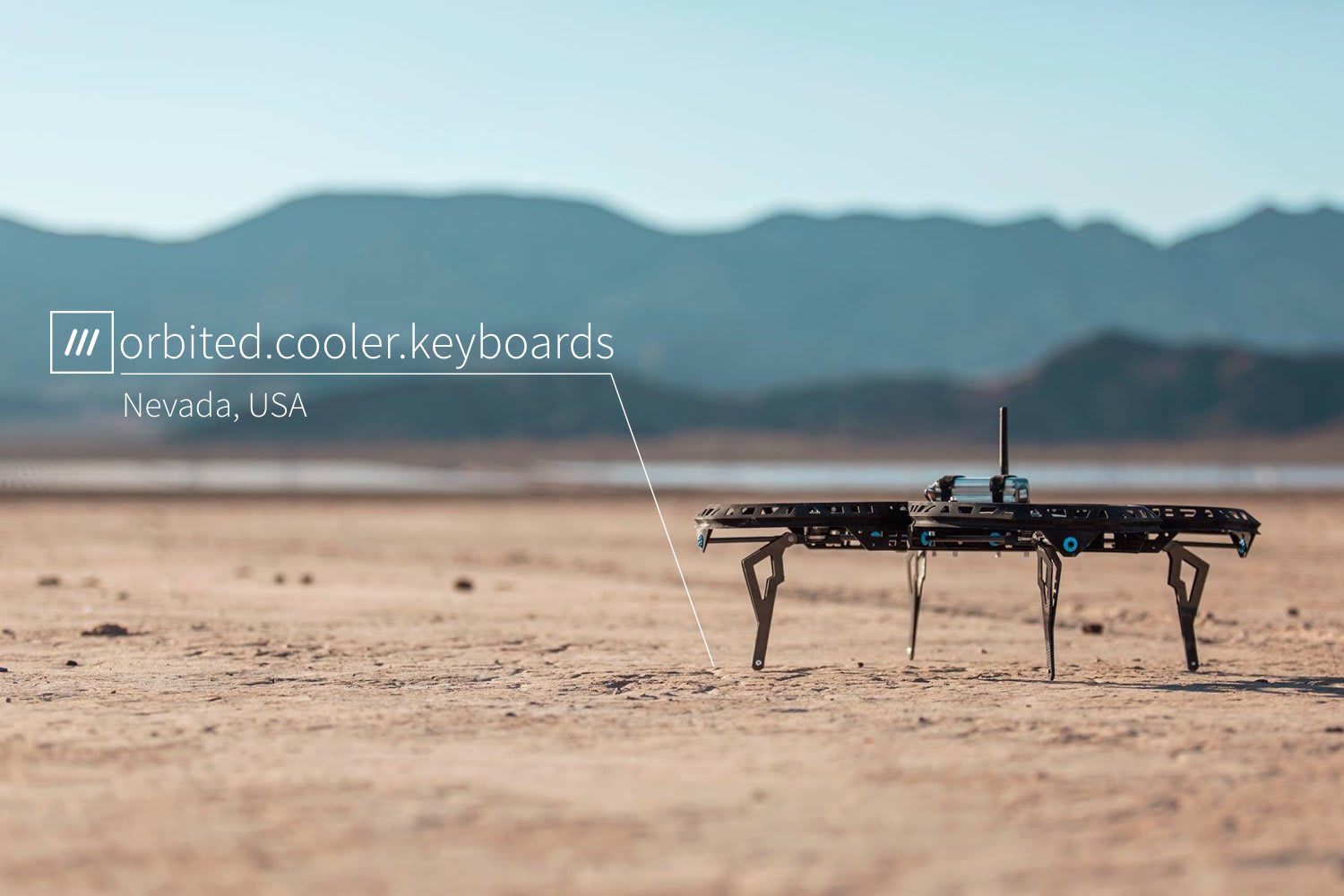
Our current address system, developed in the 18th century for postal delivery, is frightfully imprecise.
A decade ago, this imprecision was causing problems for a British concert promoter named Chris Sheldrick. He struggled to tell delivery companies exactly where to drop off drums sets or to direct musicians from their hotel to the correct backstage door. Computers didn’t have this problem, Sheldrick knew. With geo-mapping, they could pinpoint any place on earth by its longitude-latitude coordinates—New York’s Statue of Liberty, for example, was 40.6892° N, 74.0445°. But try giving longitude and latitude coordinates to an acid-rock drummer and see if he gets to the show.
The trick, Shedrick saw, was to create a navigation system for the post-postal economy. This is the almost magical idea of What3words.
The company has mapped the world as a grid of 57 trillion squares. Each one is three square meters and each has its own “tag”—a combination of three words separated by periods. Astonishingly, the whole scheme requires just 38,000 words (less than a quarter of the 171,000 words in the Oxford English Dictionary) to cover the entire planet.
And it’s blazingly precise. The torch of the Statue of Liberty, for example, is “toned.melt.ship.” in the what3words universe. The nearby cafe on the island is “puzzle.pies.ties, and the flagpole plaza is “corn.camps.spite.” In this scheme, every place on earth is many places, each with its own address.
What3words is positioning itself as the navigation app for the next phase of mobility—whether for locating dockless scooters in Santa Monica, summoning an flying drone taxi in Dubai, delivering food to famine victims in Yemen, even finding a parked car at Disney World.
The key, as in most digital technologies, is for the app to entrench itself as a standard. Already, the company has deployed the app in 26 languages. And what3words already has scored a production-vehicle coup with its installation on the 2018 Mercedes Benz A-Class, where it’s linked to the speech-enabled navigation system. Just say “Gosh.weds.lost,” and the vehicle navigation system will direct you to the centerfield gate at Chicago’s Wrigley Field.
But in coming years, mapping will need to cover more than 57 trillion squares of global real estate. How to tell a drone, for example, to deliver dim sum to a 14th-story balcony in Hong Kong? “We’re looking at vertical,” says the company’s chief marketing officer, Giles Rys Jones. The challenge is to add a new dimension of complexity while staying true to the human-friendly formula—still, preferably, with just three words.
More From SAE Media Group

Autonomous Vehicle Engineering
Hopeful but Closer Scrutiny for SAE Level 4 Automation
Aerospace & Defense Tech Briefs
Boeing, SparkCognition Partner on Safe Integration of Autonomous Air Vehicles in Airspace
NASA Spinoff
Bringing Hybrid Power to the Rescue
Tech Briefs
Air Traffic Simulation Tool
Aerospace & Defense Tech Briefs
Alakai Technologies Unveils the World’s First Hydrogen-Powered Urban Air Mobility Vehicle
Automotive Engineering
ICE and Hybrid-Electric Propulsion Show Staying Power

Automotive Engineering
2019 World Traffic Safety Symposium Focuses on AV Regulation

Automotive Engineering
CES 2025: Bosch Goes Right with Wrong-Way Alerts, Racing Hand Controls
Aerospace & Defense Tech Briefs
EU to Deploy UAV Traffic Management System by 2019
Off-Highway Engineering
Hexagon Bullish on CNG for Long-Haul Trucks
NASA Spinoff
Swinging the HAMR
Aerospace & Defense Tech Briefs
SAE International Extends Call for Abstracts, Seeks Submissions for AeroTech Conference
Battery & Electrification Technology
Extending Battery Life of Small Drones
Off-Highway Engineering
Addressing Electromagnetic Compatibility in the Context of Aircraft Electrification
Off-Highway Engineering
COMVEC 2022: Electrification Is the Future for Defense Vehicles
Off-Highway Engineering
FPT’s Battery Pack Dives into Marine Market
Automotive Engineering
Sensor Fusion Expanding in Step with Advancing Vehicle Sophistication
Off-Highway Engineering
ACT Expo: Honda Shows Class 8 Hydrogen Fuel-Cell Truck Concept

Automotive Engineering
Reducing the Battery Materials Supply Risk
Automotive Engineering
Hydrogen Storage in a Box!
Automotive Engineering
Q&A: Owl AI Making Better ADAS Systems with Help from Drones
Aerospace & Defense Tech Briefs
Curtiss-Wright Black Boxes Receive European Approval
Off-Highway Engineering
Hybrid Powertrains in the Product Mix
Off-Highway Engineering
ACT Expo 2025: Heavy-Duty EVs, H2 Trucks and Tariff Talk Dominate Day One
Top Stories
INSIDERManufacturing & Prototyping
 How Airbus is Using w-DED to 3D Print Larger Titanium Airplane Parts
INSIDERManned Systems
 FAA to Replace Aging Network of Ground-Based Radars
NewsTransportation
 CES 2026: Bosch is Ready to Bring AI to Your (Likely ICE-powered) Vehicle
NewsSoftware
 Accelerating Down the Road to Autonomy
EditorialDesign
 DarkSky One Wants to Make the World a Darker Place
INSIDERMaterials
 Can This Self-Healing Composite Make Airplane and Spacecraft Components Last...
Webcasts
Defense
 How Sift's Unified Observability Platform Accelerates Drone Innovation
Automotive
 E/E Architecture Redefined: Building Smarter, Safer, and Scalable...
Power
 Hydrogen Engines Are Heating Up for Heavy Duty
Electronics & Computers
 Advantages of Smart Power Distribution Unit Design for Automotive...
Unmanned Systems
 Quiet, Please: NVH Improvement Opportunities in the Early Design...
