




Advancing 3D-Printed NdFeB Magnets

Magnet Applications, Inc. (DuBois, PA), a Bunting Magnetics Co., has made a technology advancement in 3D-printed neodymium iron boron (NdFeB) magnets. According to Magnet Applications, engineers from the company, working together with researchers at Oak Ridge National Laboratory (ORNL), have proven that permanent magnets produced by additive manufacturing outperform bonded magnets using traditional methods with less waste. The company claims they manufactured the starting composite pellets with 65 volume % isotropic NdFeB powder and 35% polyamide nylon-12 binder in a precise ratio, blended to a consistent texture. The 3D printing was performed at ORNL with the Big Area Additive Manufacturing (BAAM) system. “Additive manufacturing in magnets provides multiple benefits,” said Magnet Applications' Dr. John Ormerod, Senior Technical Advisor. “They have more design flexibility." NdFeB magnets are the most powerful on earth, and are used in a variety of applications including robotics, wind turbines, electric vehicles, electric motors and other consumer and industrial equipment. The complete study is published in Scientific Reports. For more information, visit here .
More From SAE Media Group
Tech Briefs
Sustainable 3D-Printed Magnets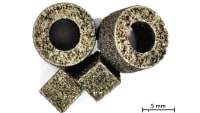

Tech Briefs
Revolutionizing Solid-State Metal 3D Printing
Medical Design Briefs
Interlocking Metasurfaces Improve Structural Strength


Tech Briefs
Magnetic, 3D-Printed, Moving Structures
Aerospace & Defense Tech Briefs
Portable 3D Printing Factory

Motion Design INSIDER
‘Metabots’ Shapeshift from Flat Sheets into Hundreds of Structures

Tech Briefs
Calibration System for Automated Fiber Placement

Motion Design
3D-Printed Miniature Magnetic Pump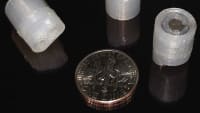
Tech Briefs
An Automatic Drawing Machine for Metamaterials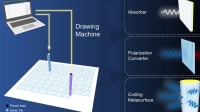
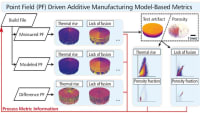
Tech Briefs
Miniscule Robots of Metal and Plastic

Aerospace INSIDER
A New Approach to 3D Printing Tool Recycling for Aerospace Manufacturers
Motion Design INSIDER
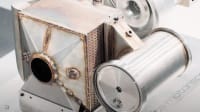
Printing a Better Actuator




Tech Briefs
Single-Step 3D-Printing Process to Build Robots
Tech Briefs
New High-Speed Microscale 3D-Printing Technique
Tech Briefs
AI Discovers Stiff and Tough Microstructures
Aerospace & Defense Tech Briefs
Shape-Shifting Antenna Poised to Transform Communications
Top Stories
INSIDERDesign
 How Airbus is Using w-DED to 3D Print Larger Titanium Airplane Parts
NewsAutomotive
 Microvision Aquires Luminar, Plans Relationship Restoration, Multi-industry Push
INSIDERRF & Microwave Electronics
 A Next Generation Helmet System for Navy Pilots
ArticlesDesign
 CES 2026: Bosch is Ready to Bring AI to Your (Likely ICE-powered) Vehicle
Road ReadyAutomotive
 2026 Nissan Sentra Review: Putting the Pieces Together
NewsUnmanned Systems

Webcasts
Power
 Hydrogen Engines Are Heating Up for Heavy Duty
Electronics & Computers
 Advantages of Smart Power Distribution Unit Design for Automotive...
Transportation
 Quiet, Please: NVH Improvement Opportunities in the Early Design...
Energy
 Battery Abuse Testing: Pushing to Failure
Connectivity
 A FREE Two-Day Event Dedicated to Connected Mobility
Aerospace
 SiPhog Technology: Enabling GPS‑Independent Flight for Uncrewed Aerial...