




Nissan's New Direct-Injection V6 Muscles 2017 Pathfinder to 6000-Lb Towing Crown

The most significant mid-cycle revamp in the Nissan Pathfinder’s 30-year history provides the midsize SUV with a 6000 lb (2722 kg) towing capacity, a full half-ton improvement versus the 2016MY vehicle.
Chris Reed, Nissan North America's Vice President of Component Engineering and the Overseas Chief Vehicle Engineer for D-Platform SUVs, explained that the MY17 engineering changes were primarily focused on handling and performance. "The re-engineered V6 engine has a 10% horsepower and torque improvement without compromising fuel economy. And that higher performance output is balanced with a re-tuned steering system and an upgraded suspension system that improves the driving experience, even when towing,” Reed told Automotive Engineering at the Pathfinder’s recent media launch.
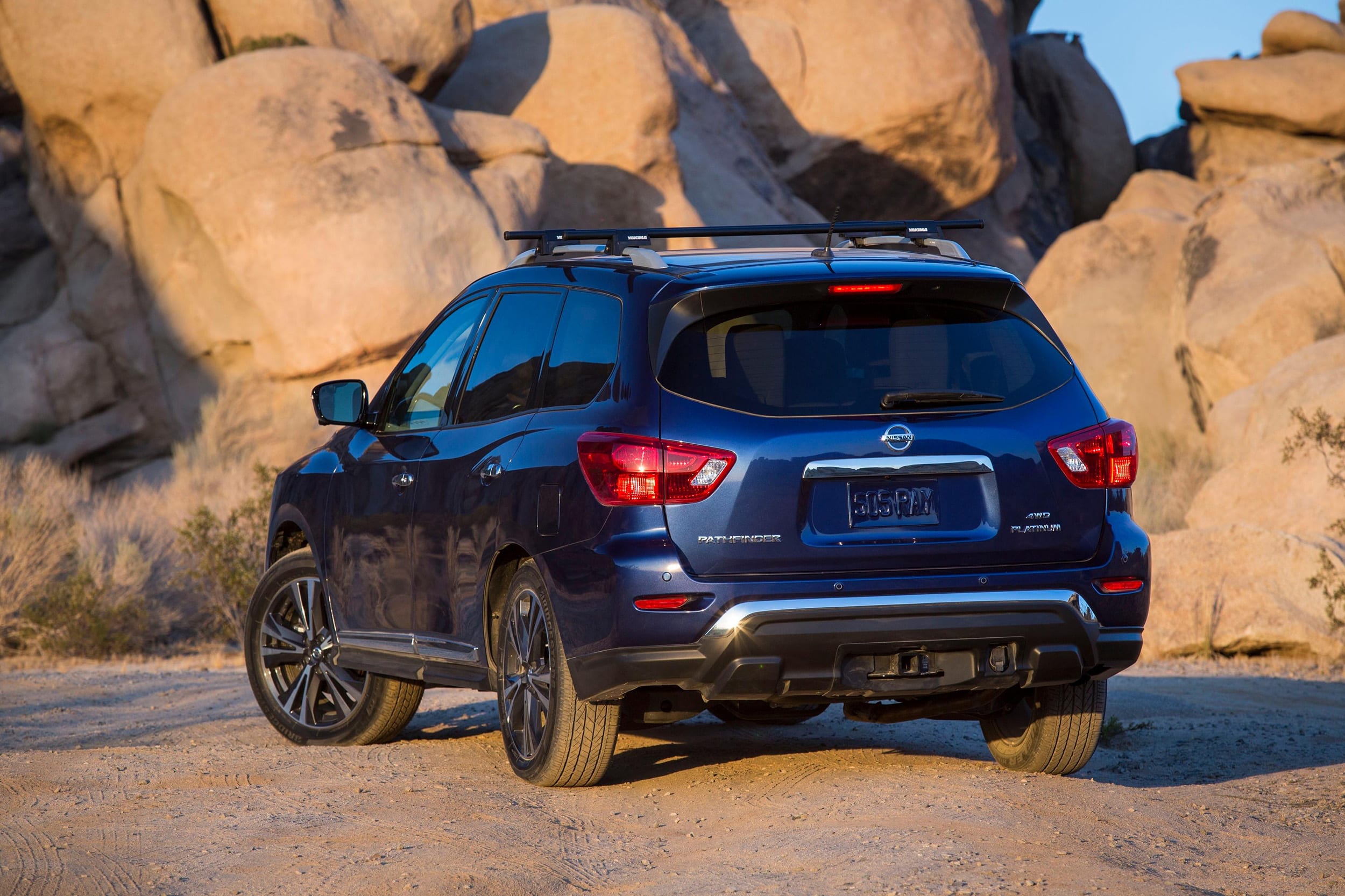
Boosting the maximum towing capacity by an additional 1000 lb (454 kg) called for significant enhancements to the powertrain and suspension, including 11% stiffer front shock absorbers, 7% stiffer rear shocks, with rear rebound spring rates increased by 25%. “We also added rebound springs to the front struts to improve the roll balance and body control,” said Reed.
The latest VQ-series 3.5-L gasoline V6 carries a 'DD' suffix, denoting direct fuel injection. With the new DI comes 11:1 compression ratio, up from 10.3:1 on the previous sequential multi-port injected V6. Air intake system revisions entailed software and hardware changes (including new fully electronic cam timing on the intake side) that improve airflow characteristics.
The result is greater peak power (284 hp at 6000 rpm) and torque (259 lb-ft at 4800 rpm)—improvements of 24 hp (18 kW) and 19 lb·ft (26 N·m), respectively, versus the 2016 engine. And the additional output comes 400 rpm lower on the rev range than the power and torque peaks of the previous engine. To reduce friction between the piston rings and the cylinder wall, the VQ35DD’s cylinder bores are cast with a molten iron surface layer, referred to by Reed as mirror bore coating. Used first by Nissan North America, this technology replaces the previous cast iron cylinder liners and yields about 3 lb (1.4 kg) of weight savings.
The new V6 mates to a third-generation Xtronic continuously variable transmission developed by JATCO. “As one example, this next-generation transmission’s optimizations helps keep the engine rpm stable while towing,” Reed said.
Engine cooling was a key focus during the new Pathfinder's development The truck's new "V-motion" grille opening was designed to boost airflow to the higher output V6 during towing. Said Reed: “It’s all about getting the right amount of air with the right pressure and flow through the engine to keep the components at the right temperature.”
More From SAE Media Group
Automotive Engineering
2022 Nissan Rogue Gets a VC Turbo Triple
Automotive Engineering
Ford Pumps Powertrains for 2018 F-150
Automotive Engineering
Lithium-Free Corvette Z06: More Sting for the 2023 Stingray
Automotive Engineering
Nissan's New Twin-Turbo V6 Powers 2016 Infiniti Q50
Automotive Engineering
New-Gen Torque Converter Aims at 2017 Vehicle Intro
Off-Highway Engineering
Perkins Offers Electronic Engine Range for Lesser Regulated Countries
Automotive Engineering
2019 Chevrolet Blazer: Sharply Styled and Right-Sized for the Voracious SUV Market
Automotive Engineering
Mazda’s 2024 CX-90 Offers Turbo I-6, PHEV Propulsion
Automotive Engineering
Sunset for the American V8
Automotive Engineering
Musclecar Godzilla: Dodge Reveals 840-Hp Challenger SRT Demon
Automotive Engineering
Balancing the Scales in Dakar
Automotive Engineering
2019 Dodge Challenger: Deceased Demon Seeds Stronger and Wider Muscle-Car Lineup
Automotive Engineering
FCA Turbocharges the 2019 Jeep Cherokee
Automotive Engineering
2019 Chevrolet Silverado 2.7L
Automotive Engineering
Engine Researchers: 50% Gasoline-Engine Efficiency in Sight
Automotive Engineering
Nissan Variable-Compression Engine Gets First Shot at Volume with New 2019 Altima
Off-Highway Engineering
Engineering the World’s Fastest Tractor
Automotive Engineering
Renault Reboots Espace with Crossover Leanings
Off-Highway Engineering
Turbo Compounding, I-Shift with Crawler Gears New to Volvo's 2017 Powertrain Lineup
Automotive Engineering
Flat-Plane Crankshaft Spins 'Voodoo' into Ford’s New Shelby V8
Automotive Engineering
Cadillac Reveals 2025 CT5-V and CT5-V Blackwing with More Tech
Off-Highway Engineering
Navistar Updates A26 Engine, Improves FE by 4%
Automotive Engineering
What We’re Driving: 2018 BMW M5
Automotive Engineering
2015 Ford Edge Boasts New 2.0-L EcoBoost Engine
Off-Highway Engineering
Compact Engines
Automotive Engineering
What We’re Driving: 2020 Acura RDX
Automotive Engineering
GM details Corvette’s new and mighty LT6 V8
Automotive Engineering
Volvo XC90 Line-Up Keeps Hybrid Futures Safe
Automotive Engineering
2017 Porsche Boxster Loses Cylinders, Gains Power, Adds Frugality
Automotive Engineering
Engineering Ford’s Jumbo SUV for Off-Roading
Top Stories
INSIDERManufacturing & Prototyping
 How Airbus is Using w-DED to 3D Print Larger Titanium Airplane Parts
INSIDERManned Systems
 FAA to Replace Aging Network of Ground-Based Radars
NewsTransportation
 CES 2026: Bosch is Ready to Bring AI to Your (Likely ICE-powered) Vehicle
NewsSoftware
 Accelerating Down the Road to Autonomy
EditorialDesign
 DarkSky One Wants to Make the World a Darker Place
INSIDERMaterials
 Can This Self-Healing Composite Make Airplane and Spacecraft Components Last...
Webcasts
Defense
 How Sift's Unified Observability Platform Accelerates Drone Innovation
Automotive
 E/E Architecture Redefined: Building Smarter, Safer, and Scalable...
Power
 Hydrogen Engines Are Heating Up for Heavy Duty
Electronics & Computers
 Advantages of Smart Power Distribution Unit Design for Automotive...
Unmanned Systems
 Quiet, Please: NVH Improvement Opportunities in the Early Design...
