




Nanotechnology May Provide Self-Cleaning, Energy-Saving 'Smart Glass' for Vehicles

Improving driver visibility is a major aspect of vehicle safety that is increasingly supported by stereo cameras, LiDAR, and infrared systems. But fundamental to visibility is being able to see clearly through clean glass windows, and front and rear windshields.
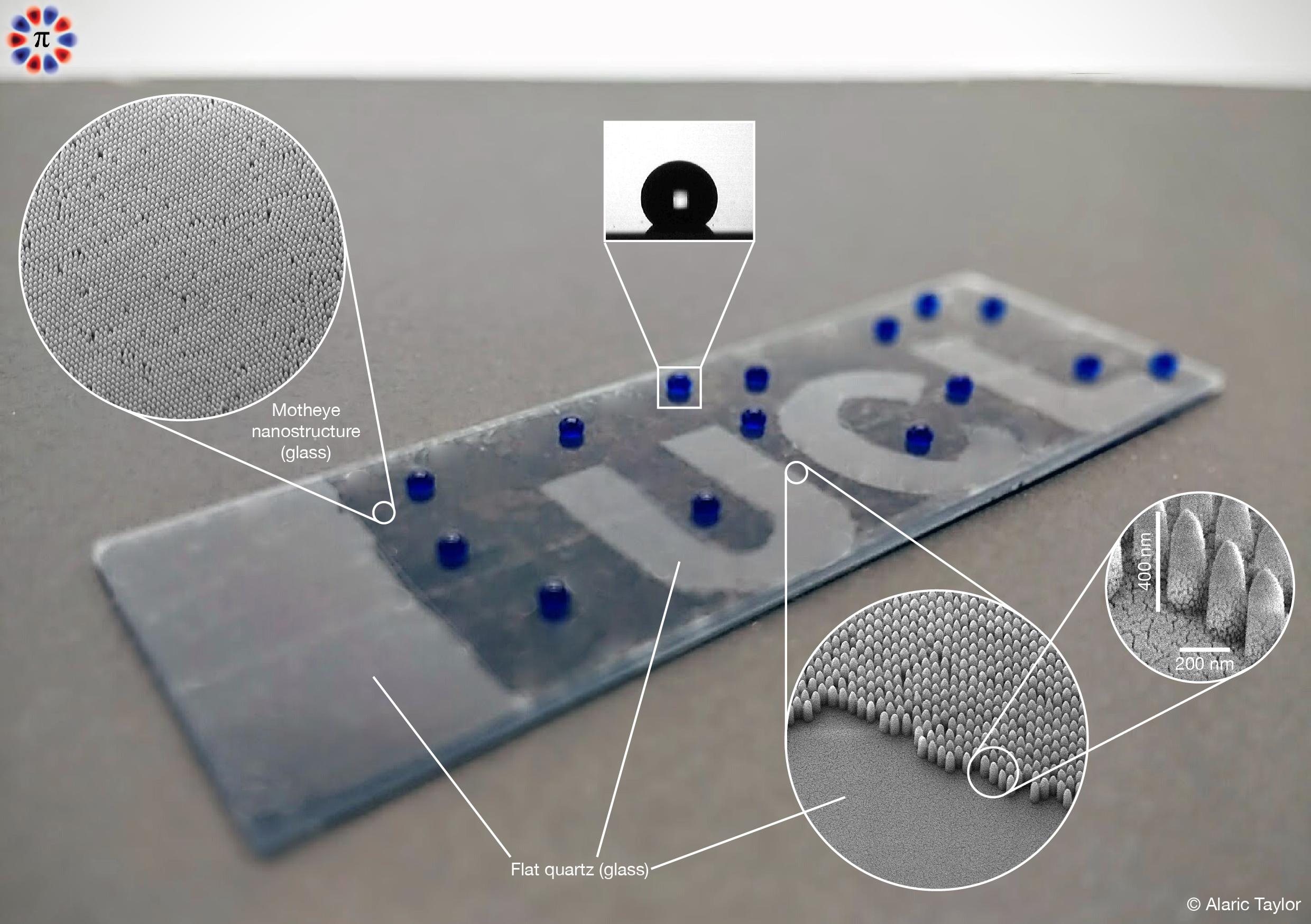
Now, researchers at a U.K. university have revealed a "smart" window solution for buildings that may also be applicable to vehicles. It uses nanotechnology to achieve not only self-cleaning but also delivers energy saving and anti-glare properties.
“This is the first time that a nanostructure has been combined with a thermochromic coating,” said Dr. Ioannis Papakonstantinou of the Department of Electronic and Electrical Engineering, University College London (UCL). “The bio-inspired nanostructure amplifies the thermochromic properties of the coating, and the net result is a self-cleaning, highly performing smart window.”
As project leader of a highly specialist team, Papakonstantinou said initial applications of nanostructures could be to skyscraper windows but at present he believes that in theory there was no reason why the system could not be extrapolated to road vehicles provided it met required safety standards and other legislation.
“It should, because it simply involves application of a coating of about one micron. But of course there would need to be a test program to establish—for example, how quickly water droplets would flow down automotive glass, particularly the windshield.”

The research work at UCL is being supported by the U.K.’s Engineering and Physical Sciences Research Council, and prototype examples of the technology are said to confirm that the three key benefits can be delivered.
The self-cleaning application sees rain hitting a glass surface to form spherical droplets that roll easily across that surface carrying away dust, dirt, and any other contaminants. Explained Papakonstantinou: “This is due to the pencil-like, conical design of nanostructures engraved onto the glass, trapping air and ensuring that only a tiny amount of water comes into contact with the surface.”
Regular glass typically sees raindrops clinging to the surface before sliding down, leaving marks.
To achieve energy saving, a glass surface is coated with a 5- to 10-nm (0.2- to 0.4-µin) film of vanadium dioxide (a cheap and abundant material), which prevents heat loss or, in hot climates, prevents solar IR entering the vehicle.
“The design of the nanostructures also gives the windows the same anti-reflective properties found in the eyes of moths and other creatures to hide them from predators!” noted Papakonstantinou. “It cuts the amount of light reflected internally in a room to less than 5% compared to 20-30% achieved by other prototype vanadium-dioxide-coated energy saving windows.”
He stressed that the UCL findings are the result of a research project and that the next big step would be to scale-up the nano manufacturing techniques and the vanadium-dioxide coating process used to create the prototypes. For this purpose, Papakonstantinou has secured a €1.8M grant from the European Research Council.
The UCL team also includes Prof. Ivan Parkin of the university’s Department of Chemistry, and researcher Alaric Taylor of the Department of Electronic and Electrical Engineering.
More From SAE Media Group
Power Electronics INSIDER
World’s Strongest Battery Paves Way for Light, Energy-Efficient Vehicles
Tech Briefs
5 Ws of Invisible Glass
Aerospace & Defense Tech Briefs
The Next Material Disruption
Tech Briefs
Scaling Up Nano for Sustainable Manufacturing
Automotive Engineering
Sealing the Future of in-wheel Motors: Low Friction and Maximum Protection
Automotive Engineering
Plasma Process Could Cut Carbon Fiber Costs
Automotive Engineering
High-Strength Sheet Steel That Bends
Tech Briefs
Why Hasn’t 3D Printing Caught On in Automotive?
Tech Briefs
Strong, Stretchy, 3D-Printed Metamaterials
Tech Briefs
Self-Growing 3D Objects


Tech Briefs
Self-Cleaning, Non-Stick Coating
Automotive Engineering
The Transformative Power of Large-Format Additive Manufacturing for Automotive
Tech Briefs
Self-Propelled Nanorobots
Photonics & Imaging Technology INSIDER
Stanford Researchers Develop Flexible Color-Changing Material
Defense INSIDER
Scientists Explore Nanoparticles for Future Weapon Systems
Photonics & Imaging Technology
Deformation Fingerprints Will Help Researchers Identify, Design Better Metallic Materials

Automotive Engineering
Graphene: Living in a Stronger Material World?

Robotics & Automation INSIDER
A New Way to Build Soft Robots That Can Walk on Water
Photonics & Imaging Technology
Measuring Surface Roughness with an Atomic Force Microscope
Motion Design
Intelligent Microrobots
Tech Briefs
Method Sprays Extremely Thin Wires on 3D Objects

Tech Briefs
Self-Cleaning Coatings for Space or Earth
Tech Briefs
Nanoscale Pillars Act as Memory Foam
Top Stories
INSIDERManufacturing & Prototyping
 How Airbus is Using w-DED to 3D Print Larger Titanium Airplane Parts
INSIDERManned Systems
 FAA to Replace Aging Network of Ground-Based Radars
NewsTransportation
 CES 2026: Bosch is Ready to Bring AI to Your (Likely ICE-powered) Vehicle
NewsSoftware
 Accelerating Down the Road to Autonomy
EditorialDesign
 DarkSky One Wants to Make the World a Darker Place
INSIDERMaterials
 Can This Self-Healing Composite Make Airplane and Spacecraft Components Last...
Webcasts
Defense
 How Sift's Unified Observability Platform Accelerates Drone Innovation
Automotive
 E/E Architecture Redefined: Building Smarter, Safer, and Scalable...
Power
 Hydrogen Engines Are Heating Up for Heavy Duty
Electronics & Computers
 Advantages of Smart Power Distribution Unit Design for Automotive...
Unmanned Systems
 Quiet, Please: NVH Improvement Opportunities in the Early Design...
