




U.S. Army Shifts from Radios to VoIP Technology

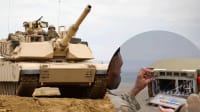
The U.S. military is moving closer to its goal of letting disparate groups of warfighters communicate freely. The U.S. Army has adopted an Internet Protocol-based communications system that lets any radio transmissions be sent over broadband networks.
The Army recently inked a deal to deploy Motorola Solutions’ WAVE software technology across its portfolio. WAVE converts two-way radio communication into a Voice over Internet Protocol (VoIP) so any authorized IP device can participate in voice communications, eliminating many of the silos that have made it difficult for various groups to communicate.
"This procurement establishes a standard solution across all Army units and the ability to link with other Department of Defense agencies including U.S. Special Operations Command and the U.S. Marine Corps," said Col. Michael Thurston, the Army’s Project Manager Mission Command.
The technology will also help military personnel communicate when they move into disaster areas, where they often work with international groups. WAVE provides seamless transitions between radios and IP-based systems. It will help vehicle drivers stay in touch over many types of communications networks.
“Radio is still the communication device of choice, but it’s impractical to have a single radio system that spans the entire world,” said James Mustarde, WAVE Broadband Product Marketing Manager at Motorola Solutions. “At some point, trucks will be beyond the range of radios. This lets them keep in touch using IP networks. We’re agnostic, it doesn’t matter whether someone has a radio or is connected to an IP network.”
The role of IP technologies in military branches is expanding rapidly. A number of DOD projects are exploring strategies for using smart phones and tablets to augment conventional communication technologies. WAVE is among the first to move from research to widespread deployment.
“If someone is using a cell phone, they can open an app that turns their smart phone into a radio handset,” Mustarde said. “Then they can basically push to talk and connect to anyone with a radio handset, including someone using a similar app on a phone or tablet.”
The Army’s WAVE contract highlights the DOD’s focus on network-centric warfare. Providing bandwidth for this changeover has been a critical focus for military planners in recent years.
“In the battlefield, bandwidth was a limiting factor,” Mustarde said. “But that’s changing rapidly, streaming video is becoming common in many zones.”
More From SAE Media Group
Aerospace & Defense Tech Briefs
Mettis Aerospace to Serve as Testbed for World’s First Wi-Fi 6-Enabled Smart Factory Technologies
Automotive Engineering
Next-Generation Infotainment System Envisioned by Mitsubishi Electric
Automotive Engineering
Securing the Software-Defined Vehicle
Automotive Engineering
High-Speed Entertainment
Off-Highway Engineering
Dynamic Weighing System
Aerospace & Defense Tech Briefs
PAE ISR Engineers Boost Resolute Eagle UAS Networking, Endurance, Payload Capacity with Persistent Systems MPU5
Off-Highway Engineering
Europe’s Blockchain-Based Smart E-Mobility Challenge Will Conclude This May in Germany
Automotive Engineering
Dual-Band Front-End Module
Automotive Engineering
New Open Source Software Simplifies Remote-Access Communications
Off-Highway Engineering
Connecting Off-Highway Vehicles in Remote Locations
Automotive Engineering
SAE Government/Industry 2018: AT&T Reaffirms Mobile 5G Trials, DSRC ‘Still Alive’
Aerospace & Defense Tech Briefs
Five-Satellite MUOS Constellation to Deliver Secure, Next-Gen SATCOM on Battlefield
Off-Highway Engineering
Danfoss Introduces Robust Telematics Platform
Off-Highway Engineering
Real-Time Jobsite Management
Aerospace Manufacturing and Machining INSIDER
Army Launches CMOSS Prototyping Competition for Computer Chassis and Cards

Aerospace & Defense Tech Briefs
Persistent Systems Auto-Tracking Antenna Adds Aircraft to Network, Enhances Data Sharing
Automotive Engineering
Vehicle Network Security Highlighted in New Concept
Aerospace & Defense Tech Briefs
Military, Suppliers Focus on Long-Term Technical Advances, Compatibility
Automotive Engineering
Hyundai Activates Its Own Cloud Server for Blue Link
Automotive Engineering
Systems Send Digital Telematics Information to Emergency Dispatchers
Aerospace & Defense Tech Briefs
How SpaceVPX is Influencing the Design of Next Generation Spacecraft Avionics
Automotive Engineering
Connectivity Advances Dominate at CES 2017
Aerospace & Defense Tech Briefs
Advances in Military Avionics Technologies Create New Challenges for RF Test and Measurement
Automotive Engineering
High-Speed Camera
Automotive Engineering
NFC Looks to Score Big in Cars
Automotive Engineering
Bridging the Automotive/consumer Electronics Product Cycle Gap
Automotive Engineering
Integrated Automotive Gateway Can Enable Connected Cars
Aerospace & Defense Tech Briefs
Clamoring for a Connection
Top Stories
INSIDERManufacturing & Prototyping
 How Airbus is Using w-DED to 3D Print Larger Titanium Airplane Parts
INSIDERManned Systems
 FAA to Replace Aging Network of Ground-Based Radars
NewsTransportation
 CES 2026: Bosch is Ready to Bring AI to Your (Likely ICE-powered) Vehicle
NewsSoftware
 Accelerating Down the Road to Autonomy
EditorialDesign
 DarkSky One Wants to Make the World a Darker Place
INSIDERMaterials
 Can This Self-Healing Composite Make Airplane and Spacecraft Components Last...
Webcasts
Defense
 How Sift's Unified Observability Platform Accelerates Drone Innovation
Automotive
 E/E Architecture Redefined: Building Smarter, Safer, and Scalable...
Power
 Hydrogen Engines Are Heating Up for Heavy Duty
Electronics & Computers
 Advantages of Smart Power Distribution Unit Design for Automotive...
Unmanned Systems
 Quiet, Please: NVH Improvement Opportunities in the Early Design...
