




Nanoparticle Networking Could Lead to Fast-Charging Batteries
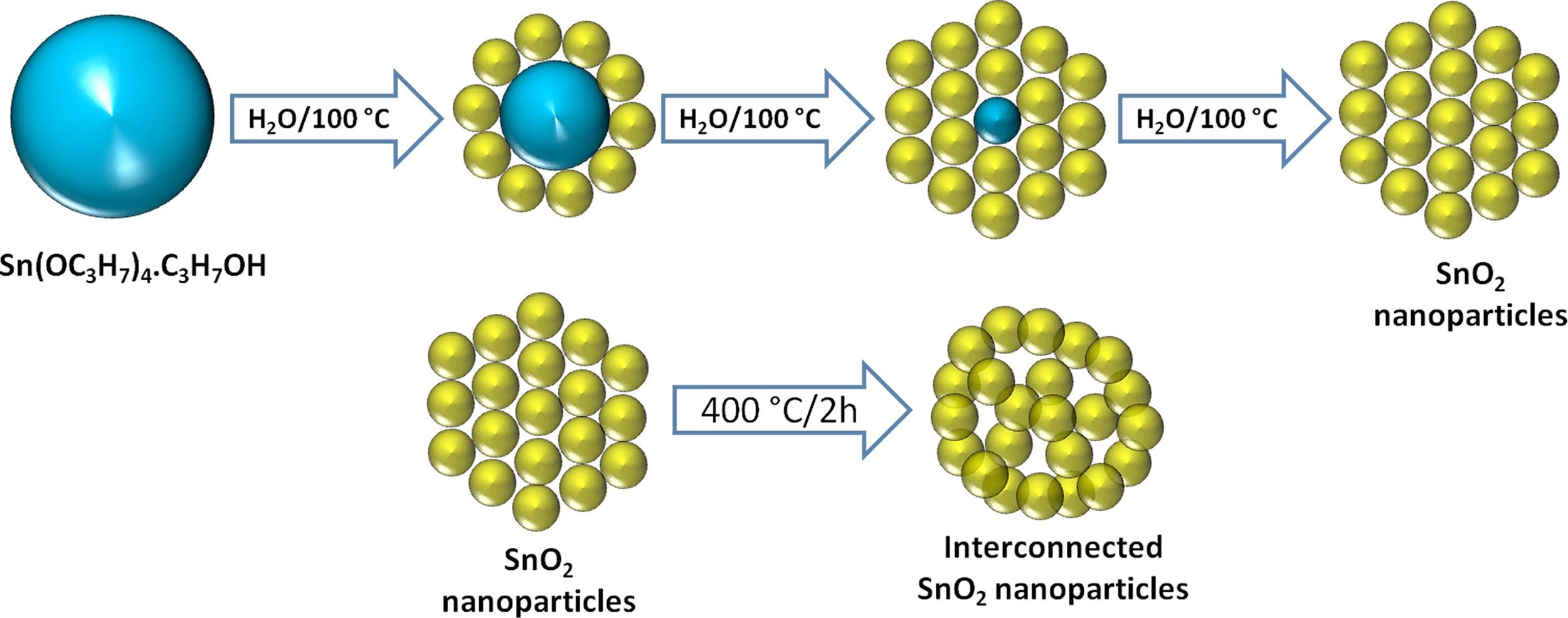
A new electrode design for lithium-ion batteries has been shown to potentially reduce the charging time from hours to minutes by replacing the conventional graphite electrode with a network of tin-oxide nanoparticles.
Batteries have two electrodes, an anode and a cathode. The anodes in most of today's lithium-ion batteries are made of graphite.
The theoretical maximum storage capacity of graphite is very limited, at 372 mA·h/g, hindering significant advances in battery technology, according to Vilas Pol, Associate Professor of Chemical Engineering at Purdue University.
Researchers have performed experiments with a "porous interconnected" tin-oxide based anode, which has nearly twice the theoretical charging capacity of graphite. The researchers demonstrated that the experimental anode can be charged in 30 minutes and still have a capacity of 430 mA·h/g, which is greater than the theoretical maximum capacity for graphite when charged slowly over 10 hours.
The anode consists of an "ordered network" of interconnected tin oxide nanoparticles that would be practical for commercial manufacture because they are synthesized by adding the tin alkoxide precursor into boiling water followed by heat treatment, Pol said.
"We are not using any sophisticated chemistry here," Pol said. "This is very straightforward rapid 'cooking' of a metal-organic precursor in boiling water. The precursor compound is a solid tin alkoxide—a material analogous to cost-efficient and broadly available titanium alkoxides. It will certainly become fully affordable in the perspective of broad-scale applications."
When tin oxide nanoparticles are heated at 400°C they self-assemble into a network containing pores that allow the material to expand and contract, or breathe, during the charge-discharge battery cycle.
"These spaces are very important for this architecture," said Purdue postdoctoral research associate Vinodkumar Etacheri. "Without the proper pore size, and interconnection between individual tin oxide nanoparticles, the battery fails."
The researchers included Swedish University of Agricultural Sciences researchers Gulaim A. Seisenbaeva, Geoffrey Daniel, and Vadim G. Kessler; James Caruthers, Purdue's Gerald and Sarah Skidmore Professor of Chemical Engineering; Jeàn-Marie Nedelec, a researcher from Clermont Université in France; and Pol and Etacheri.
Electron microscopy studies were performed at the Birck Nanotechnology Center in Purdue's Discovery Park. Future research will include work to test the battery's ability to operate over many charge-discharge cycles in fully functioning batteries
More From SAE Media Group
Automotive Engineering
Fungus-Inspired Improvements in Battery Performance
Aerospace & Defense Tech Briefs
A Look Inside Lithium-Ion Batteries
Aerospace & Defense Tech Briefs
Glassy Breakthrough for Battery Performance
Automotive Engineering
Niobium: Magic Metal for Battery Anodes?
Aerospace & Defense Tech Briefs
OXIS Energy and Bye Aerospace Partner to Develop Advanced Lithium Sulfur Battery Cells for Aviation
Aerospace & Defense Tech Briefs
The Next Material Disruption
Tech Briefs
Flexible, Water-Based Lithium-Ion Batteries


Battery & Electrification Technology
New Self-Assembling Material Could Be the Key to Recyclable EV Batteries
Aerospace & Defense Tech Briefs
Rolls-Royce and Superdielectrics Explore Supercapacitor Technology
Aerospace & Defense Tech Briefs
UCLA Researchers Develop New Strong and Lightweight Metal Nanocomposite
Battery Technology
Hybrid Membrane Doubles the Lifetime of Rechargeable Batteries
Defense INSIDER
Batteries That “Drink” Seawater Could Power Long-Range UUVs
Battery & Electrification Technology
Thick Electrodes’ Chemistry Matters More Than Structure for Battery Performance
Medical Design Briefs
Pomegranate Inspires Battery Design
Tech Briefs
Advanced Binders for Advancing Li-ion Batteries
Battery & Electrification Technology
Designing Safer, Higher-Performance Lithium Batteries
Tech Briefs
An EV Battery that Works in Sub-Zero Temperature
Aerospace & Defense Tech Briefs
Researchers Reduce Graphene-Enhanced Composite Development Time Using Neural Networks

Battery & Electrification Technology
Leading the Charge to Better Batteries
Battery & Electrification Technology
New Material Offers Promise for Solid-State Batteries
Power Management INSIDER
Potassium Metal Battery Emerges as a Rival to Lithium-Ion Technology

Battery & Electrification Technology
A New Way to Enhance Durability of Lithium Batteries
Battery & Electrification Technology
Iron Could Be Key to Less Expensive, Greener Lithium-Ion Batteries
Power Electronics INSIDER
World’s Strongest Battery Paves Way for Light, Energy-Efficient Vehicles
Top Stories
INSIDERManufacturing & Prototyping
 How Airbus is Using w-DED to 3D Print Larger Titanium Airplane Parts
INSIDERManned Systems
 FAA to Replace Aging Network of Ground-Based Radars
NewsTransportation
 CES 2026: Bosch is Ready to Bring AI to Your (Likely ICE-powered) Vehicle
NewsSoftware
 Accelerating Down the Road to Autonomy
EditorialDesign
 DarkSky One Wants to Make the World a Darker Place
INSIDERMaterials
 Can This Self-Healing Composite Make Airplane and Spacecraft Components Last...
Webcasts
Defense
 How Sift's Unified Observability Platform Accelerates Drone Innovation
Automotive
 E/E Architecture Redefined: Building Smarter, Safer, and Scalable...
Power
 Hydrogen Engines Are Heating Up for Heavy Duty
Electronics & Computers
 Advantages of Smart Power Distribution Unit Design for Automotive...
Unmanned Systems
 Quiet, Please: NVH Improvement Opportunities in the Early Design...
