




Deere Upgrades Excavators with Tier 4 Final Engines

John Deere's goals in the development of its new G-Series Final Tier 4 excavators went beyond making the machines emissions ready, but to also include design and functionality improvements that it hoped would increase performance and productivity, without compromising on sightlines and service access.

In terms of power, the 250G LC features a 188-hp (140-kW) certified Final Tier 4 John Deere PowerTech PVS 6.8-L engine. Both the 350G LC and 380G LC are powered by a certified Final Tier 4 PowerTech PSS 9.0-L engine offering 271 hp (202 kW). The fact that Deere's Final Tier 4 technology allows users to maintain or reduce total fluid consumption (diesel and DEF) is one contribution to the lowering of daily operating costs. DPF cleaning occurs automatically with no impact to machine operation, and Deere says it can go up to 15,000 hours before ash removal.
To increase uptime, Deere designed the new G-Series models with a larger hood for improved engine access. Also, the nine-pin diagnostic connector was moved into the cab to reduce diagnostic testing time for technicians. Other improvements include a single-side ground level fluid filter service, which moves the engine oil, fuel, and hydraulic pilot oil filters to ground level on the right side of the machine and adds a service door for easy access to change filters.
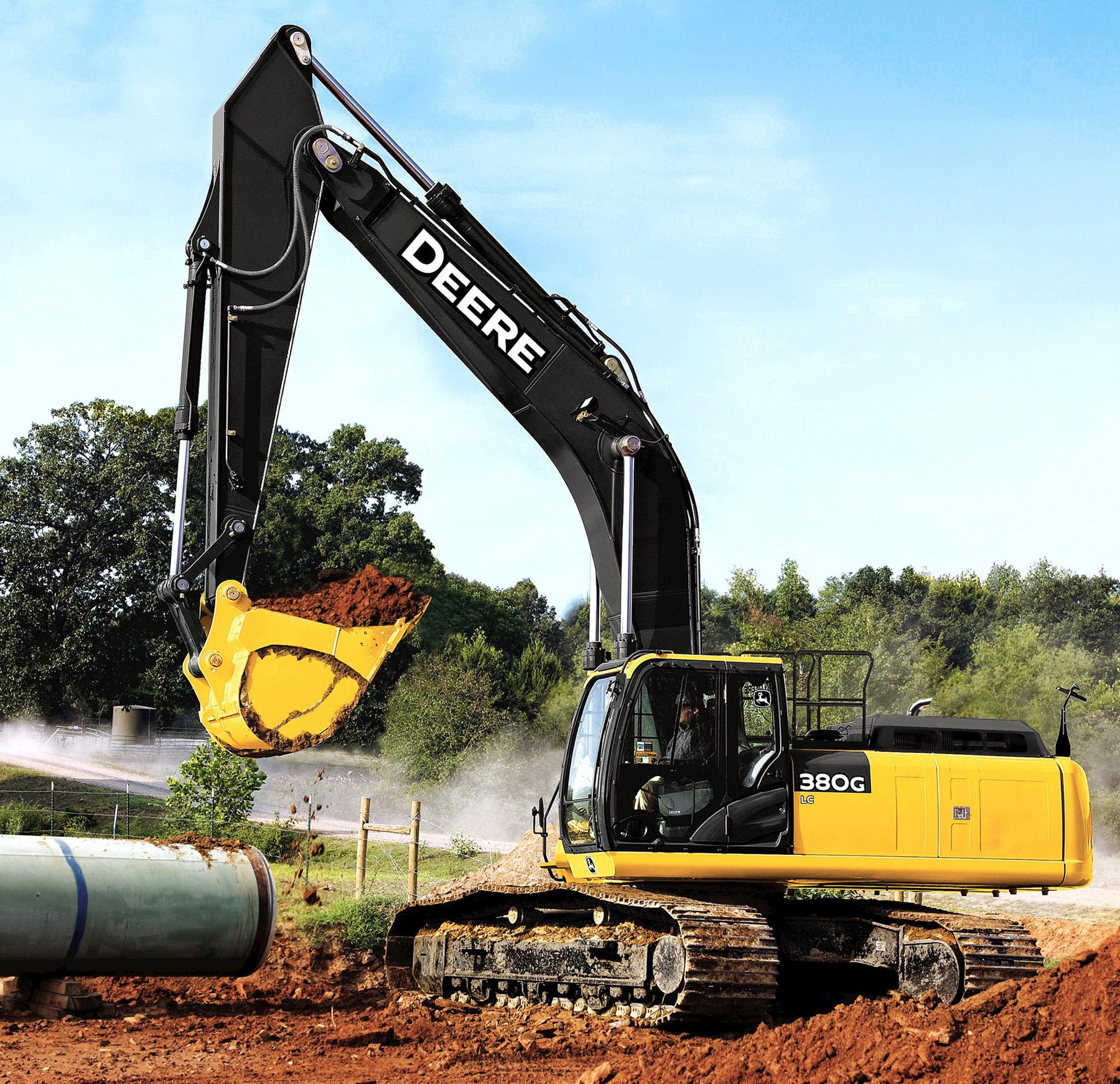
A grade-reference-ready option for the 350G LC is available from the factory, reducing installation time by half, says Deere. Sensor mounting brackets are welded to the boom, arm, dogbone, counterweight, and mainframe at the factory, enabling immediate install of Topcon, Trimble, Leica, or other grade-reference systems. A programmable thumb attachment mode is also available and enables operators to program oil flow for thumb attachments with the monitor.
New handrails help maintain contact when climbing the upper structure to service the engine, improving service accessibility and security. The optional light package now includes a hood light to provide greater visibility to the engine compartment to easily see daily service points. The hood light is useful for customers who work in dark or low light environments, or those who run multiple shifts and may need to conduct late night fuel and lube operations.
More From SAE Media Group
Off-Highway Engineering
Toro Introduces Its Largest Compact Utility Vehicle
Off-Highway Engineering
Caterpillar's Wheeled Excavator Design Based on Customer Input
Off-Highway Engineering
Deere's Updated Skid Steers and Compact Track Loader
Off-Highway Engineering
New Holland Electric Mini-Excavator Hits Market
Off-Highway Engineering
Toro Launches New Riding Trencher
Off-Highway Engineering
Case N Series Goes Tier 4 Final
Off-Highway Engineering
ZF Premieres AxTrax 2 Electric Axle Platform at ACT Expo
Off-Highway Engineering
ZM Trucks Starts Production in Fontana, California
Off-Highway Engineering
Komatsu Targets Productivity, Operator Comfort With New WA480-8 Wheel Loader
Off-Highway Engineering
Deere Tier 4 Final Construction-Class Dozers Feature New Electrohydraulic System
Off-Highway Engineering
Caterpillar Adds to Its Paver Family
Off-Highway Engineering
Doosan Introduces Tier 4 Final Wheeled Excavator
Off-Highway Engineering
Freightliner’s Medium-Duty Makeover
Off-Highway Engineering
EV Startup Prepares to Enter Commercial Market with Novel EAxle
Off-Highway Engineering
Allison Purpose-Builds More Powerful TerraTran Transmission
Off-Highway Engineering
Terex Launches GEN2 Loaders, with Claims of More Than 100 Upgrades
Automotive Engineering
Gearing Dana for the EV Future
Off-Highway Engineering
Math to Road Cycle Is Similar Yet Diverse for Trains, Trucks, and Tractors
Off-Highway Engineering
Case CE Upgrades 621F and 721F Wheel Loaders to Meet Tier 4 Final
Off-Highway Engineering
Auxiliary Hydraulics Highlight Productivity Focus for Deere Reduced-Tail-Swing Excavators
Off-Highway Engineering
REE Unveils P7-C Chassis Cab at ACT Expo
Off-Highway Engineering
Komatsu Augments Intelligent Machine Control in New Excavator
Off-Highway Engineering
Hyundai CE Debuts Hydrogen and Electric Excavators at Bauma 2022
Off-Highway Engineering
Dana Rexroth Completes Validation Testing on R2 HVT
Off-Highway Engineering
New Komatsu Wheel Loader with Tier 4F Engine Consumes 13% less Fuel
Off-Highway Engineering
John Deere Adds Three Models to Its K-Series-II Wheel Loaders Line
Off-Highway Engineering
Claas Expands Its Forage Harvester Line
Off-Highway Engineering
Volvo Reveals New VNL with SuperTruck Influence
Off-Highway Engineering
Kia Takes Aim at Commercial Vans with PBV Concepts
Off-Highway Engineering
Hydrogen Shows Increased Commercial Interest
Top Stories
INSIDERManufacturing & Prototyping
 How Airbus is Using w-DED to 3D Print Larger Titanium Airplane Parts
INSIDERManned Systems
 FAA to Replace Aging Network of Ground-Based Radars
NewsTransportation
 CES 2026: Bosch is Ready to Bring AI to Your (Likely ICE-powered) Vehicle
NewsSoftware
 Accelerating Down the Road to Autonomy
EditorialDesign
 DarkSky One Wants to Make the World a Darker Place
INSIDERMaterials
 Can This Self-Healing Composite Make Airplane and Spacecraft Components Last...
Webcasts
Defense
 How Sift's Unified Observability Platform Accelerates Drone Innovation
Automotive
 E/E Architecture Redefined: Building Smarter, Safer, and Scalable...
Power
 Hydrogen Engines Are Heating Up for Heavy Duty
Electronics & Computers
 Advantages of Smart Power Distribution Unit Design for Automotive...
Unmanned Systems
 Quiet, Please: NVH Improvement Opportunities in the Early Design...
