




Proven Solutions to Enhance Customer Value
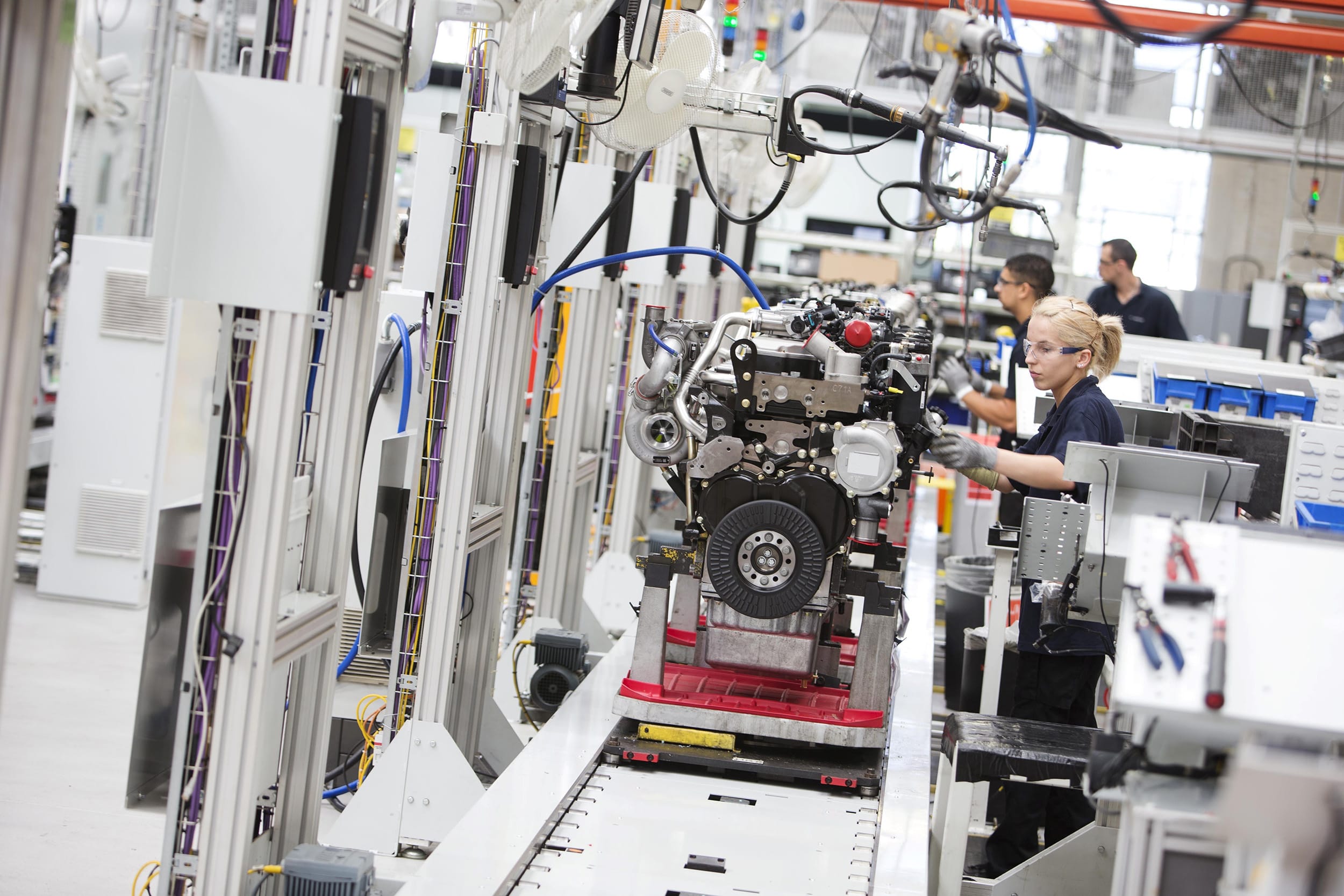
Frank Manfredi, President of Manfredi & Associates said in a recent interview: “It is hard to imagine that there would be another level of emissions regulations, because if you operated a Tier 4 Final engine in Los Angeles, the air coming out of the exhaust is cleaner than the air going in.” While maybe not literally true, Manfredi’s statement illustrates the magnitude of the challenge the diesel engine industry just met in achieving U.S. EPA Tier 4 Final emissions standards.

Going forward, the industry faces no foreseeable regulations that will require new diesel engine technologies. The suite of solutions now in Perkins' proven portfolio is robust and capable of addressing all foreseeable standards. The EPA previously confirmed it has no intention to regulate non-road greenhouse gases in the short to medium term and is working with industry and end users to determine optimal fuel efficiency improvement/GHG reduction strategies.
Virtually all engines designed to meet Tier 4 Final emissions standards utilize some combination of four basic technologies, and will continue to do so in the coming decades. These key technologies are:
- Diesel particulate filters (DPFs) that physically trap particulates in the exhaust stream.
- Cooled exhaust gas recirculation (CEGR) or exhaust gas recirculation (EGR) that lowers combustion temperatures to minimize NOx formation.
- Diesel oxidation catalysts (DOC) that help remove particulate matter from exhaust gasses, turning hydrocarbons and carbon monoxide into carbon dioxide and water. DOCs also aid the overall performance of aftertreatment systems comprising of DPF/SCR.
- Selective Catalytic Reduction (SCR) that reduces NOx in the exhaust stream. Diesel exhaust fluid (DEF) is injected into the exhaust gasses after the DOC/DPF and before the SCR to further reduce NOx. DEF consists of high-purity urea dissolved in de-ionized water meeting a specific, required concentration level—the industry standard being DEF which meets ISO 22241. It is stored in a dedicated tank and never comes into contact with the diesel fuel.
The exact technology mix for any given engine and application is arrived at by including everything needed to meet applicable regulatory standards while achieving customer performance requirements. Arriving at such an optimum solution in practice requires a very high level of cooperation between engine builders and their OEM customers.
Perkins, for example, has created the Technology Integration Workshop (TIW) program that gives customers an unprecedented amount of access to, and influence in, the ongoing engineering effort.
Under the TIW program OEMs engineers work side-by-side with Perkins engineers to create optimal solutions for customer applications. To date, the TIW program has generated more than 500 optimized engine/machine installations for 150 OEM customers. Compared to the previous Tier products, these applications deliver better fuel economy, more precise engine response, and more productive duty cycles giving customers clear differentiators in their highly competitive markets.
Having put in place the suite of technologies needed to achieve these near zero levels of emissions, the industry can now provide an even greater focus on enhanced customer value as the technologies mature and experience is gained.
Karl Vandermyde, Americas Sales Director, Perkins, wrote this article for SAE Off-Highway Engineering.
More From SAE Media Group
Off-Highway Engineering
FPT Plans Engines for Complex Market
Off-Highway Engineering
Stricter Stage V Regs Pose Challenges
Off-Highway Engineering
MTU Training Facility Helps Keep Complex Engines up and Running
Off-Highway Engineering
Unearthing the Solutions: The Road Ahead
Off-Highway Engineering
Greener, Meaner, Leaner Drive Systems for Off-Highway
Off-Highway Engineering
Kohler Extends Its Hand in Off-Highway Diesels
Off-Highway Engineering
Volvo Penta Talks Tier 4 Trends
Off-Highway Engineering
Innovation Is at the Core of Engine Design
Off-Highway Engineering
DPF Cleaning Process
Off-Highway Engineering
Cummins in Production with 'Simplified' Tier 4 Final Engines
Off-Highway Engineering
Raising the Bar on Engine Performance at Emissions Changes
Off-Highway Engineering
Cummins’ New Mid-Displacement Turbos Quieter and More Efficient
Off-Highway Engineering
Cummins, Tula Test ‘Dynamic’ Cylinder Deactivation for Diesels
Off-Highway Engineering
Many ICE Paths Lead to Reduced Emissions
Off-Highway Engineering
Stage V-Ready Engines Take Center Stage at Bauma
Off-Highway Engineering
Advancing Aftertreatment
Off-Highway Engineering
SwRI Rolls out Hydrogen Demonstration Truck
Off-Highway Engineering
Aftertreatment Module
Off-Highway Engineering
Cummins New X15 Engine Meets Upcoming Regs While Boosting Efficiency

Tech Briefs
Making Diesel Engines Nearly Emission-Free
Off-Highway Engineering
Caterpillar Unveils New Stage V, Tier 4 Final Industrial Engine
Automotive Engineering
Eaton Goes Internal with Its Next-Generation EGR Solution
Automotive Engineering
Injecting a Sense of Urgency to Clean up Diesels
Off-Highway Engineering
Cummins Looks Ahead with New Component Technology
Off-Highway Engineering
Eaton Demonstrates Waste Heat Recovery, Variable Valve Actuation for HD Diesels
Automotive Engineering
The International Fight over EFuels, Internal Combustion’s Would-Be Savior
Automotive Engineering
Audi's New V6 Diesel to Feature Electric Turbocharging, New NOx Technology
Off-Highway Engineering
Combustion Engines Carry on in Construction
Off-Highway Engineering
FPT Reveals Stage V Engine on Genset Frame Concept
Top Stories
INSIDERManufacturing & Prototyping
 How Airbus is Using w-DED to 3D Print Larger Titanium Airplane Parts
INSIDERManned Systems
 FAA to Replace Aging Network of Ground-Based Radars
NewsTransportation
 CES 2026: Bosch is Ready to Bring AI to Your (Likely ICE-powered) Vehicle
NewsSoftware
 Accelerating Down the Road to Autonomy
EditorialDesign
 DarkSky One Wants to Make the World a Darker Place
INSIDERMaterials
 Can This Self-Healing Composite Make Airplane and Spacecraft Components Last...
Webcasts
Defense
 How Sift's Unified Observability Platform Accelerates Drone Innovation
Automotive
 E/E Architecture Redefined: Building Smarter, Safer, and Scalable...
Power
 Hydrogen Engines Are Heating Up for Heavy Duty
Electronics & Computers
 Advantages of Smart Power Distribution Unit Design for Automotive...
Unmanned Systems
 Quiet, Please: NVH Improvement Opportunities in the Early Design...
