




Integrating Factory Automation into the Off-Highway Industry

In most industries, companies are faced with constant pressure to increase productivity and decrease operating costs. The off-highway industry is no exception, and operators, decision makers, and OEMs are looking to the evolution in manufacturing practices and smarter vendor partnerships as they consider ways to improve efficiencies.
Plant floor automation has evolved from the days when, in the automotive industry, the manufacturing process was retooled each year to accommodate the production of new vehicle models.
Over time, manufacturers began replacing hard-wired mechanical devices with smart controllers that could be reprogrammed each year. This change saved companies millions of dollars each year by reducing downtime and increasing productivity.
As automation technology evolved, so did the ability to tie those systems into upper level communication networks. It’s realistic to forecast that future manufacturing facilities will continue to drive the evolution of automation, moving away from physical plant constraints and instead solving complexities of the processes that factories tie into.
Taking the philosophy of automation from the factory floor and integrating it into the off-highway industry entails replacing standalone systems with smart solutions that allow for integration and sharing of information. Each piece of equipment can be viewed as a part of a manufacturing process that directly or indirectly ties into another piece of equipment.
When building a road, for example, many pieces of equipment are used to complete a different part of the process. While each machine is used independently, all the equipment must work together. Being able to scale each machine’s data for the different processes and the entire process allows one to manage resources exponentially better than previously possible.
The addition of smart systems, data collection and upper level monitoring provides benefits including more flexibility, higher throughput, improved quality control, increased safety, and allows workers to focus on higher level tasks that provide more overall value.
As with factory automation, the equipment, components, and networks for off-highway use must be appropriately designed to withstand the environmental considerations unique to each fleet and application, including moisture, temperature, noise, and shock and vibration. It’s essential to work with vendor partners who are truly that—partners. In fact, it could be said that just as automation must become smarter, so too must partnerships.
When implementing smarter automation into mobile equipment applications, an ideal partner will not only have the product you require, but will also take the time to learn about the unique conditions your fleet may encounter, and will be well versed in developing a tailored solution to work now and evolve in the future.
Dave Lagerstrom, CEO, Turck, wrote this article for SAE Off-Highway Engineering.
More From SAE Media Group
Medical Design Briefs
Bosch Rexroth Opens New Factory Automation Customer Innovation Center
Off-Highway Engineering
Additive Manufacturing Is Transforming Mobility Engineering, Driving the Factory of the Future

Motion Design
Reducing Plasma Cutting Cycle Time with a Cobot Cutter
Robotics & Automation INSIDER
Tech Focus: Leveraging Generative AI for Industrial Environment

Medical Manufacturing and Fabrication
Center Demonstrates Decentralized, Digital Factory
Motion Design
When Cobots Make a Manufacturing Difference
Medical Design Briefs INSIDER
MD&M South Debuts in Charlotte, NC
Automotive Manufacturing and Machining
Atlas Copco Takes Smart-Manufacturing Tools and Systems on Tour
Tech Briefs
2024 Award Finalists

Medical Design Briefs
MESI 4.0 Summit: Enabling Digital Transformation and Fueling Growth
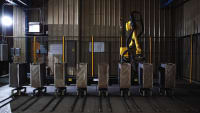
Aerospace & Defense Tech Briefs
Stratasys Unveils High-Production Additive Manufacturing Spin-Off
Medical Design Briefs
Inside Story: Selecting and Implementing Automation Solutions
Medical Design Briefs
MMT Acquires Ward Automation Galway, Somex: Launches MMT Automation Division
Motion Design
The Role of Sensors in the Evolution of Robotics
Tech Briefs
2025 Award Finalists
Motion Design
Boosting Welding Productivity with the GoFa Cobot

Off-Highway Engineering
3DEO Launches New Metal 3D-Printing Platform
Medical Design Briefs
Weiss-Aug Expands R&D, Automation with Launch of New Division, Lupine Research

Tech Briefs
RISING STAR AWARDS 2025 WINNERS ANNOUNCED
Tech Briefs
Lasers Assemble Miniature Robots from Bubbles

Motion Design
Cobot Cuts Cost and Risk While Boosting On-Time Delivery
Top Stories
NewsRF & Microwave Electronics
 Microvision Aquires Luminar, Plans Relationship Restoration, Multi-industry Push
INSIDERAerospace
 A Next Generation Helmet System for Navy Pilots
INSIDERDesign
 New Raytheon and Lockheed Martin Agreements Expand Missile Defense Production
INSIDERMaterials
 How Airbus is Using w-DED to 3D Print Larger Titanium Airplane Parts
NewsPower
 Ford Announces 48-Volt Architecture for Future Electric Truck
ArticlesAR/AI

Webcasts
Electronics & Computers
 Cooling a New Generation of Aerospace and Defense Embedded...
Automotive
 Battery Abuse Testing: Pushing to Failure
Power
 A FREE Two-Day Event Dedicated to Connected Mobility
Unmanned Systems
 Quiet, Please: NVH Improvement Opportunities in the Early Design Cycle
Automotive
 Advantages of Smart Power Distribution Unit Design for Automotive &...
Energy
 Sesame Solar's Nanogrid Tech Promises Major Gains in Drone Endurance