




Polypropylene Rigid Honeycomb Board

Stinger polypropylene rigid honeycomb-cored structural sheet from Coroplast will be displayed at SAE 2014 World Congress April 8-10 in Detroit. The Stinger board provides stiffness, strength, impact performance, and weight reduction unmatched by any other polypropylene panel production technology, claims the company. Recognized by the issuance of U.S. and foreign patents, the unique design and performance of the Stringer board also addresses numerous automotive industry challenges. When used as a spare wheel cover and/or load floor medium, alternative to commonly used wood-based hardboard, Stinger board: will not rot or deteriorate from exposure to moisture; provides significant weight saving; offers resistance to deflection and fracturing under load; features improved noise and temperature isolation; and is 100% recyclable. For Tier 1 and 2 customers, Stinger board is easily and cleanly converted into two-dimensional shapes by steel-rule die-cutting methods. No messy sawing and sanding is needed. In addition, the board can be thermo-formed into three-dimensional shapes for applications that require compound surfaces. (Booth 534)
More From SAE Media Group
Tech Briefs
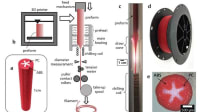
Self-Healing Aluminum Metal Matrix Composite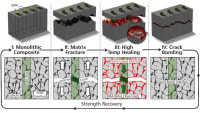
Tech Briefs
Rapidly Printing with Liquid Metal
Tech Briefs
AERoBOND: Large-Scale Composite Manufacturing

Aerospace INSIDER
Air Force Explores Use of Thermoplastic Fin for F-16
Medical Design Briefs
Top 10 Reasons Stainless Steel Is Right for Healthcare Design
Aerospace & Defense Tech Briefs
Beyond Boundaries: Elevating Aerospace Design with Fluorosilicones
Medical Design Briefs
Product of The Month
Tech Briefs
Product Spotlight: EP30NS
Photonics & Imaging Technology
Deformation Fingerprints Will Help Researchers Identify, Design Better Metallic Materials
Aerospace INSIDER
A New Platform for Developing Advanced Aerospace Metals at Scale
Tech Briefs
Origami-Inspired…Ceramics?!?
Automotive Engineering
Optimizing Design for Additive Manufacturing

Automotive Engineering
Recaro Pioneers Seating Shells Made with CF Recyclate


Automotive Engineering
Lighter, Recyclable Body Seal from Cooper Standard Wins SAA Award

Motion Design INSIDER
Autonomous Structures Can Be Programmed to Jump Days in Advance

Tech Briefs
How MXenes Can Improve Air Filtration

Tech Briefs
New Glass is More Damage Resistant, Greener


Top Stories
INSIDERManufacturing & Prototyping
 How Airbus is Using w-DED to 3D Print Larger Titanium Airplane Parts
INSIDERManned Systems
 FAA to Replace Aging Network of Ground-Based Radars
NewsTransportation
 CES 2026: Bosch is Ready to Bring AI to Your (Likely ICE-powered) Vehicle
NewsSoftware
 Accelerating Down the Road to Autonomy
EditorialDesign
 DarkSky One Wants to Make the World a Darker Place
INSIDERMaterials
 Can This Self-Healing Composite Make Airplane and Spacecraft Components Last...
Webcasts
Defense
 How Sift's Unified Observability Platform Accelerates Drone Innovation
Automotive
 E/E Architecture Redefined: Building Smarter, Safer, and Scalable...
Power
 Hydrogen Engines Are Heating Up for Heavy Duty
Electronics & Computers
 Advantages of Smart Power Distribution Unit Design for Automotive...
Unmanned Systems
 Quiet, Please: NVH Improvement Opportunities in the Early Design...
