




Rocket Engine Technology
Invocon, Inc.
Conroe, TX
281-292-9903
www.invocon.com
The team of Invocon, Inc., KT Engineering Corporation, and Troy 7, Inc. has been awarded a Prototype Project Award by the U.S. Air Force Space and Missile Systems Center (SMC) for the Aerospike Rocket Integration and Suborbital Experiment (ARISE). Awarded through the Space Enterprise Consortium ® (SpEC) and managed by the Air Force Research Labs (AFRL) Rocket Lab at Edwards AFB, California, the project will demonstrate flight in a sub-orbital flight test of a launch vehicle utilizing a single rocket engine with an annular aerospike nozzle, modular thrust cells, and modular turbomachinery.

The primary objective of the flight test is obtaining flight performance data for the modular aerospike engine over a range of operation representative of a launch vehicle trajectory, including open wake regime, wake transition, and closed wake regime. To achieve this objective, the team will produce a highly instrumented modular aerospike engine and launch vehicle and perform integration activities, execute range coordination, and conduct launch operations on a sub-orbital flight, the first of which is scheduled for 2022.
This effort will also mark the first representative flight of an aerospike engine after many decades of research and abandoned flight efforts. Aerospike nozzles operate in three modes (open wake, wake transition, and closed wake) at specific altitudes depending on the engine design, flight trajectory, and ambient atmospheric conditions. ARISE will fly a launch-to-orbit trajectory to ensure the aerospike nozzle operates in all three regimes and gathers applicable data for future launch vehicles.
The benefits of this structure include improved performance, better facilitation of integration schemes between vehicle and engine, and improved adaptability between different derivative engine and vehicle. Until now, uncertainties related to design and performance presented barriers to engine modularity and aerospike nozzles in launch vehicles. Since ARISE will demonstrate relevant behavior in flight and gather large amounts of data that can anchor models, this initiative will significantly decrease the risks and costs associated with developing future rocket engines that incorporate this technology.
KT Engineering (KTE) is a small business specializing in the research, design, analysis and testing of aerospace systems, subsystems and components. KTE has demonstrated expertise in the research and development of low-cost chemical rocket engines, high-performance pressurization systems, and lightweight metallic tanks and structures, and 18 years of experience in the design, analysis and testing of aerospike and plug cluster rocket engines.
Troy7 is a woman-owned small business with core competencies in guidance and control, telemetry, vehicle design, and launch operations. Troy7 is a highly technical small business with a legacy of support to more than 350 DoD and NASA flight test missions. Troy7 currently supports MDA, the National Aeronautics and Space Administration (NASA), PEO Missiles and Space, the US Army Space and Missile Defense Command (SMDC), and commercial companies.
Invocon is a veteran-owned small business that provides turnkey instrumentation and control solutions for demanding applications in extreme environments for the sensing and data acquisition communities. For the ARISE project, Invocon is responsible for engine instrumentation, PCM telemetry encoders and transmitters, vehicle battery power and control, and flight termination system. As a SpEC Consortium member, Invocon will serve as prime contractor for the project.
For Free Info Visit Here
More From SAE Media Group
Aerospace & Defense Tech Briefs
OmegA Rocket Sustains Explosion During First Static Test, Northrop Grumman Maintains Test Was a Success
Aerospace & Defense Tech Briefs
AVIO Engineers Evolve Vega Rocket Design, Enhance Avionics and Propulsion
Aerospace & Defense Tech Briefs
The Future of Space Propulsion
Aerospace & Defense Tech Briefs
Orbex Debuts Innovative Smallsat Launch Vehicle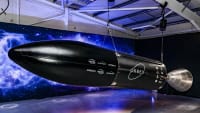
Aerospace & Defense Tech Briefs
U.K. Space Agency Partners with Industry to Advance Spaceflight Program
Aerospace & Defense Tech Briefs
Prototype Hypersonic Defense Engine
Tech Briefs
UCF’s Hypersonic Technology Advances
Aerospace & Defense Tech Briefs
Industry Invited to Participate in AeroTech Aerospace and Defense Technical Program
Tech Briefs
Water-Powered Engines Offer Satellite Mobility
Aerospace & Defense Tech Briefs
Why are Aerospace & Defense Companies Embracing Additive Manufacturing?
Aerospace & Defense Tech Briefs
NASA Budget Amendment to Help Send Americans to Moon by 2024, Then Mars
Aerospace & Defense Tech Briefs
AVIO Software Developers Leverage AdaCore GNAT pro Assurance for ESA Vega C Launch Vehicle
Aerospace & Defense Tech Briefs
Evaluation and Test Requirements for Liquid Rocket Engines
Aerospace & Defense Tech Briefs
SAE International Extends Call for Abstracts, Seeks Submissions for AeroTech Conference
Aerospace & Defense Tech Briefs
JAXA Launches HTV7 Unmanned Cargo Spacecraft on Resupply Mission to ISS
Aerospace & Defense Tech Briefs
NASA Selects Frontier Aerospace to Continue Development of New Deep Space Thruster

Aerospace & Defense Tech Briefs
To the Moon and Beyond with Additive Manufacturing
Tech Briefs
SMART Solar Sail
Aerospace & Defense Tech Briefs
Northrop Grumman Launches Rocket Motor Production at Modernized Tactical Motor Manufacturing Facility
Tech Briefs
How Jet Engine Flow Can Be Controlled Optically
Aerospace & Defense Tech Briefs
SAE International Issues, Revises Technical Reports for Aerospace Engineering
Aerospace & Defense Tech Briefs
Electric Rockets and the Future of Satellite Propulsion
Aerospace & Defense Tech Briefs
GKN Aerospace to Develop First Additive-Manufactured Rocket Engine Turbines in Europe for Prometheus Project
Aerospace & Defense Tech Briefs
ULA Selects Blue Origin Advanced Booster Engine for Vulcan Centaur Rocket System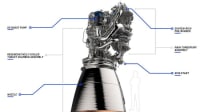
Aerospace & Defense Tech Briefs
On-Orbit Satellite Refueling Flow Measurement
Tech Briefs
Hybrisol Rocket Engines
Aerospace & Defense Tech Briefs
Soyuz MS-10 Launch Abort Prompts Investigation into Booster Anomaly
Top Stories
INSIDERManned Systems
 How Airbus is Using w-DED to 3D Print Larger Titanium Airplane Parts
INSIDERAerospace
 FAA to Replace Aging Network of Ground-Based Radars
NewsUnmanned Systems
 Microvision Aquires Luminar, Plans Relationship Restoration, Multi-industry Push
NewsDesign
 CES 2026: Bosch is Ready to Bring AI to Your (Likely ICE-powered) Vehicle
NewsSoftware
 Accelerating Down the Road to Autonomy
INSIDERManned Systems
 Can This Self-Healing Composite Make Airplane and Spacecraft Components Last...
Webcasts
Power
 Hydrogen Engines Are Heating Up for Heavy Duty
Transportation
 Advantages of Smart Power Distribution Unit Design for Automotive...
Automotive
 Quiet, Please: NVH Improvement Opportunities in the Early Design...
Power
 A FREE Two-Day Event Dedicated to Connected Mobility
Connectivity
 E/E Architecture Redefined: Building Smarter, Safer, and Scalable Vehicles
Manufacturing & Prototyping
 How Sift's Unified Observability Platform Accelerates Drone Innovation