




Validation of Automated Prediction of Blood Product Needs Algorithm Processing Continuous Non-Invasive Vital Signs Streams (ONPOINT4)
Using a combination of non-invasive sensors, advanced algorithms, and instruments built for combat medics could reduce hemorrhaging and improve survival rates.
Hemorrhagic shock occurs frequently in natural and man-made disaster scenarios. To control bleeding and to provide necessary resuscitation, swift and accurate diagnosis and decision-making are required. Early recognition of bleeding and the need for targeted interventions could improve both survival and resource management, allowing the receiving hospital to prepare required blood, surgeons, or other resources in advance of patient arrival and to conserve valuable resources in those patients who are not bleeding. Resources can be saved through avoidance of over-triage, thereby reducing unnecessary air transport, unnecessary blood transfusions, and unnecessary evaluation with labs, X-rays, and computed tomography scans, which is important in all resource-constrained and austere environments.
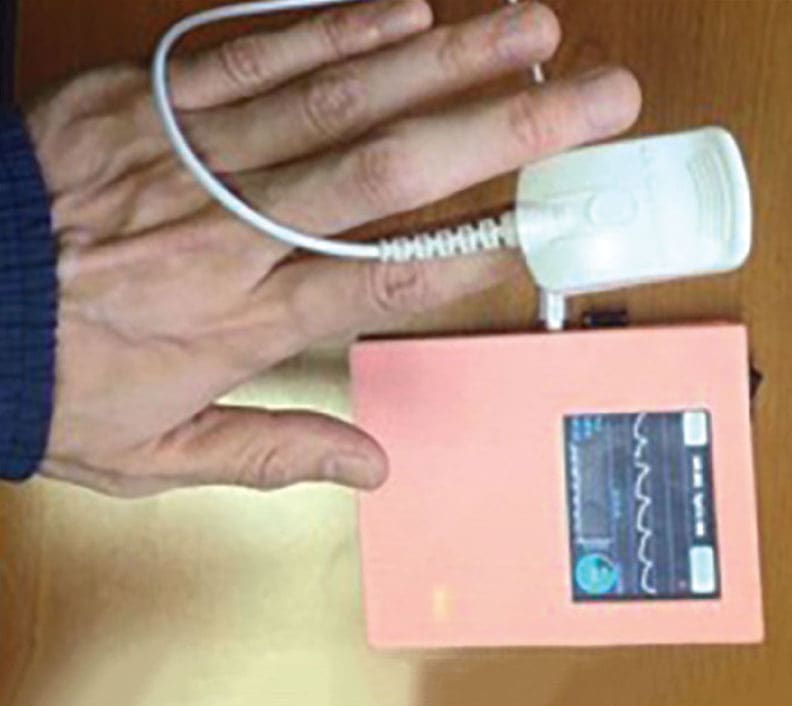
To achieve the above goals, many diagnostic and predictive models have been proposed. These models use information collected from patients, such as pre-hospital vital signs (VS), injury mechanism, or information measured from other devices. They are useful and some of them have been used in practice. However, those methods have their drawbacks. First, they are mostly based on a paper-pencil type scoring system. Users need to collect all variables and either do manual calculation or input the numbers to a calculator, costing valuable time. Second, alternative methods require specially trained experts to use certain devices, such as ultrasound machines. Third, other methods depend on blood sampling and laboratory testing; such requirement increases the logistics for in-the-field deployment. Moreover, there is no systematic validation of those models in military-specific populations.
Advances in computing and sensoring techniques allow real-time high-fidelity VS data collection and processing. Non-expensive and non-invasive sensors with built-in computing processors could fully automate data collection and calculation without user input during the multi-tasking trauma patient resuscitation period. Transfusion prediction algorithms use the non-invasive sensor signals to convert these data into clinically relevant quantities that can be used for identifying patients with life-threatening bleeding.
To derive such algorithms, a feasible and practical approach was to use a subset of >22,000 trauma patient datasets to train an algorithmic “learner.” By “observing” and “inferring” from the dataset, the association between input variables and the outcomes could be learned. This machine learning approach is called supervised learning. Moreover, the trained algorithms need to be thoroughly tested in testing datasets that the algorithms have never seen before. In this way, what performance to expect when the algorithms are applied in the future would be known. Therefore, it is important to use these validation methods to train and test the algorithms or models, e.g., for transfusion prediction, before deploying them for healthcare.
This has particular relevance for military applications. Hemorrhage is the greatest threat to survival, the leading cause of death, and the most common cause of potentially preventable combat-related mortality. The Department of Defense has invested many resources into developing reliable transfusion prediction models andpractical usable tools based on intensive analysis of large data collections. Military medicine considers these approaches as the future way to develop combat casualty autonomous resuscitation and enhance real-time field decision-making.
Past work has focused on the assessment and treatment of major bleeding in the pre-hospital environment, typically in the form of field severity scoring systems. On the other hand, using new sensors that are non-expensive and non-invasive, advanced field-ready algorithms and instruments that can be built for combat medics offers advantages. Such study can enhance the ability to rapidly assess fluid resuscitation needs. Through large-scale big data modeling, evidence-based physiologic criteria for validation of transfusion use in a combat casualty can be identified and thoroughly tested.
This work was done by Peter Hu, PhD; Shiming Yang, PhD; and Colin Mackenzie, MD; University of Maryland School of Medicine for the Air Force Research Laboratory. AFRL-0261
This Brief includes a Technical Support Package (TSP).
Validation of Automated Prediction of Blood Product Needs Algorithm Processing Continuous Non-Invasive Vital Signs Streams (ONPOINT4)
(reference AFRL-0261) is currently available for download from the TSP library.
Don't have an account?
More From SAE Media Group
Medical Design Briefs
AI Prediction Method Developed for Epileptic Seizures
Medical Design Briefs
FDA’s Modernization Plans Gain Momentum in Expediting Healthcare Innovation



Tech Briefs
Tool Can Diagnose Strokes with a Smartphone

Aerospace & Defense Tech Briefs
AIA Predicts Flying Air Taxis, Supersonic Air Travel, and Space Industry for 2050
Medical Design Briefs
Training Artificial Intelligence with Artificial X-Rays
Aerospace & Defense Tech Briefs
3D Data Acquisition Platform for Human Activity Understanding
Sensor Technology
High Tech Comes to Fitness Monitoring


Medical Design Briefs
Detecting Newborn Jaundice with a Smartphone
Photonics & Imaging Technology
The Role Deep Learning Plays in Imaging Software
Tech Briefs
Executive Forum: Machine Learning & AI
Electronics & Sensors INSIDER
Wi-Fi Signals Can Measure Heart Rate — No Wearables Needed
Tech Briefs
Building Big Data from Little Data
Motion Design
Teaching Robots the Craft of Manipulating Materials
Medical Design Briefs
2022 Technology Trends: Digital Health Marks the Future of Medical Development

Medical Design Briefs
Moving One Step Closer to Personalized Anesthesia
Photonics & Imaging Technology
Vision-Based System Validates Driver Monitoring
Medical Design Briefs
Wearable Monitors Heart Rate Recovery to Predict Risk
Medical Design Briefs
Smart Wearable Sensors for Parkinson’s Disease

Sensor Technology
How Sophisticated Wearable Sensors are Changing Healthcare
Sensor Technology
Oxygen Sensor for Sick Infants
Medical Design Briefs
Show Preview: Biosensors for Medical Wearables
Overview
The document titled "Validation of Automated Prediction of Blood Product Needs Algorithm Processing Continuous Non-Invasive Vital Signs Streams (ONPOINT4)" is a final technical report detailing research conducted from September 2015 to September 2017. The study was led by a team from the University of Maryland, Baltimore, and sponsored by the USAF School of Aerospace Medicine.
The primary objective of the research was to validate an automated algorithm designed to predict the need for blood products in trauma patients by processing continuous non-invasive vital signs data. This is particularly relevant in military and emergency medical settings, where timely blood transfusions can be critical for patient survival.
The report is structured into several sections, beginning with an executive summary that outlines the significance of the study and its military relevance. It discusses previous work in the field, emphasizing the need for improved prediction models that can enhance patient outcomes in trauma care.
The methods section details the large validation dataset sourced from a real trauma center, including data processing techniques, model refinement, and evaluation strategies. The researchers developed training and testing datasets to ensure robust model performance, employing various statistical methods to assess the accuracy and reliability of their predictions.
Results are presented in a dedicated section, highlighting the overall effectiveness of the prediction model, its performance in special subsets of patients, and comparisons with existing blood transfusion prediction scoring systems. The findings indicate that the ONPOINT4 algorithm demonstrates significant promise in accurately predicting blood product needs, which could lead to better resource allocation and improved patient care in trauma situations.
The discussion section addresses the implications of the findings, potential future work, and limitations of the study. It emphasizes the importance of continued research in this area to refine the algorithm further and explore its application in diverse clinical settings.
In conclusion, the report underscores the potential impact of automated prediction systems in trauma care, advocating for their integration into clinical practice to enhance decision-making and patient outcomes. The document is approved for public release, contributing to the broader scientific and technical knowledge base in the field of emergency medicine and military healthcare.
Top Stories
NewsRF & Microwave Electronics
 Microvision Aquires Luminar, Plans Relationship Restoration, Multi-industry Push
INSIDERAerospace
 A Next Generation Helmet System for Navy Pilots
INSIDERDesign
 New Raytheon and Lockheed Martin Agreements Expand Missile Defense Production
INSIDERMaterials
 How Airbus is Using w-DED to 3D Print Larger Titanium Airplane Parts
NewsPower
 Ford Announces 48-Volt Architecture for Future Electric Truck
ArticlesAR/AI

Webcasts
Electronics & Computers
 Cooling a New Generation of Aerospace and Defense Embedded...
Automotive
 Battery Abuse Testing: Pushing to Failure
Power
 A FREE Two-Day Event Dedicated to Connected Mobility
Unmanned Systems
 Quiet, Please: NVH Improvement Opportunities in the Early Design Cycle
Automotive
 Advantages of Smart Power Distribution Unit Design for Automotive &...
Energy
 Sesame Solar's Nanogrid Tech Promises Major Gains in Drone Endurance