




NASA Miniaturizes Century-Old Radio Sounder Technology
A century-old technology that scientists use to probe the ionosphere — the important atmospheric layer that can interfere with the transmission of radio waves — is getting smaller.
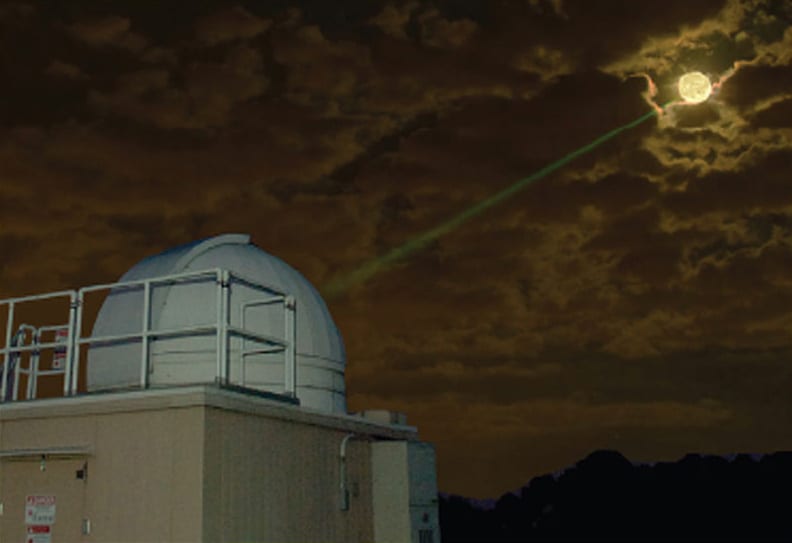
A team of NASA scientists and engineers at Goddard Space Flight Center (Greenbelt, MD) is upgrading and miniaturizing the electronics on a prototype instrument called the Concentration vs. Height for an Orbiting Electromagnetic Sounder (ECHOES). The device could be used to “sound” the ionosphere from either a ground-based observatory or ultimately a constellation of CubeSats.
The ionospheric layer — which is electrically charged or ionized primarily by extreme ultraviolet radiation coming from the Sun during the day, or by the bombardment of cosmic rays during the night — is of interest to scientists because of the role it plays in the transmission of radio waves. Depending on the concentration of electrons in the ionosphere and the frequency of the radio waves, the layer reflects radio waves to Earth, rather than allowing them to escape into space. Solar flares — the spontaneous eruption of high-energy radiation from the surface of the Sun — can cause a sharp increase in the number of ionized particles, thus changing the height and density of the particles.
“Gravity pulls the denser plasma (ionized gas) down toward Earth to lower altitudes that are less dense. This is an unstable configuration,” said ECHOES Principal Investigator and Goddard scientist Mark Adrian. “This motion leads to a turbulent mixing of the ionosphere, not unlike pouring cream into your morning coffee. This produces density irregularities or structures that reflect and refract radio waves — what we simply refer to as interference.”
To determine the electron density vertically in the ionosphere, scientists have long used radio sounders — in essence, dedicated radio stations. A range of different radio frequencies is directed vertically to the ionosphere, and a receiver then collects and measures the values of the returning signals or echoes.
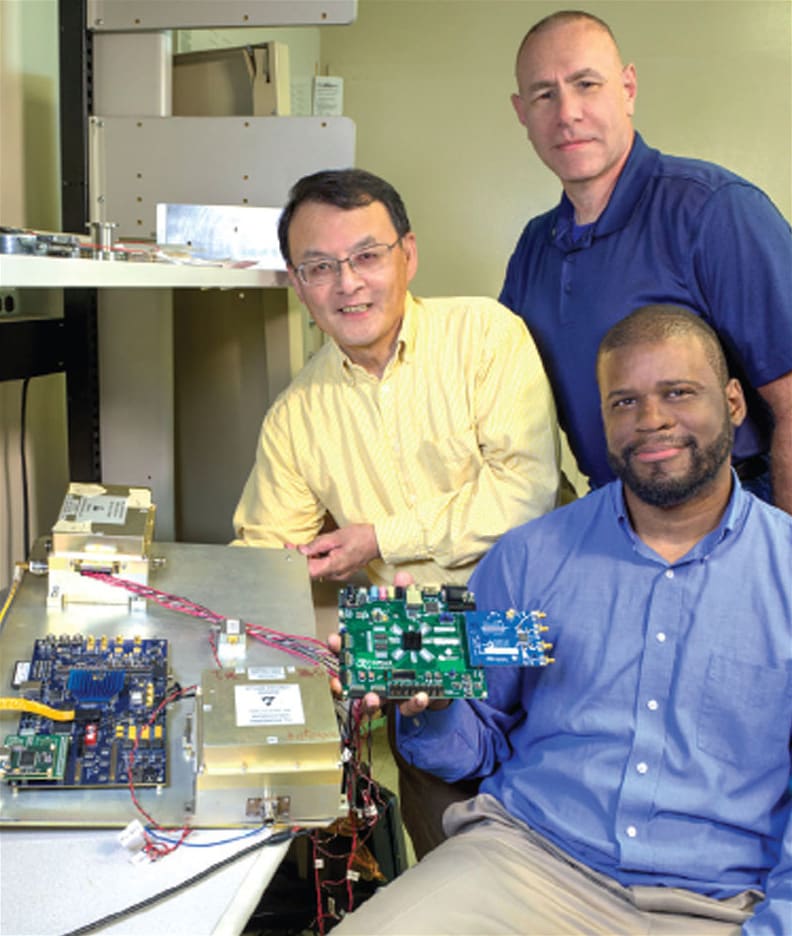
The immediate plan is to use ECHOES on the ground, contributing to a network of instruments that supports space-weather prediction and real-time mapping of the ionosphere. The instruments also could fly in space; for example, in a constellation of CubeSats that would make simultaneous, multi-point soundings of the top side of Earth’s enveloping ionosphere, which lies 46 to about 621 miles above Earth’s surface.
The sounding technique is at least a century old. It wasn’t until the dawn of the space age that the technique was applied to sounding-rocket and full-fledged satellite missions such as the Canadian-built and NASA-launched Alouette 1 in 1962. More recently, NASA launched the Radio Plasma Imager on a mission called the Imager for Magnetopause-to-Aurora Global Exploration (IMAGE). Also, the Jet Propulsion Laboratory, in collaboration with its European partners, provided another sounder, the Mars Advanced Radar for Subsurface and Ionospheric Sounding, for the European Space Agency’s Mars Express mission.
“Basically, what we’re doing is miniaturizing a 100-year-old radio receiver signal-processing technology,” said ECHOES co-Principal Investigator Damon Bradley, who led the development of the digital signal-processing system for the radiometer on NASA’s Soil Moisture Active Passive (SMAP) mission, which tracks global soil-moisture levels. “ECHOES is essentially a low-frequency radar that uses space-based digital-signal processing as on SMAP, but for probing the ionosphere as opposed to mapping global soil-moisture levels.”
Before the miniaturized instrument can fly in space, however, the team needs to prove that it’s capable of obtaining density measurements in a relevant environment. As part of its technology development effort, the team plans to integrate ECHOES electronics and antenna systems with other instrument hardware and execute a test at the Goddard Geophysical and Astronomical Observatory later this year.
For more information, visit here .
More From SAE Media Group

Tech Briefs
Toroidal Radiation Pattern Patch Antenna
RF & Microwave Technology
System Could Detect Concealed Person-Borne Bombs at a Distance
Aerospace & Defense Tech Briefs
Air Force Technology Tracks “Sporadic E”
Aerospace & Defense Tech Briefs
New, Portable Antenna Could Help Restore Communication After Disasters
Tech Briefs
Products of Tomorrow
Aerospace & Defense Tech Briefs
CubeSat Spacecraft
Aerospace & Defense Tech Briefs
RAD-HARD Microelectronics for Space Applications
Aerospace & Defense Tech Briefs
EMI Analysis Software Helps Telescope Group Simulate RFI Mitigation
Aerospace & Defense Tech Briefs
GPS Radio Occultation and Ultraviolet Photometry-Colocated (GROUP-C) Early Orbit Testing Results
Aerospace & Defense Tech Briefs
Nonlinear Effects in Transformation Optics-Based Metamaterial Shields for Counter Directed Energy Weapon Defense
RF & Microwave Technology
Simulation Optimizes Safety and Performance When Integrating an Antenna Onto a Platform
Photonics & Imaging Technology
Getting NASA Data to the Ground With Lasers
Aerospace & Defense Tech Briefs
Shape-Shifting Origami Could Help Antenna Systems Adapt On-the-Fly
Aerospace & Defense Tech Briefs
Ultraviolet Spacecraft Camera
Aerospace & Defense Tech Briefs
Communications in Space: A Deep Subject
Tech Briefs
Getting NASA Data to the Ground with Lasers
Aerospace & Defense Tech Briefs
Pushing the Boundaries of RF Passive Hardware with Additive Manufacturing
Aerospace & Defense Tech Briefs
Designing, Developing and Deploying CubeSats
Aerospace & Defense Tech Briefs
Communicating Via Long-Distance Lasers

NASA Spinoff
Catch the Waves

Aerospace & Defense Tech Briefs
Pushing the Boundaries of Rapid Production of Spacecraft: Flight Results from NearSpace Launch’s TROOP and ThinSat Platforms
Aerospace & Defense Tech Briefs
Digital Radar Warning Receiver

Aerospace & Defense Tech Briefs
Photonic Microwave Generation Using On-Chip Optical Frequency Combs
Aerospace & Defense Tech Briefs
Cassini Stays in Touch with NASA's Radio Science Subsystem
Top Stories
NewsSensors/Data Acquisition
 Microvision Aquires Luminar, Plans Relationship Restoration, Multi-industry Push
INSIDERRF & Microwave Electronics
 A Next Generation Helmet System for Navy Pilots
INSIDERWeapons Systems
 New Raytheon and Lockheed Martin Agreements Expand Missile Defense Production
NewsAutomotive
 Ford Announces 48-Volt Architecture for Future Electric Truck
INSIDERAerospace
 Active Strake System Cuts Cruise Drag, Boosts Flight Efficiency
ArticlesTransportation

Webcasts
Aerospace
 Cooling a New Generation of Aerospace and Defense Embedded...
Energy
 Battery Abuse Testing: Pushing to Failure
Power
 A FREE Two-Day Event Dedicated to Connected Mobility
Automotive
 Quiet, Please: NVH Improvement Opportunities in the Early Design Cycle
Electronics & Computers
 Advantages of Smart Power Distribution Unit Design for Automotive &...
Unmanned Systems
 Sesame Solar's Nanogrid Tech Promises Major Gains in Drone Endurance