




Lightweight Artificial Hair Sensors Could Enable “Fly by Feel”
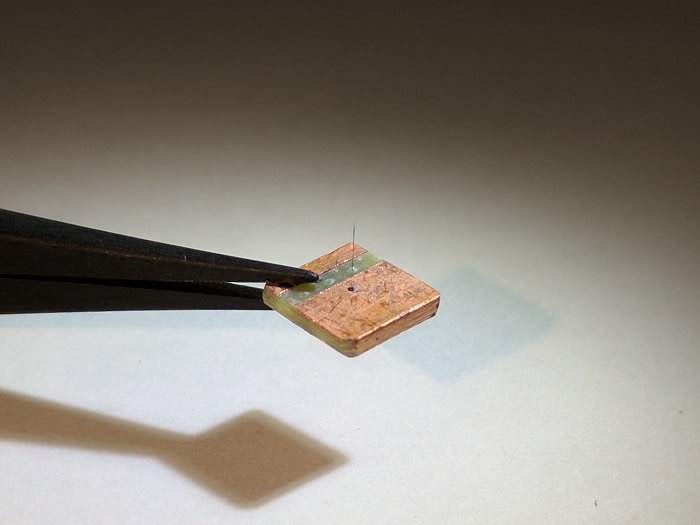
The Air Force Research Laboratory was inspired by the hairs on bats and crickets in creation of artificial hair sensors that could assess the external environment and change maneuvers during flight. The need to understand ambient air data and its effects on aircraft performance, navigation, and more has become more critical as aircraft are now lighter and operate in diverse environments.
The Artificial Hair Sensor team created the sensors using carbon nanotube forests grown inside glass fiber capillaries. The hairs are sensitive to airflow changes during flight, enabling quick response by fliers. The sensors work when air flows over the fiber, compressing the carbon nanotube, causing a change in the resistance between the electrodes.
More From SAE Media Group
Aerospace INSIDER
Non-Contact Method Measures Aircraft Internal Stresses
Tech Briefs
Sensor Film for Aerospace
Aerospace INSIDER
Sensor Film Detects Aerospace Defects
Tech Briefs
Macro-Fiber Composite (MFC) Actuator
Tech Briefs
Solid-State Carbon Dioxide Sensor
Tech Briefs
Thin Film Sensor for Ultra High-Temp Measurement

Tech Briefs
Insect-Sized Agile Drones
Tech Briefs
Electronics Withstand Extreme Heat
Aerospace & Defense Tech Briefs
Sensing Applied Load and Damage Effects in Composites with Nondestructive Techniques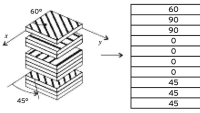
Tech Briefs
Packaging for SiC Sensors and Electronics

Electronics & Sensors INSIDER
MIT Team Takes a Major Step Toward Fully 3D-Printed Active Electronics
Aerospace INSIDER
Heated Concrete Could Pave the Way for Ice-Free Runways

Aerospace & Defense Tech Briefs
Fiber Computer Allows Apparel to Run Apps and Understand the Wearer
Aerospace INSIDER
Tests Show How Plastic Parts Deform During Flight
Motion Design
Insect-Inspired Motion Sensing

Tech Briefs
Pyroelectric Sandwich Thermal Energy Harvester
Tech Briefs
Moisture Sensor Based on NASA Humidity Sensor
Aerospace Manufacturing and Fabrication
New Products & Services

Aerospace INSIDER
Insect-Sized Agile Drones Operate in Tight Spaces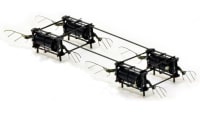
Tech Briefs
Corrosion and Coating Evaluation System
Tech Briefs
Nano-Infused Ceramic Can Report its own Health
Tech Briefs
SiC-Based Microstructures for Sensors
Top Stories
INSIDERManufacturing & Prototyping
 How Airbus is Using w-DED to 3D Print Larger Titanium Airplane Parts
INSIDERManned Systems
 FAA to Replace Aging Network of Ground-Based Radars
NewsTransportation
 CES 2026: Bosch is Ready to Bring AI to Your (Likely ICE-powered) Vehicle
NewsSoftware
 Accelerating Down the Road to Autonomy
EditorialDesign
 DarkSky One Wants to Make the World a Darker Place
INSIDERMaterials
 Can This Self-Healing Composite Make Airplane and Spacecraft Components Last...
Webcasts
Defense
 How Sift's Unified Observability Platform Accelerates Drone Innovation
Automotive
 E/E Architecture Redefined: Building Smarter, Safer, and Scalable...
Power
 Hydrogen Engines Are Heating Up for Heavy Duty
Electronics & Computers
 Advantages of Smart Power Distribution Unit Design for Automotive...
Unmanned Systems
 Quiet, Please: NVH Improvement Opportunities in the Early Design...
