




Unmanned Naval Helicopter
Northrop Grumman Corporation
Redondo Beach, CA
310-812-4321
www.northropgrumman.com
The U.S. Navy has been conducting ship-board flight testing of the first operational MQ-8C Fire Scout unmanned helicopter delivered by the Northrop Grumman Corporation. After more than a year of land-based testing conducted at Point Mugu, California, the MQ-8C took its first flight off the deck of the guided-missile destroyer, USS Jason Dunham (DDG 109), off the coast of Virginia in mid-December last year. It marked the first time an unmanned helicopter had ever operated from the deck of a U.S. Navy destroyer. All told, the new Fire Scout made 22 takeoffs and precision landings during its first sea trials, all while being controlled from the ship’s ground control station. According to George Vardoulakis, Northrop Grumman’s vice president for medium range tactical systems, the test program will run throughout the summer of 2015 and if all goes well, the aircraft should be operational by the end of the year.
 The MQ-8C is an upgraded version of the MQ-8B Fire Scout, which has logged more than 14,000 flight hours and 5,300 sorties while being deployed on the Navy’s frigates and littoral combat ships. The MQ-8C, which is based on the FAA-certified Bell 407 commercial helicopter, features a larger airframe than the MQ-8B and it can fly twice as long and carry three times more intelligence, surveillance, and reconnaissance payloads. Powered by a Rolls- Royce 250-C47E engine with dual channel full authority digital engine control, the MQ-8C has a top speed of 135 knots, a maximum ceiling of 16,000 feet, an internal payload capacity of 500 lbs., a maximum sling load of 2,650 lbs., maximum endurance of 12 hrs., and a maximum range of 1,227 nautical miles.
Northrop Grumman is under contract with the Navy to build a total of 19 MQ-8C Fire Scout helicopters, including two for testing purposes. All told, the Navy hopes to acquire 70 units.
For Free Info Click Here
More From SAE Media Group
Aerospace & Defense Tech Briefs
Unmanned Autonomous Helicopter
Aerospace & Defense Tech Briefs
Autonomous Helicopters
Aerospace & Defense Tech Briefs
Enabling Off-the-Shelf Autonomous Naval Warfare
Aerospace & Defense Tech Briefs
MTSI’s Latest Project Gives Fixed-Wing Aircraft Vertical Cargo Lift Capabilities
Aerospace INSIDER
Short-Takeoff & Landing Capability to be Added to MQ-9B Aircraft
Aerospace & Defense Tech Briefs
Armed Scout Helicopter Upgrades
Aerospace & Defense Tech Briefs
Attack Reconnaissance Helicopter
Aerospace & Defense Tech Briefs
Like a Good Neighbor, Impossible Aerospace Flew over to a Nearby Construction Fire to Help Locate Hotspots for First Responders
Aerospace & Defense Tech Briefs
Boeing to Modernize Spanish Chinook Fleet with Autonomous-Ready Avionics and Flight Control Systems
Aerospace & Defense Tech Briefs
Light Attack Reconnaissance Helicopter Secures Vertical Lift Dominance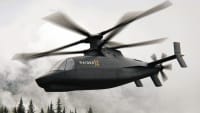

Aerospace & Defense Tech Briefs
Sikorsky’s All-New Raider Helicopter Prototype is Ready to Fly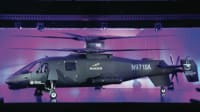
Aerospace & Defense Tech Briefs
Robotic Helicopter
Aerospace Manufacturing and Machining INSIDER
A New AI-Piloted VTOL Fighter Jet for Contested Environments
Aerospace & Defense Tech Briefs
H-1 Helicopter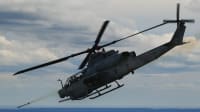
Aerospace & Defense Tech Briefs
Unmanned Aircraft System Offers Superior Surveillance Imagery
Aerospace & Defense Tech Briefs
Remotely Piloted Air Systems

Aerospace & Defense Tech Briefs
Tiltrotor Aircraft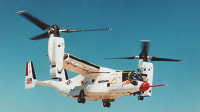
Aerospace & Defense Tech Briefs
Dart Aerospace’s Latest Emergency Float System Receives Certification in the U.S. and Europe
Aerospace & Defense Tech Briefs
Sonobuoy Dispensing & Remote Processing System
Aerospace & Defense Tech Briefs
Insitu ScanEagle SUAS Boosts Coast Guard Mission Effectiveness
Aerospace & Defense Tech Briefs
Poland’s PGZ to Collaborate on New Leonardo Attack Helicopter
Aerospace & Defense Tech Briefs
Commando Helicopter
Aerospace & Defense Tech Briefs
Autonomous Collaborative Platform
Aerospace & Defense Tech Briefs
Nano-UAV Systems
Aerospace & Defense Tech Briefs
Sikorsky-Boeing’s FVL Contender Takes Flight
Aerospace & Defense Tech Briefs
Unmanned Aerial Vehicle
Aerospace & Defense Tech Briefs
Multi-Spectral Targeting System
Aerospace INSIDER
Navy Completes 73-Hour Nonstop Flight of Solar-Powered UAS
Top Stories
INSIDERManufacturing & Prototyping
 How Airbus is Using w-DED to 3D Print Larger Titanium Airplane Parts
INSIDERManned Systems
 FAA to Replace Aging Network of Ground-Based Radars
NewsTransportation
 CES 2026: Bosch is Ready to Bring AI to Your (Likely ICE-powered) Vehicle
NewsSoftware
 Accelerating Down the Road to Autonomy
EditorialDesign
 DarkSky One Wants to Make the World a Darker Place
INSIDERMaterials
 Can This Self-Healing Composite Make Airplane and Spacecraft Components Last...
Webcasts
Defense
 How Sift's Unified Observability Platform Accelerates Drone Innovation
Automotive
 E/E Architecture Redefined: Building Smarter, Safer, and Scalable...
Power
 Hydrogen Engines Are Heating Up for Heavy Duty
Electronics & Computers
 Advantages of Smart Power Distribution Unit Design for Automotive...
Unmanned Systems
 Quiet, Please: NVH Improvement Opportunities in the Early Design...
