




Cabin Fever
As humans do less actual driving, autonomous vehicle interiors will transform radically to provide more creature comforts.

The transition to autonomous driving will transform many aspect of vehicles, not the least being interiors. Cabins will evolve significantly to give drivers and passengers more freedom and varied entertainment options.
Partnerships, ecosystems and holistic designs are among the buzz words associated with driverless cars, which are so complex that many companies are needed to supply all the necessary hardware and software. That’s giving providers a more influential role in the look and feel of a vehicle’s cockpit.
“Suppliers are in a stronger position to influence the industry — the normal master-slave relationship is inverted,” said Andreas Wlasak, Vice President of Design at Faurecia Interiors. “There’s less of a hierarchy where they’re the customer and we’re the supplier. Now everyone starts at zero, whether we’re working with a new startup carmaker or one that’s 100 years old.”
In an exclusive interview with Autonomous Vehicle Engineering, Wlasak detailed many of the factors that will change as the industry makes its way to fully autonomous driving. The interim period, when drivers will interact with electronic controllers of SAE Level 3 and 4 vehicles, will be challenging. But when vehicle systems make all the decisions, things change dramatically.
“At Level 5, interior design almost becomes easier again, you can do anything and everything,” said Wlasak, a leader on Faurecia’s Cockpit of the Future team. “You don’t need a steering wheel, all the cost and space it used to take can be given over to comfort and design.
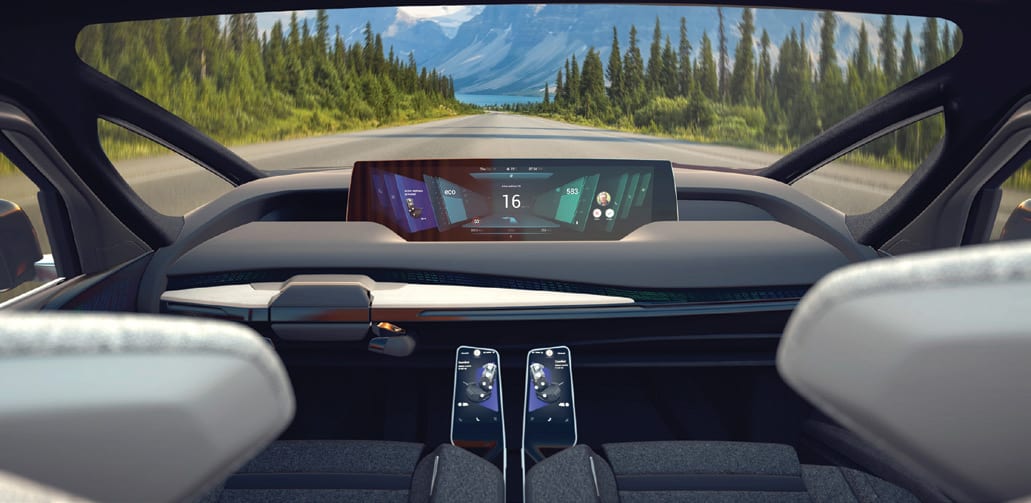
“For the last 100 years, we’ve been trying to avoid driver distraction. Now we’re trying to create it,” Wlasak continued. “Displays are very important, but vehicles can’t look like space ships; they can’t be all screens. People still want wood, rich leather, maybe fabrics. It’s not just a digital world.”
Interim steps
Until full Level 5 autonomy emerges, interiors will need to entertain drivers who have much more freedom, but must remain engaged in driving in case roadway scenarios require human intervention. Wlasak views this transitional period as a time for automakers to try new things and see how consumers interact with interiors that aren’t designed according to conventional constraints. Retracting steering wheels to give drivers more room during long drives are possible when automated systems take control.
“Big things happen at Level 3 and 4; you can physically transform the interface,” Wlasak said. “You can put the occupants in a more relaxed position, like pivoting the seats. You do need to return people to a safe position, so there’s still a need for redundancy at Level 3 and 4. You need belts and safety systems, because accidents will still occur.”
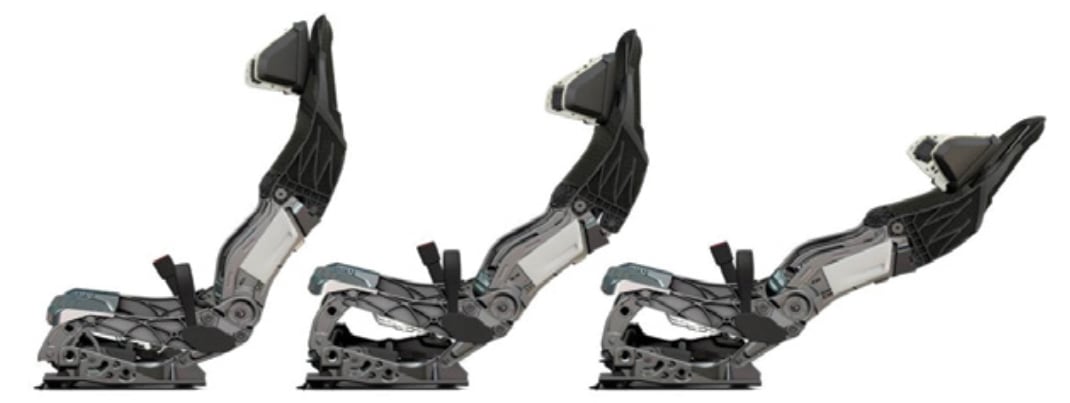
Swiveling the seats even a few degrees makes a huge change in the perception of roominess, so it’s an attractive concept. However, turning the seats requires a lot more than changing the seat mounting. Ergonomic factors related to buttons, switches and ventilation all shift when people move.
Safety factors also change. It is no simple task to protect passengers when seat positions change often, but it will remain important until accidents no longer occur. This is one area where teaming up with partners can help provide solutions like quickly returning the seat to a safe spot.
“A seat frame we developed in a partnership with ZF has airbag pyrotechnics built into the frame; it will work when the seat is swiveled,” Wlasak said. “That’s not possible without integrated pyrotechnics. By the time the car senses an accident is coming, it’s too late for normal motors to drive the seat back to a safe position. With pyrotechnics, you’re almost shooting the passenger seat to a safe position.”
Once people are comfortable and safe, the focus shifts to entertainment. Faurecia is working more closely with suppliers of radio head units and screens. Displays are a central focus. A Faurecia concept called ‘morphing’ moves screens as driving modes change.
“Instrument panels need to be designed for two situations, autonomous and manual driving,” Wlasak explained. “Screen positions are in their normal position for manual driving, but the passenger screen can move right or left, up or down. For autonomous driving, the instrument panel can be moved to the center to expand the display. Passengers in the rear seat could see it then.”
Over the next few years, cabin accoutrements are going to transform rapidly. The vast number of options for seats, electronics and visual/tactile materials make interiors a major differentiator for vehicles. OEMs will gain or lose market share based on how they position the look and feel of different makes and models.
“Interiors are becoming a playground for expression,” Wlasak said. “Probably the most important thing every carmaker has to decide is where to position itself in the whole user-experience spectrum. Morphing may have a ‘wow’ effect, but it might mean there’s less to spend on lighting. Some brands may have a lot of switches. Others may decide on all touch-entry. ”
More From SAE Media Group
Automotive Engineering
Johnson Controls, Faurecia Envision Interiors for Autonomous Driving
Automotive Engineering
Inside the Autonomous Vehicle
Automotive Engineering
Johnson Controls Presents Interior Concept for Autonomous Driving at 2015 NAIAS
Tech Briefs
Making EVs Accessible for All

Off-Highway Engineering
WABCO, Nexteer Collaborate to Develop Active Steering Systems for CVs
Automotive Engineering
Core Ford, New Ford…One Ford?
Automotive Engineering
Lights Communicate Hella's Autonomous Vehicle Messages
Automotive Engineering
Aisin Opens New North American Tech Center, Will Add Engineers
Automotive Engineering
Lexus Unveils Concept Flagship Crossover
Automotive Engineering
Suppliers Struggling to Keep Pace with Faster Product Cycles, Says IHS
Off-Highway Engineering
Israeli Startup REE Reinvents the Wheel with a Modular Approach to Future EV Design
Off-Highway Engineering
Western Star Adds ‘Weight Sensitive’ 47X to Vocational Lineup
Autonomous Vehicle Engineering
Senso-Rama!
Tech Briefs
EV vs. ICE: How Does Wire Harness Design Differ?
Automotive Engineering
ZF's CEO Talks About Lightweight Vehicle Applications
Automotive Engineering
In Search of the Lightweight, Multi-Material Car
Automotive Engineering
See-Through A-Pillars, Ghost Navigation, and Discovery Sport Extreme Testing
Off-Highway Engineering
REE’s P7 Brings Advanced Suspension Control to Medium-Duty Trucks
Automotive Engineering
Making over the World’s Leading Hybrid
Automotive Engineering
Gearing Up Drive Axle Innovations
Automotive Engineering
Seats and Instrument Panel in Faurecia's Autonomous Vehicle Sights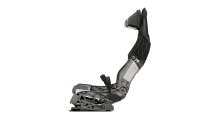
Automotive Engineering
ZF TRW to Launch Electric Park Brake in India, Production Starts in 2017

Automotive Engineering
2021 Toyota Supra 2.0
Automotive Engineering
2016 Altair Enlighten Award Adds New Category to Honor Lightweighting Efforts
Automotive Engineering
Magna’s New Active Airdam Boosts 2019 Ram Fuel Efficiency
Automotive Engineering
2015 Ford Edge Boasts New 2.0-L EcoBoost Engine
Automotive Engineering
2023 Cadillac Lyriq Executive Chief Engineer: New EV Her ‘North Star’
Top Stories
INSIDERManufacturing & Prototyping
 How Airbus is Using w-DED to 3D Print Larger Titanium Airplane Parts
INSIDERManned Systems
 FAA to Replace Aging Network of Ground-Based Radars
NewsTransportation
 CES 2026: Bosch is Ready to Bring AI to Your (Likely ICE-powered) Vehicle
NewsSoftware
 Accelerating Down the Road to Autonomy
EditorialDesign
 DarkSky One Wants to Make the World a Darker Place
INSIDERMaterials
 Can This Self-Healing Composite Make Airplane and Spacecraft Components Last...
Webcasts
Defense
 How Sift's Unified Observability Platform Accelerates Drone Innovation
Automotive
 E/E Architecture Redefined: Building Smarter, Safer, and Scalable...
Power
 Hydrogen Engines Are Heating Up for Heavy Duty
Electronics & Computers
 Advantages of Smart Power Distribution Unit Design for Automotive...
Unmanned Systems
 Quiet, Please: NVH Improvement Opportunities in the Early Design...
