




Active Noise Control

Mentor Automotive’s XSe ANC (Active Noise Control) technology is a high-performance noise cancellation solution that can perform a host of functions with fewer hardware components, requiring less tuning and calibration when compared to competing approaches, the company claims. By carefully placing microphones and accelerometers inside the vehicle, synthesized signals from ANC generate anti-noise to create “quiet zones” for both driver and passenger. Legacy, narrowband solutions typically reduce a few harmonically related frequencies addressing engine order cancellation (EOC) only; Mentor claims that its ANC technology not only includes algorithms to address EOC, but also offers a wider spectrum of frequencies for noise cancellation of the more erratic and unpredictable sounds associated with road noise. ANC has enhanced performance algorithms that cover the complete audio spectrum, compared to traditional least-mean-square and normalized-least-mean-square solutions. This gives ANC fast convergence so it can handle sudden dynamic changes in noise as a result of various road surfaces. The system can be tuned in real time while it’s running, which allows dynamic configuration.
More From SAE Media Group
Automotive Engineering
Bose, NXP Team up to Hush Powertrains
Automotive Engineering
Sounds like Holistic Audio System Development
Automotive Engineering
Dirac Claims 'New Approach' to Sound Optimization
Off-Highway Engineering
Two-Way Communication System
Automotive Engineering
Expanding the ‘Bubble’ of Cabin Acoustics

Automotive Engineering
Audio Transceiver with Automotive Audio Bus
Automotive Engineering
Portable Sound Calibrator
Automotive Engineering
Audio Network Analysis
Automotive Engineering
Vehicle Sound-Generating System
Aerospace & Defense Tech Briefs
Advances in Military Avionics Technologies Create New Challenges for RF Test and Measurement
Aerospace Manufacturing and Machining INSIDER
Army Launches CMOSS Prototyping Competition for Computer Chassis and Cards
Automotive Engineering
Signal Conditioning, Filter and Instrumentation Amplifier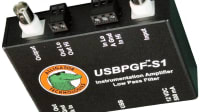

Off-Highway Engineering
RFID Electronic Immobilizer
Automotive Engineering
Dual-Band Front-End Module
Off-Highway Engineering
High-Temp Dual Valve Controller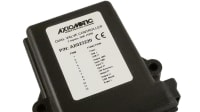
Aerospace & Defense Tech Briefs
How SpaceVPX is Influencing the Design of Next Generation Spacecraft Avionics
Off-Highway Engineering
Filtering out Common Mode Noise with Monolithic EMI Filters
Automotive Engineering
CES 2017: Honda Partners with VocalZoom to Advance Speech-Recognition Technology
Aerospace & Defense Tech Briefs
PAE ISR Engineers Boost Resolute Eagle UAS Networking, Endurance, Payload Capacity with Persistent Systems MPU5
Automotive Engineering
Making the Case for MEMS Timing
Aerospace & Defense Tech Briefs
Persistent Systems Auto-Tracking Antenna Adds Aircraft to Network, Enhances Data Sharing
Automotive Engineering
Wireless, Batteryless Limit Switches
Automotive Engineering
Measuring Module with TEDS Support
Off-Highway Engineering
Addressing Electromagnetic Compatibility in the Context of Aircraft Electrification
Automotive Engineering
Next-Generation LED Drivers for Front, Rear Lights
Automotive Engineering
Maxim Chips Help Trim Space Requirements in Dashboards
Automotive Engineering
Actuator Sensor Manipulation Box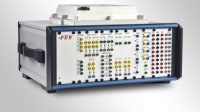
Aerospace & Defense Tech Briefs
Heterogeneous Integration and SiPs Benefit SWaP-C Reduction
Top Stories
INSIDERManufacturing & Prototyping
 How Airbus is Using w-DED to 3D Print Larger Titanium Airplane Parts
INSIDERManned Systems
 FAA to Replace Aging Network of Ground-Based Radars
NewsTransportation
 CES 2026: Bosch is Ready to Bring AI to Your (Likely ICE-powered) Vehicle
NewsSoftware
 Accelerating Down the Road to Autonomy
EditorialDesign
 DarkSky One Wants to Make the World a Darker Place
INSIDERMaterials
 Can This Self-Healing Composite Make Airplane and Spacecraft Components Last...
Webcasts
Defense
 How Sift's Unified Observability Platform Accelerates Drone Innovation
Automotive
 E/E Architecture Redefined: Building Smarter, Safer, and Scalable...
Power
 Hydrogen Engines Are Heating Up for Heavy Duty
Electronics & Computers
 Advantages of Smart Power Distribution Unit Design for Automotive...
Unmanned Systems
 Quiet, Please: NVH Improvement Opportunities in the Early Design...
