




‘Minecraft' Getting Kids into Coding

Stephen Foster, CEO and Co-Founder of ThoughtSTEM, has a new outlook on STEM (science, technology, engineering, and mathematics) education and the utilities that can be used to get kids involved in software coding. Foster had the opportunity to speak at TEDxUCSD ( http://youtu.be/mn4RHIxriEY ) this past summer, where he divulged his exciting theory.
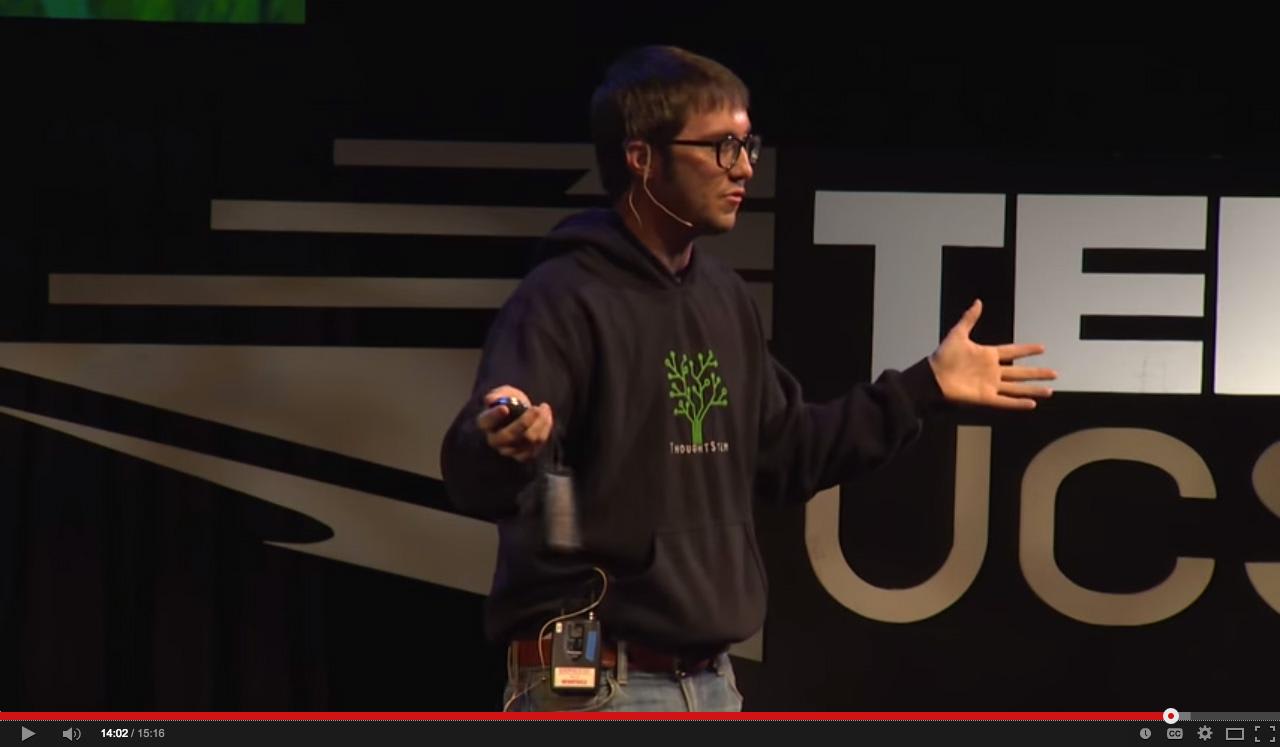
He had spent the past several years developing a game called “Code Spell” in an attempt to find ways to get kids interested in coding. Foster inadvertently discovered what he thinks will “unlock computer science as we know it for a massive fraction of humanity.” It’s “Minecraft,” the game played by more than 30 million people and what represents the key to the future for Foster and ThoughtSTEM.
Foster is so captured by the idea that he has created a curriculum at ThoughtSTEM that surrounds the game. The summer program, “Intro to Minecraft,” is having remarkable success, selling out all of its June-July time slots. In fact, the class’ success has allowed it to launch a web version of “Intro to Minecraft,” enabling kids from around the world a chance to learn how to code.
Foster imagines a future where the majority of people know the language of code, rather than the small fraction that large corporations rely on. In his opinion, coding is the “most powerful problem-solving tool,” which makes it crucial for today’s youth to learn.
Instead of adding on to a litany of other homework that students have, Foster desires to teach code through an activity that they already love. “Minecraft” is easily “modded” or recoded by the user and is already considered “cool” for millions of youth.
Foster and ThoughtSTEM are also partnering with the University of California, San Diego to offer college credits while learning computer science through “Minecraft” mods. There is no age limit for enrollment, which entitles the enrollee to free LearnToMod e-learning software.
With a bit of direction from ThoughtSTEM, Foster hopes that “Minecraft” will go “down in the history books as a key moment in the history of computer science, maybe even the history of humanity.”
Matt May, a senior communications major at Malone University and SAE International summer intern, wrote this article for MOMENTUM.
More From SAE Media Group
Automotive Engineering
Denso Senior VP Offers Career Advice to Young Engineers
Off-Highway Engineering
Autodesk Moves Full STEAM Ahead with Its Commitment to Education
Off-Highway Engineering
COMVEC 2022: Hiring Talent to Meet High-Tech Demands
Automotive Engineering
NXP Processors Evolve to Enable Software-Defined Vehicles
Automotive Engineering
NXP S32 CoreRide Platform Simplifies Development of Software-Defined Vehicles
Off-Highway Engineering
Navigating the Future of AI
Tech Briefs
New Tech: See No Data, Steal No Data
Automotive Engineering
No, Really, What’s an SDV?
Automotive Engineering
WCX 2023: Making the ‘Smart Cockpit’ and UX Safer
Off-Highway Engineering
Software's Growth Shines Spotlight on Eliminating Defects
Tech Briefs
Nanomagnets Can Perform AI-Like Processing
Automotive Engineering
Machine Learning Software Monolith Cuts Development Time for BMW’s Test Engineers
Tech Briefs
AI Advances at Hannover Messe 2023
Motion Design INSIDER
New Technique Helps Robots Pack Objects into a Tight Space
Automotive Engineering
Software Transforming Vehicle Development
Automotive Engineering
Data Boom Drives Bosch to 10,000 Software Engineers in 2022
Automotive Engineering
The ‘Coming STEM Crisis’ Is Already Here
Automotive Engineering
Driving Success with the Software-Defined Product

Automotive Engineering
2016 SAE Congress: Engineering Education Gets Industry Boost
Defense INSIDER
MIT Report Finds US Lead in Advanced Computing is Almost Gone

Automotive Engineering
Key ‘Plug and Charge’ Agreement Could Eliminate EV Charging-Payment Headaches

Automotive Engineering
Q&A: Envorso Wants to Help OEMs Make Better Software In-House
Automotive Engineering
WCX 2023: Software-Defined Vehicle Development an Ongoing Headache for Industry
Tech Briefs
Using AI to Identify Poison Ivy
Off-Highway Engineering
Deere’s Ingredients for Innovation

Automotive Engineering
Bosch Adding Engineers, Expanding Tech Center
Top Stories
INSIDERManufacturing & Prototyping
 How Airbus is Using w-DED to 3D Print Larger Titanium Airplane Parts
INSIDERManned Systems
 FAA to Replace Aging Network of Ground-Based Radars
NewsTransportation
 CES 2026: Bosch is Ready to Bring AI to Your (Likely ICE-powered) Vehicle
NewsSoftware
 Accelerating Down the Road to Autonomy
EditorialDesign
 DarkSky One Wants to Make the World a Darker Place
INSIDERMaterials
 Can This Self-Healing Composite Make Airplane and Spacecraft Components Last...
Webcasts
Defense
 How Sift's Unified Observability Platform Accelerates Drone Innovation
Automotive
 E/E Architecture Redefined: Building Smarter, Safer, and Scalable...
Power
 Hydrogen Engines Are Heating Up for Heavy Duty
Electronics & Computers
 Advantages of Smart Power Distribution Unit Design for Automotive...
Unmanned Systems
 Quiet, Please: NVH Improvement Opportunities in the Early Design...
