




Flexible Antenna Array Could Coat Airplane Wings

Princeton University researchers have taken a step toward developing a type of antenna array that could coat an airplane’s wings. The technology, which could enable many uses of emerging 5G and 6G wireless networks, is based on large-area electronics, a way of fabricating electronic circuits on thin, flexible materials.
The approach overcomes limitations of conventional silicon semiconductors, which can operate at the high radio frequencies needed for 5G applications but can only be made up to a few centimeters wide and are difficult to assemble into the large arrays required for enhanced communication with low-power devices.
With an airplane, because its distance is so far, much signal power is lost. Since wings are a fairly large area, a single-point receiver on the wing does not help but if the amount of area that’s capturing the signal is increased by a factor of a hundred or a thousand, signal power can be reduced and sensitivity of the radio can be increased.
More From SAE Media Group
Aerospace & Defense Tech Briefs
Army and Universities Deploy New Warfighter Communication Technology

Tech Briefs
Agile RFID Antenna System
Aerospace & Defense Tech Briefs
Multi-Agent RF Propagation Simulator
Aerospace Manufacturing and Machining INSIDER
DARPA Seeks New Antenna Designs From Nontraditional Defense Contractors
Aerospace & Defense Tech Briefs
Software-Defined Analog Filters: A Paradigm Shift in Radio Filter Performance and Capability
Tech Briefs
Test Strategies to Track Hypersonic Threats

Tech Briefs
New Phase Shifter to Reduce Antenna Signal Loss

Aerospace INSIDER
Metamaterials Antenna Makes Generational Leap in Multi-Band Connectivity
Aerospace & Defense Tech Briefs
Shape-Shifting Origami Could Help Antenna Systems Adapt On-the-Fly

Tech Briefs
Wireless, Wearable Transmitter
Tech Briefs
New Wireless System for Greater 5G Access

Defense INSIDER
Antenna Design Turns Entire Vehicles into Broadcasting Equipment
Tech Briefs
Quantum Sensor Enables Wide Spectral Coverage

Aerospace & Defense Tech Briefs
Identifying and Isolating Signals Using Radio Frequency Photonics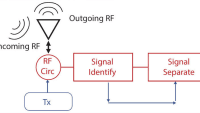
Aerospace & Defense Tech Briefs
Advanced Satellite Communications Research
Aerospace & Defense Tech Briefs
Tracking WiFi Signals to Passively See Through Walls
Tech Briefs
Wireless Transceiver Quadruples Speed of 5G
Aerospace & Defense Tech Briefs
Making Fully Digital Beamforming for Radar and Electronic Warfare Applications a Reality
Aerospace & Defense Tech Briefs
Air Force Technology Tracks “Sporadic E”
Tech Briefs
Products of Tomorrow
Tech Briefs
Toroidal Radiation Pattern Patch Antenna


Tech Briefs
Device-Free RF Residential Monitoring System
Top Stories
INSIDERManned Systems
 How Airbus is Using w-DED to 3D Print Larger Titanium Airplane Parts
INSIDERAerospace
 FAA to Replace Aging Network of Ground-Based Radars
NewsUnmanned Systems
 Microvision Aquires Luminar, Plans Relationship Restoration, Multi-industry Push
NewsDesign
 CES 2026: Bosch is Ready to Bring AI to Your (Likely ICE-powered) Vehicle
NewsSoftware
 Accelerating Down the Road to Autonomy
INSIDERManned Systems
 Can This Self-Healing Composite Make Airplane and Spacecraft Components Last...
Webcasts
Power
 Hydrogen Engines Are Heating Up for Heavy Duty
Transportation
 Advantages of Smart Power Distribution Unit Design for Automotive...
Automotive
 Quiet, Please: NVH Improvement Opportunities in the Early Design...
Power
 A FREE Two-Day Event Dedicated to Connected Mobility
Connectivity
 E/E Architecture Redefined: Building Smarter, Safer, and Scalable Vehicles
Manufacturing & Prototyping
 How Sift's Unified Observability Platform Accelerates Drone Innovation