




New Thruster Generates Ultra-High Velocities
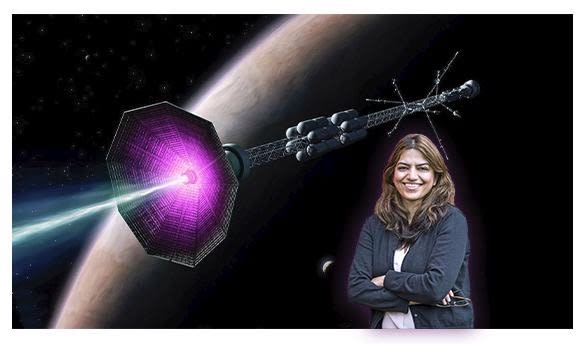
A new type of rocket thruster was developed at the DOE’s Princeton Plasma Physics Laboratory (PPPL) that could take humankind to Mars and beyond. It applies magnetic fields to cause particles of plasma – electrically charged gas also known as the fourth state of matter – to shoot out the back of a rocket and because of the conservation of momentum, propel the craft forward.
Current plasma thrusters that use electric fields to propel the particles can only produce low specific impulse, or speed. The new plasma thruster concept can generate exhaust with velocities of hundreds of kilometers per second – ten times faster than those of other thrusters. That faster velocity at the beginning of a spacecraft’s journey could bring the outer planets within reach of astronauts.
While other thrusters require heavy gas made of atoms like xenon, in this concept, any type of gas may be used. Scientists might prefer light gas in some cases because the smaller atoms can get moving more quickly.
More From SAE Media Group

Motion Design INSIDER
Plasma Thrusters Used on Satellites Could be Much More Powerful
Aerospace & Defense Tech Briefs
Improving Electric Propulsion Thrusters for Future Spacecraft Missions
Aerospace & Defense Tech Briefs
Electric Propulsion for a Nuclear-Powered Spacecraft
Aerospace & Defense Tech Briefs
Electric Satellite Thruster
Aerospace & Defense Tech Briefs
Thrust in Space - The Nuances of Thruster Valve Design
Tech Briefs
A New Way to Launch Rockets: Microwave Power
NASA Spinoff
Water-Powered Engines Offer Satellite Mobility

Aerospace Manufacturing and Machining INSIDER
RAMFIRE Project Develops, Tests 3D-Printed Aluminum Rocket Engine Nozzle
NASA Spinoff
Controlled Propulsion for Gentle Landings
Aerospace INSIDER
Nontoxic, Salt-Based Propellant Could Power Rockets
Aerospace & Defense Tech Briefs
Hybrid Propulsion Systems
Tech Briefs
Spacecraft Propulsion via Nuclear Power
Tech Briefs
Hall Thrusters Could Be Key to Mars Exploration




Motion Design INSIDER
MIT Engineers Develop a Fully 3D-Printed Electrospray Engine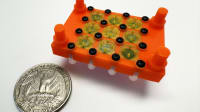
Aerospace & Defense Tech Briefs
A New Clean Room for Missile and Satellite Propulsion Components
Tech Briefs
Miniature Separable Fill and Drain Valve
Aerospace & Defense Tech Briefs
NASA Selects Frontier Aerospace to Continue Development of New Deep Space Thruster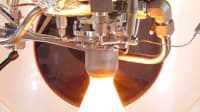

Aerospace INSIDER
New Propulsion Method Moves CubeSats Without Fuel
Aerospace & Defense Tech Briefs
Navigation Unit

Top Stories
INSIDERManufacturing & Prototyping
 How Airbus is Using w-DED to 3D Print Larger Titanium Airplane Parts
INSIDERManned Systems
 FAA to Replace Aging Network of Ground-Based Radars
NewsTransportation
 CES 2026: Bosch is Ready to Bring AI to Your (Likely ICE-powered) Vehicle
NewsSoftware
 Accelerating Down the Road to Autonomy
EditorialDesign
 DarkSky One Wants to Make the World a Darker Place
INSIDERMaterials
 Can This Self-Healing Composite Make Airplane and Spacecraft Components Last...
Webcasts
Defense
 How Sift's Unified Observability Platform Accelerates Drone Innovation
Automotive
 E/E Architecture Redefined: Building Smarter, Safer, and Scalable...
Power
 Hydrogen Engines Are Heating Up for Heavy Duty
Electronics & Computers
 Advantages of Smart Power Distribution Unit Design for Automotive...
Unmanned Systems
 Quiet, Please: NVH Improvement Opportunities in the Early Design...
