




How Flying Cars Could Change the Aerospace Industry

A new study of the environmental sustainability impacts of flying cars (electric vertical takeoff and landing aircraft, or VTOLs) finds that they wouldn’t be suitable for a short commute but could be valuable in congested cities or in places where there are geographical constraints.
The found that for trips of 62 miles, a fully loaded VTOL carrying a pilot and three passengers had lower greenhouse gas emissions than ground-based cars with an average vehicle occupancy of 1.54. Emissions were 52 percent lower than gasoline vehicles and 6 percent lower than battery-electric vehicles.
More From SAE Media Group

Aerospace INSIDER
Sikorsky is Designing a New Hybrid Electric Tilt Wing VTOL Demonstrator
Aerospace INSIDER
Archer Achieves First Untethered Flight with Midnight eVTOL
Tech Briefs
Fixed-Wing Angle eVTOL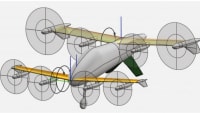

Aerospace INSIDER
Electra Starts Proving Blown Lift eSTOL Technology
Aerospace & Defense Tech Briefs
How to Get Advanced Air Mobility into the Sky
NASA Spinoff
From Shark Searches to Space Tours
Aerospace INSIDER
Archer Aviation Completes Midnight eVTOL Transition Flight Milestone
Aerospace & Defense Tech Briefs
Airbus to Fly Prototype eVTOL This Year
Aerospace INSIDER
Lilium Starts Production of eVTOL Jet Batteries
Aerospace INSIDER
Why Hybrid-Electric is a Key Solution for Decarbonizing Aviation

Tech Briefs
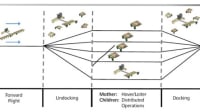
Aircraft Vertical Takeoff and Landing
Aerospace INSIDER
EASA Ready to Adopt Final Regulations for eVTOL Operations
Aerospace & Defense Tech Briefs
1 Megawatt Turbogenerator
Aerospace INSIDER
Porsche and Boeing Partner on Urban Air Mobility

Aerospace & Defense Tech Briefs
Rising Star Awards: Women in Engineering Aerospace Winner - Heather Cummings

Tech Briefs
Multirotor Aircraft Noise Reduction
Aerospace INSIDER
Fly-by-Wire Inceptor Developed for eVTOL Aircraft

Aerospace INSIDER
Embraer Subsidiary Shows First Full-Scale eVTOL Prototype

Aerospace INSIDER
German eVTOL Company Needs Buyers to Keep Manufacturing Operations Alive
Aerospace & Defense Tech Briefs
Air Force Receives First Joby eVTOL
Aerospace & Defense Tech Briefs
Air Force eVTOL Research and Development Programs Make Remote Pilot Progress
Aerospace INSIDER
XQ-67A's First Flight Shows 'Genus' Approach to Aircraft Design
Top Stories
INSIDERManufacturing & Prototyping
 How Airbus is Using w-DED to 3D Print Larger Titanium Airplane Parts
INSIDERManned Systems
 FAA to Replace Aging Network of Ground-Based Radars
NewsTransportation
 CES 2026: Bosch is Ready to Bring AI to Your (Likely ICE-powered) Vehicle
NewsSoftware
 Accelerating Down the Road to Autonomy
EditorialDesign
 DarkSky One Wants to Make the World a Darker Place
INSIDERMaterials
 Can This Self-Healing Composite Make Airplane and Spacecraft Components Last...
Webcasts
Defense
 How Sift's Unified Observability Platform Accelerates Drone Innovation
Automotive
 E/E Architecture Redefined: Building Smarter, Safer, and Scalable...
Power
 Hydrogen Engines Are Heating Up for Heavy Duty
Electronics & Computers
 Advantages of Smart Power Distribution Unit Design for Automotive...
Unmanned Systems
 Quiet, Please: NVH Improvement Opportunities in the Early Design...
