




Automated Process Prints Aircraft Parts

Copper cables run through the fuselage of aircrafts. They transmit electrical signals for temperature-measuring sensors, LEDs in ceilings, or electronic connections in seats. During their installation, individual cables are combined into harnesses. A new manufacturing process eliminates the classic laying of the cable harnesses, saving space and weight.
Electrically conductive silver ink is applied by screen or inkjet printing in layers of only a few microns directly onto lightweight aerospace materials such as high-temperature-resistant plastics. The lightweight components are flame-retardant, stable, can be automated in large quantities, and are easy to assemble.
More From SAE Media Group
Aerospace INSIDER
A New Approach to 3D Printing Tool Recycling for Aerospace Manufacturers
Aerospace & Defense Tech Briefs
Unlocking the Potential of 3D-Printed Polymers in Aerospace and Defense

Aerospace INSIDER
Air Force Wind Tunnel Team Takes 3D Printing Program to Next Dimension
Aerospace INSIDER
4D Composite Printing Can Improve Drone Wings
Medical Design Briefs
Inkjet Printing Shows Promise for Making E-Textiles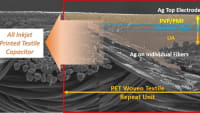
Tech Briefs
New Printing Process Advances 3D Capabilities
Tech Briefs
3D Printing of Wearable Devices
Electronics & Sensors INSIDER
MIT Team Takes a Major Step Toward Fully 3D-Printed Active Electronics
Aerospace Manufacturing and Machining INSIDER
How Airbus is Using w-DED to 3D Print Larger Titanium Airplane Parts


Tech Briefs
Videos of the Month
Aerospace & Defense Tech Briefs
Additive Manufacturing
Aerospace Manufacturing and Machining INSIDER
Collins Opens $14 Million Aerospace Additive Manufacturing Facility in Iowa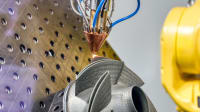

Medical Design Briefs
2020 Product Buyer's Guide
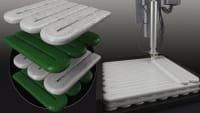
Tech Briefs
Calibration System for Automated Fiber Placement
Aerospace & Defense Tech Briefs
SAE International Issues First Technical Standards for Aerospace Additive Manufacturing
Aerospace Manufacturing and Machining INSIDER
MQ-9B to Get New 3D- Printed Fuel Oil Heat Exchanger
Aerospace & Defense Tech Briefs
Aitiip Integrates Freeform Injection Molding to Lower Weight and Reduce Production Costs
Tech Briefs
Products of Tomorrow
Aerospace & Defense Tech Briefs
Physics-Guided Neural Network for Regularization and Learning Unbalanced Data Sets
Tech Briefs
Device Measures Laser Power in Real Time

Aerospace & Defense Tech Briefs
Metal-Plated, High-Temperature Plastics
Aerospace Manufacturing and Machining INSIDER
Clean Sky Demonstrator Fuselage Shows Potential of Thermoplastics in Aircraft Production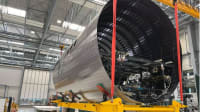
Top Stories
INSIDERManufacturing & Prototyping
 How Airbus is Using w-DED to 3D Print Larger Titanium Airplane Parts
INSIDERManned Systems
 FAA to Replace Aging Network of Ground-Based Radars
NewsTransportation
 CES 2026: Bosch is Ready to Bring AI to Your (Likely ICE-powered) Vehicle
NewsSoftware
 Accelerating Down the Road to Autonomy
EditorialDesign
 DarkSky One Wants to Make the World a Darker Place
INSIDERMaterials
 Can This Self-Healing Composite Make Airplane and Spacecraft Components Last...
Webcasts
Defense
 How Sift's Unified Observability Platform Accelerates Drone Innovation
Automotive
 E/E Architecture Redefined: Building Smarter, Safer, and Scalable...
Power
 Hydrogen Engines Are Heating Up for Heavy Duty
Electronics & Computers
 Advantages of Smart Power Distribution Unit Design for Automotive...
Unmanned Systems
 Quiet, Please: NVH Improvement Opportunities in the Early Design...
