




Pumped Two-Phase Cooling for Thermal Management of High Heat Flux Electronics
Pumped two-phase cooling provides a compact, low pumping power option for thermal management in high heat flux applications (300-500W/cm2). Compared to single-phase convection, significantly higher heat transfer coefficients can be achieved at substantially lower flowrates. Two-phase cooling also provides a high degree of isothermality, which is important in many applications such as lasers whose emission wavelengths are temperature-dependent.


For the sake of illustration, representative experimental results on the cooling performance of a pumped two-phase cooling loop are presented here, along with some practical considerations concerning the design and operation of two-phase cooling systems.
Experimental Hardware
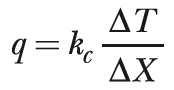 The laboratory test setup shown in Figure 2a is outfitted with a copper minichannel heat sink having overall dimensions 20.4mm × 12.3mm × 6.0mm with 8 rectangular channels each having a hydraulic diameter 1.8 mm and a channel aspect ratio (H/W) of 2.8 (housed within the Test Section Assembly). The heat load applied to the heat sink was simulated using a copper heater block containing cartridge heater inserts. As shown in Figure 2b, the heater block narrows down to a pedestal through which heat is transferred to the heat sink. The heat flux applied to the minichannel heat sink is approximated by the product of the thermal gradient (ΔT/Δx) measured with thermocouples positioned along the pedestal length using the 1-D heat conduction formula:
where kc is the thermal conductivity of the copper heater block.
Boiling Enhancement Coatings

Results
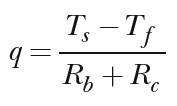 The thermal performance of coated and uncoated minichannel heat sinks was evaluated in the pumped two-phase cooling system shown in Figure 2. The heat transfer coefficient (HTC) [W/m2K] and the Incipient Wall Superheat [K] were evaluated as a function of the input heat flux and coolant mass flux [kg/m2s] using refrigerant R134a. Here, the HTC was calculated using a one-dimensional resistance model that yields:
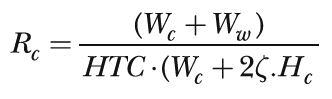 Here, Ts is the average temperature of the heat sink base, Tf is the average fluid temperature (average of the inlet and outlet temperatures) and Rb and Rc are the thermal resistances of the copper base and channel. Notably, Rb = thickness of the base/thermal conductivity of copper and:
where Ww is the fin width, Wc is the channel width, ζ is the fin efficiency (function of HTC) and Hc is the channel height. Substituting the experimentally measured values, the equation was then solved for the HTC.
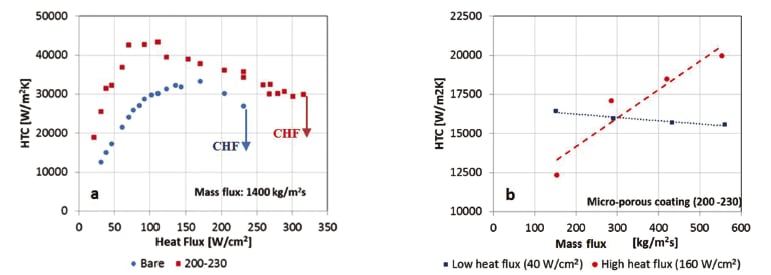

In short, coated heat sinks have higher heat transfer coefficients, lower wall superheat, and higher CHF than uncoated heat sinks. Moreover, temperature and pressure fluctuations (not presented) in the heat sink/evaporator are suppressed with the coated heat sinks, thus enabling accurate thermal control and isothermalization of high-power electronics and laser diodes.
Summary
Pumped two-phase cooling systems can handle very high heat fluxes, operate with small pumps (low pumping power), and can be designed to be compact and reliable. At ACT, efforts are underway to develop an ultra-compact two-phase cooling system for ground and air-based platforms. In this study, the heat sink temperature for all cases considered (heat fluxes as high as 320 W/cm2 or ~105 W/cm2 on the wetted surface) was maintained below 90°C (with a condenser temperature of 30°C). Among other benefits, a two-phase system allows for precise control of the boiling temperature, which in turn enables accurate control of the device’s operating temperature.
Flow boiling heat transfer on minichannel copper heat sinks was evaluated as a function of coolant mass flux, input heat flux, and boiling enhancement coatings. The microporous coatings substantially improve heat transfer by promoting nucleate boiling on the heat transfer surfaces as demonstrated in the substantial reduction in the incipient wall superheat required to dissipate a given heat flux. For the best performance, for a given application, special attention should however be given to optimizing the thickness of the porous coating and its particle and pore size.
This article was written by Ehsan Yakhshi-Tafti, Xudong Tang, Pete Ritt, and Howard Pearlman, Advanced Cooling Technologies, Inc. (ACT) (Lancaster, PA). For more information, Click Here .
Acknowledgements
Special thanks are given to Dr. Tadej Semenic who developed and tested some of the initial prototypes and Dr. Seung You at the University of Texas Dallas for coating select heat sinks and helping characterize their thermal performance under pool boiling conditions. Funding for this work was provided by the National Science Foundation under contract #1127293.
References
- Forster, H. K., & Zuber, N. (1955). Dynamics of vapor bubbles and boiling heat transfer. AIChE Journal, 1(4), 531-535.
- Semenic, T., & You, S. M. (2013). Two-Phase Heat Sinks with Microporous Coating. Heat Transfer Engineering, 34(2-3), 246-257.
- Chang, J. Y., & You, S. M. (1997). Boiling heat transfer phenomena from microporous and porous surfaces in saturated FC-72. International Journal of Heat and Mass Transfer, 40(18), 4437-4447.
More From SAE Media Group
Aerospace & Defense Tech Briefs
UGVs — On the Cutting Edge of Thermal Management
Aerospace & Defense Tech Briefs
Thermal Management for Directed Energy Weapons
Aerospace & Defense Tech Briefs
Advanced Thermal Management Solutions
Software Tech Briefs
Conjugate Heat Transfer
Aerospace & Defense Tech Briefs
Acceleration Resistant HiK Heat Spreader
Embedded Technology
Direct Spray Liquid Cooling Systems
Aerospace & Defense Tech Briefs
Thermal Management Techniques in Avionics Cooling
Aerospace & Defense Tech Briefs
Thermostatic Solutions for Temperature Control Applications
Aerospace & Defense Tech Briefs
Using Heat Pipes to Cool Embedded Computers
Aerospace & Defense Tech Briefs
Thermal Trends and Improvements for Rugged COTS Cards
Aerospace & Defense Tech Briefs
Compact Thermal Management Solutions for Mobile Laser Weapon Systems
Aerospace & Defense Tech Briefs
Thermal Simulation and Testing of Expanded Metal Foils for Lightning Protection
Aerospace & Defense Tech Briefs
Microtube Technology: A Catalyst for Next-Gen Aerospace Thermal Control
Medical Design Briefs
New Thermal Management Strategies for Medical Devices
Aerospace & Defense Tech Briefs
Submersion and Directed Flow Cooling Technology for Military Applications
Tech Briefs
System Provides Cooling with No Electricity
Aerospace & Defense Tech Briefs
Thermoelectric Cooling

Tech Briefs
Extrans Permeation Measurement System
Aerospace & Defense Tech Briefs
Two-Phase Electronics Cooling for Vehicle Applications


Aerospace & Defense Tech Briefs
Loop Thermosyphons
Air Force Research Laboratory Technology Horizons
Film Cooling Using Pulsed Coolant

Tech Briefs
Composite Panel with Integrated Thermal Control
Tech Briefs
Aerogel-Reinforced Composites
Aerospace & Defense Tech Briefs
Optimizing Thermal Management to Meet SWaP-C Requirements
Lighting Technology
Heat Pipe Solutions for LED Devices

Top Stories
INSIDERManufacturing & Prototyping
 How Airbus is Using w-DED to 3D Print Larger Titanium Airplane Parts
INSIDERManned Systems
 FAA to Replace Aging Network of Ground-Based Radars
NewsTransportation
 CES 2026: Bosch is Ready to Bring AI to Your (Likely ICE-powered) Vehicle
NewsSoftware
 Accelerating Down the Road to Autonomy
EditorialDesign
 DarkSky One Wants to Make the World a Darker Place
INSIDERMaterials
 Can This Self-Healing Composite Make Airplane and Spacecraft Components Last...
Webcasts
Defense
 How Sift's Unified Observability Platform Accelerates Drone Innovation
Automotive
 E/E Architecture Redefined: Building Smarter, Safer, and Scalable...
Power
 Hydrogen Engines Are Heating Up for Heavy Duty
Electronics & Computers
 Advantages of Smart Power Distribution Unit Design for Automotive...
Unmanned Systems
 Quiet, Please: NVH Improvement Opportunities in the Early Design...
