




Tips for Selecting or Designing a Membrane Switch
Membrane switches are known for standing up to tough environmental conditions. Flexible and durable, the membrane switch can be customized with embossing, backlighting, sealing, and electrostatic discharge (ESD) shielding. Membrane switches can be made with either tactile or non-tactile feedback and they can be integrated with LEDs and other components. To get the switch that works for your application, follow these simple guidelines.
What Is A Membrane Switch And Why Use It?
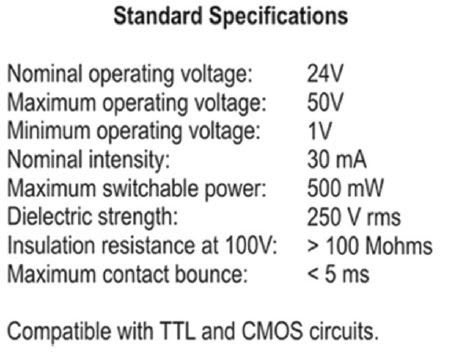
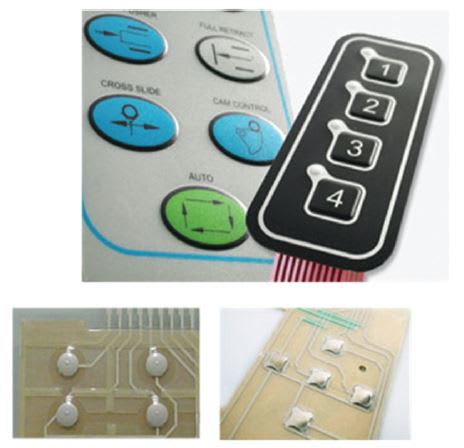
Over the past decade, the membrane switch has grown in popularity as designers are seeking a more modernized look, avoiding the older, bulky switches, and looking for ways to fit switches into smaller footprints in today’s equipment. The membrane switch’s sleek, flat design with modern LED lights is appealing with a less industrial look. Figure 1 shows some of the many applications for membrane switches. Table 2 lists some of their design advantages.
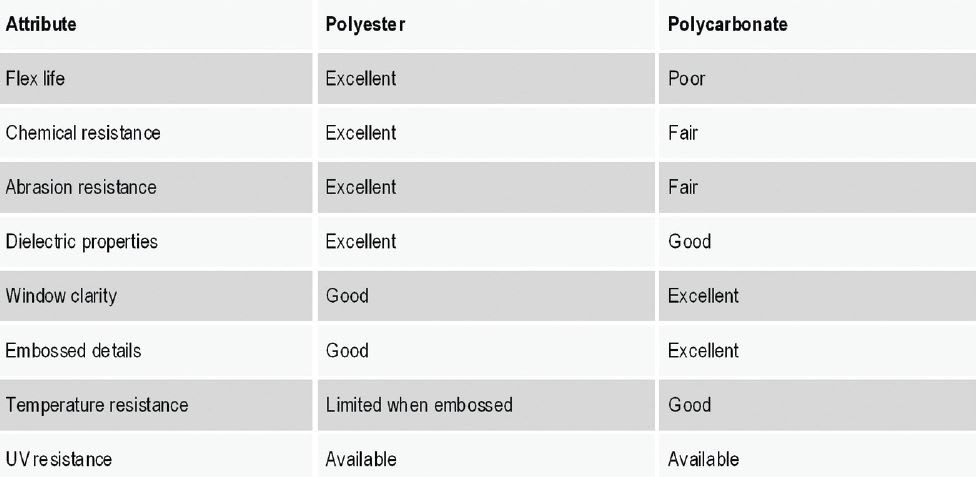
Which Overlay Material Is Best For My Application?

A Word About Environmental Regulations
Most industries now require RoHS compliance. The RoHS (Restriction of Hazardous Substances) Directive, most well known as the lead-free requirement, also restricts the use of lead (Pb), mercury (Hg), Cadmium (Cd), Hexavalent chromium (Cr 6+), and polybrominated diphenyls (PBB and PBDE).
Ask The Right Questions

Overlay or membrane? Decide if you need an overlay (just the graphic) or a membrane switch (includes circuitry).
Is a back plate or bezel involved? Is there a back plate or bezel to which the membrane will be applied? If so, ask the manufacturer to quote this. It makes your sub-assembly more complete and easier to install into your finished product.
Where will the switch be used? Consider the environment in which the membrane will be used so you can design your membrane switch for maximum reliability. For example, if it will be used outdoors, you will want a graphic material with UV protection. If it will be used in an environment where ESD is present, consider incorporating a shield into the design.
What is the mating connector? You can cut cost by using a standard 2.54mm pitch female connector.
Are there specific ergonomic concerns with the application? Consider embossing, which allows the user to locate keys easily. There are multiple types of embossing, including pillow, rim, logo, LED, and combination. Embossing can be beneficial for low lighting environments or for disabled users.
Is lighting required? Keypad can be backlit, with a thin film electroluminescent (EL) lamp, widely used for medical equipment and robotic controls, or light emitting diodes (LEDs), used in medical equipment, power supplies, generators, and hand-held devices, provides visual indicators to the user of actuation.
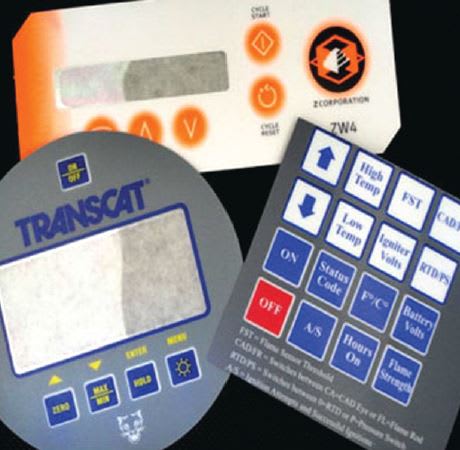
How do I get a graphic design that is aesthetically pleasing while not being too expensive? You can use embossing, multiple colors, graphic design, and material finish to convey your company’s message. To save on cost, minimizing the number of colors, using standard off-the-shelf connectors should be incorporated into your design. Avoid thin lines (less than 0.3mm) and serif fonts, which can be costly to print. Keep in mind that use of embossing and polycarbonate material will increase costs. Figure 3 provides some ideas on labels and overlays.
Following the basic guidelines in this article should simplify the job of selecting or designing a membrane switch for any application, and save you time and money in the process.
This article was written by Brian Tovtin, Product Management, Switch Product Line, APEM Components (Haverhill, MA). For more information, Click Here .
More From SAE Media Group
Tech Briefs
New on the Market
Embedded Technology INSIDER
New Wearable Technology Can Sense Appliance Use
Medical Design Briefs
Seven Advantages of Membrane Switches for Medical Electronics
Embedded Technology
Toggle Switch
Medical Design Briefs
PCB Microelectronics Assembly Takes Center Stage for Medical Miniaturization

Tech Briefs
New on the Market: October 2022
Tech Briefs
Product of the Month
Embedded Technology INSIDER
Tactile Switch

Tech Briefs
Integrating Fragile 2D Materials into Devices
Medical Design Briefs
New Isolated Power Supply Chip Design Improves Efficiency

Aerospace & Defense Tech Briefs
Evaluation of the Effects of Hydrogen Peroxide on Common Aircraft Electrical Materials
Electronics & Sensors INSIDER
Researchers Develop Recyclable, Healable Electronics

Motion Design
Software Brings Movement to Linear Actuators
Medical Design Briefs
3D Printed Plastics with High-Performance Electrical Circuits
Embedded Technology
Using Laser Direct Structuring (LDS) to Create Robust Hardware Security Devices
Tech Briefs
High-Power/Pulsed-Power Electrical Switch
Tech Briefs
Room-Temperature Magnon Switch
Tech Briefs
Low-Inductance DC Power Bus
Medical Design Briefs
New Products and Services
Electronics & Sensors INSIDER
This LED Can Be Integrated Directly Into Computer Chips
Tech Briefs
Pyroelectric Sandwich Thermal Energy Harvester

Top Stories
INSIDERManufacturing & Prototyping
 How Airbus is Using w-DED to 3D Print Larger Titanium Airplane Parts
INSIDERManned Systems
 FAA to Replace Aging Network of Ground-Based Radars
NewsTransportation
 CES 2026: Bosch is Ready to Bring AI to Your (Likely ICE-powered) Vehicle
NewsSoftware
 Accelerating Down the Road to Autonomy
EditorialDesign
 DarkSky One Wants to Make the World a Darker Place
INSIDERMaterials
 Can This Self-Healing Composite Make Airplane and Spacecraft Components Last...
Webcasts
Defense
 How Sift's Unified Observability Platform Accelerates Drone Innovation
Automotive
 E/E Architecture Redefined: Building Smarter, Safer, and Scalable...
Power
 Hydrogen Engines Are Heating Up for Heavy Duty
Electronics & Computers
 Advantages of Smart Power Distribution Unit Design for Automotive...
Unmanned Systems
 Quiet, Please: NVH Improvement Opportunities in the Early Design...
