




White PaperRobotics, Automation & Control
Important Success Factors for Dry-running Bearings in Construction Machinery
SPONSORED BY: ![]()

Choosing between plastic and metal bearings for construction machinery is a decision many manufacturers have to make. However, it’s a deceptively simple choice, as plastics offer numerous advantages metal alternatives cannot provide. This white paper examines the various benefits plastic bearings provide over metal including cost, environmental impact, and maintenance requirements.
Don't have an account?
Overview
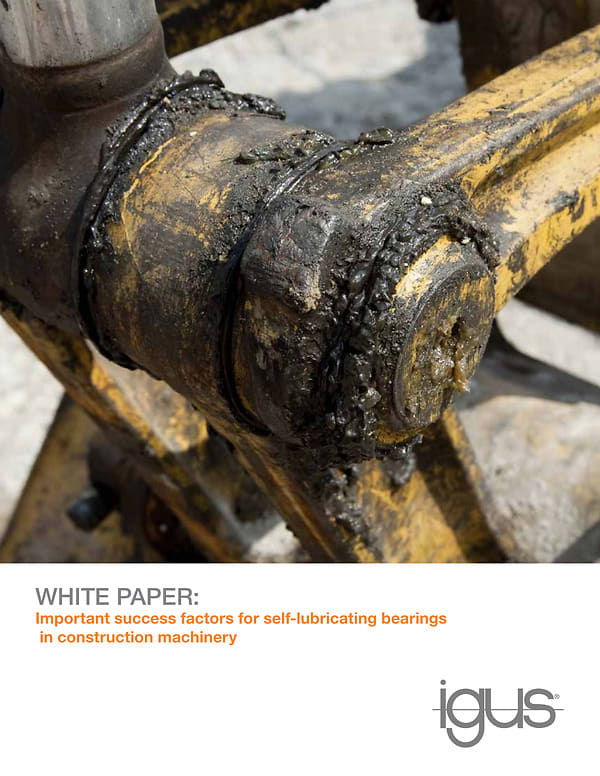
The white paper discusses the critical factors influencing the adoption of self-lubricating bearings in construction machinery, addressing the challenges posed by traditional metallic bearings in harsh operating environments. Construction machinery often operates under extreme conditions, including exposure to dust, moisture, and mud, which can compromise the performance and reliability of conventional bearings that rely heavily on lubricating greases.
As the construction industry faces increasing demands for flexibility, efficiency, and reduced maintenance, the limitations of traditional lubrication methods become apparent. Regular maintenance can lead to machine downtime, while improper lubrication poses risks to machine readiness. Additionally, environmental concerns regarding grease contamination of soil and water are prompting a shift towards more sustainable bearing solutions.
Self-lubricating plain bearings, such as those developed under the iglide® brand, offer a promising alternative. These bearings are designed to operate without the need for additional lubrication, making them suitable for dirty and adverse weather conditions. The paper highlights the extensive research and development behind iglide® materials, which incorporate solid lubricants and additives to enhance performance and durability.
The white paper also emphasizes the importance of understanding specific application requirements when transitioning to self-lubricating bearings. Factors such as shaft material compatibility and environmental conditions must be carefully considered to ensure optimal performance. The iglide® expert system aids in predicting the service life of these bearings based on application conditions, further supporting manufacturers in their decision-making process.
In conclusion, the white paper advocates for the adoption of self-lubricating bearings as a means to improve machine reliability, reduce maintenance needs, and meet ecological standards. By embracing these innovative solutions, manufacturers can enhance operational efficiency while minimizing environmental impact, ultimately leading to more sustainable construction practices.